


Rococo Headboard and Footboard
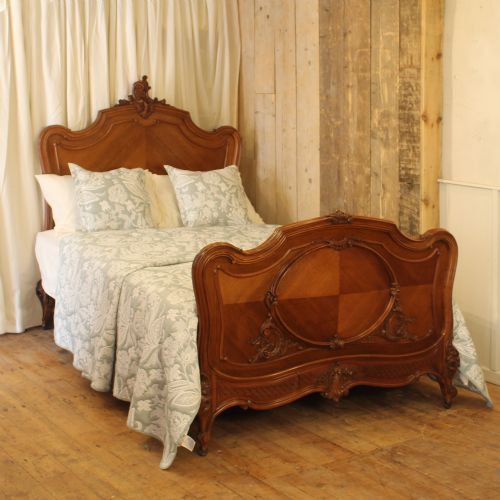
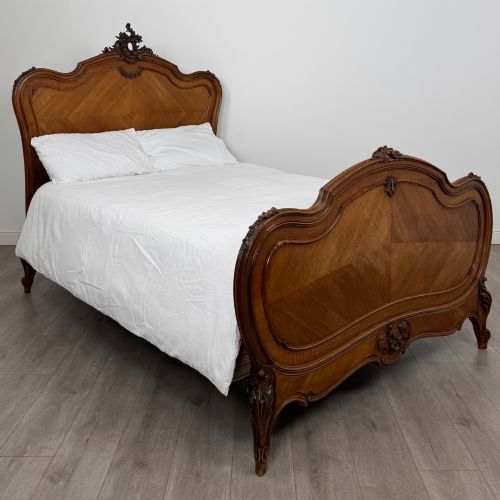
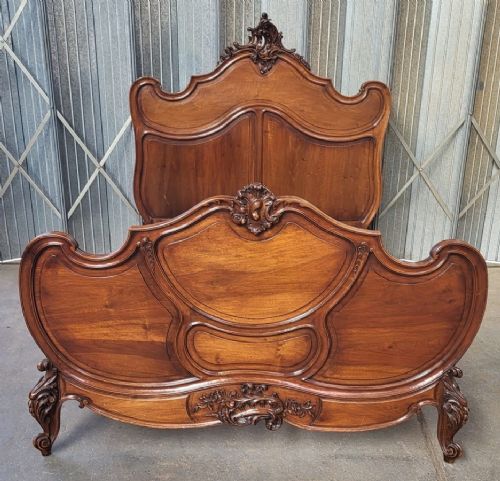
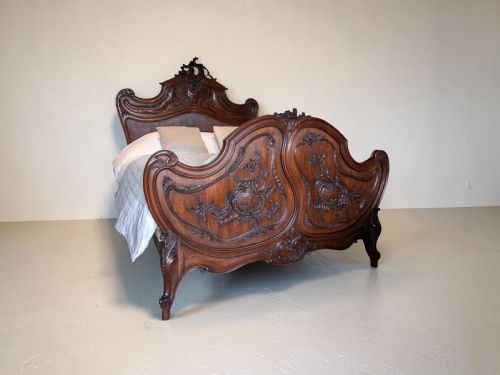
These rococo headboard and footboard pieces bring exuberant curves and carved flourishes to a bedroom, turning a bed into a grand focal point.
Materials and construction methods
Carving defines the construction, with deep relief work shaping the crests and footboards. Cabinetmakers applied parcel gilt highlights to accentuate the carved scrolls, curves, and asymmetrical lines characteristic of the revival styles.
Distinguishing quality across the range
Depth and crispness of the timber carving separate standard production from superior work. Finer examples display hand-chiselled details with sharp relief on the crest rails and footboards, whereas simpler pieces rely on softer, shallower moulding.
Selection of timber grain and veneer quality marks the upper tier of pieces. Burr walnut and carefully matched veneers demonstrate deliberate material choice, while painted finishes vary in the subtlety of their layering and preservation.
Listings span the nineteenth century through to the 1930s, featuring walnut, oak, and painted wood finishes.
The Rococo Headboard and Footboard Glossary
- Rococo Revival
- A nineteenth-century design movement that resurrected the flowing curves, shell motifs, and asymmetry of the eighteenth-century French style. It dominates the decorative vocabulary of these bed frames.
- Louis XV Style
- An aesthetic defined by cabriole legs, serpentine outlines, and naturalistic plant motifs. Beds in this style often feature sweeping headboards with prominent carved cartouches.
- Walnut Veneer
- A thin layer of figured walnut timber applied to a secondary wood base to create decorative surface patterns. It offers visual richness while maintaining structural stability.
- Parcel Gilt
- A technique where specific carved details or mouldings are partially gilded with gold leaf. This highlights the sculptural elements against the darker walnut or painted wood background.
- Bombe
- A swelling, outward-curving contour found on furniture fronts and sides. It adds a dramatic volumetric presence to the associated bedside cabinets.
Rococo Headboard and Footboard: Frequently Asked Questions
How do I fit a modern mattress?
Many of these antique frames accommodate standard modern mattress sizes with slight adjustments or custom support slats. Consult the specific internal dimensions listed for each bed.
Working with a specialist upholsterer or bed maker helps integrate modern slatted bases securely into the historical wooden framework.
What is French Rococo style?
French Rococo style emerged from the court of Louis XV, emphasising asymmetry, scrolls, and floral ornamentation. It avoids straight lines in favour of organic, flowing contours.
Revival pieces from the nineteenth and early twentieth centuries faithfully replicate these exuberant decorative elements on headboards and footboards.
Are these beds solid walnut?
Construction varies between solid walnut, walnut veneer over secondary timbers, and painted wood surfaces. Walnut was chosen for its strength and grain.
Checking the specific listing details reveals whether Burr walnut or plain walnut forms the primary visual surface of the headboard.
How do I care for painted wood?
Painted wooden surfaces require gentle dusting with a dry, soft cloth to prevent abrasion. Avoid harsh chemical cleaners that might compromise the antique finish.
Keeping the bed away from direct sunlight and dramatic humidity changes protects both the painted finish and the underlying timber.