
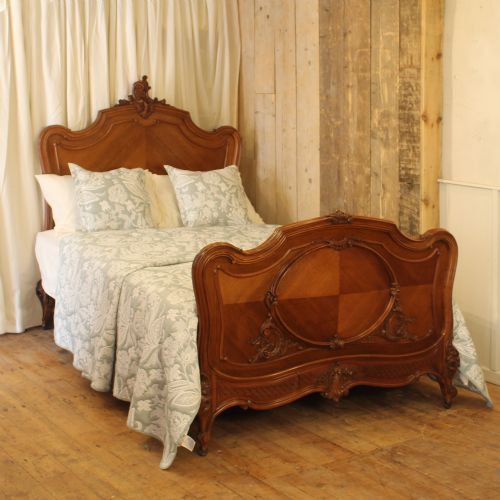

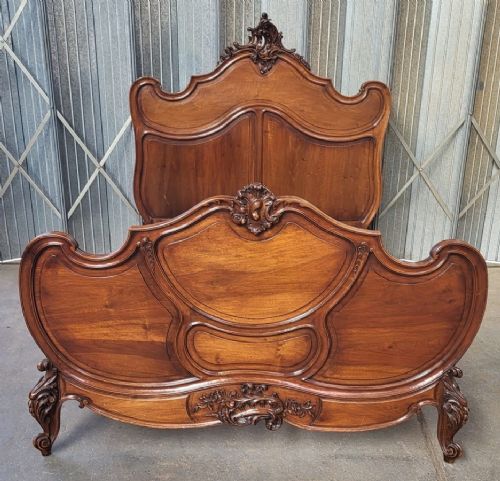

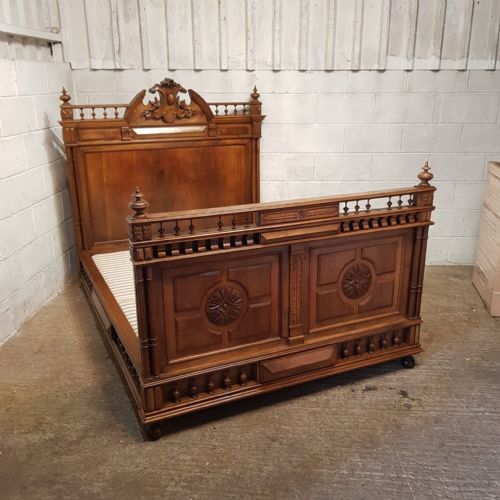
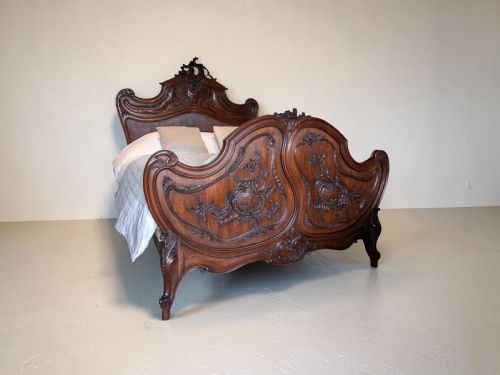
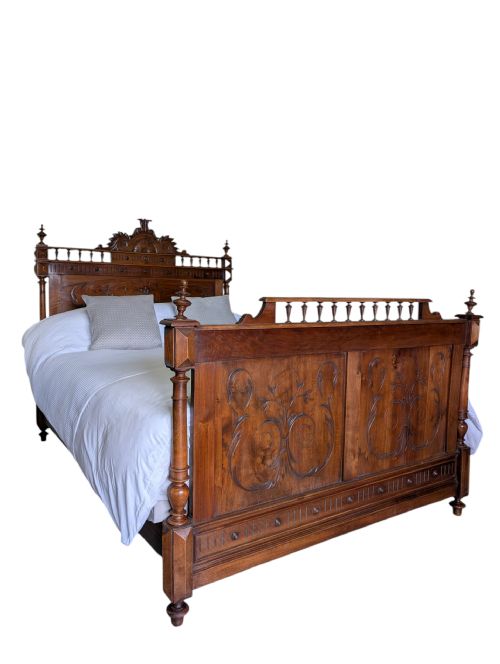


Ornate Wooden Bed Frame
These ornate wooden bed frames bring heavy carving and continental presence into a bedroom, offering a substantial centrepiece with historical depth.
Ornate Wooden Bed Frame
When you search for an ornate wooden bed frame, you are looking at substantial sleeping furniture defined by decorative carving and historical continental styles. These pieces range across the nineteenth and early twentieth centuries, drawing heavily upon French Rococo, Italian Rococo, and Portuguese Baroque Revival aesthetics.
You are most likely to meet walnut, oak, and mahogany bedsteads in double and king sizes on this page. Many examples originate from France, often incorporating detailed woodwork, veneer, or painted finishes with brass detailing.
The forms span from standard bed frames to large panelled bedsteads, sometimes accompanied by matching bedside cabinets. They reflect periods from the late Victorian era up through the nineteen-twenties, grounding a modern room in heavy historic timber.
How they were made
Makers utilised solid wood and walnut veneer over supportive timber carcases to build these bed frames, shaping them with hand-carved details. Giltwood, damask, fruitwood, and chestnut also appear across the structures, adding contrasting texture and tone to the main panels.
Joinery techniques relied on sturdy frame construction to support large headboards and footboards, while brass detailing was fastened directly to painted or polished wooden surfaces. Artisans applied French polishing or paint directly to the timber, sealing the grain and highlighting the intricate relief carving.
What varies in quality
The depth and crispness of the hand-carving set one frame apart from another, separating standard production from exceptional craftsmanship. Deeper relief work on walnut and oak demonstrates a surer hand by the original cabinetmaker.
The integrity of the timber and the retention of original surface finishes, whether polished walnut or painted wood with brass detailing, dictate the overall standard of the piece. Matching elements, such as accompanying bedside cabinets, alter the completeness and cohesion of the bedstead.
The Ornate Wooden Bed Frame Glossary
- Bedstead
- A framework of a bed consisting of headboard, footboard, and side rails. This term often appears interchangeably with bed frame in older listings.
- French Rococo
- A decorative style characterised by asymmetrical curves, scrollwork, and naturalistic plant motifs. It heavily influences many nineteenth-century continental bed designs.
- Walnut Veneer
- A thin layer of walnut wood applied over a secondary timber base to create decorative grain patterns. This technique allowed makers to display rich figuring across large headboard panels.
- Baroque Revival
- A nineteenth-century historical revival style that mimics the theatrical and ornate designs of the seventeenth century. Portuguese examples in this style use dramatic carving and heavy proportions.
Ornate Wooden Bed Frame: Frequently Asked Questions
Will a standard modern mattress fit an antique bed frame?
Many older French and continental beds do not conform to modern standard UK or US mattress dimensions. You may need a custom-made mattress to fit the specific interior rails of the bedstead.
Checking the exact internal length and width measurements in the listing is essential before purchasing bedding or a mattress.
Are these beds made of solid wood?
Construction varies between solid timber frames and panels faced with walnut veneer over a secondary wood core. Both methods were standard practice during the nineteenth and early twentieth centuries.
Inspect the material notes in each listing to confirm whether the bed uses solid oak, walnut, mahogany, or fruitwood.
How do I care for the wood and polished finish?
Dust the carved wooden surfaces regularly with a soft, dry cloth to prevent dirt build-up in the intricate recesses. Avoid using modern silicone sprays or harsh chemical cleaners that can degrade antique French polish or painted finishes.
Apply a traditional beeswax polish sparingly once or twice a year to nourish the timber.