




Rococo Glass Vitrine
A rococo glass vitrine brings French revival elegance into a room, offering glazed panels and gilt mounts to house small treasures.
Rococo Glass Vitrine
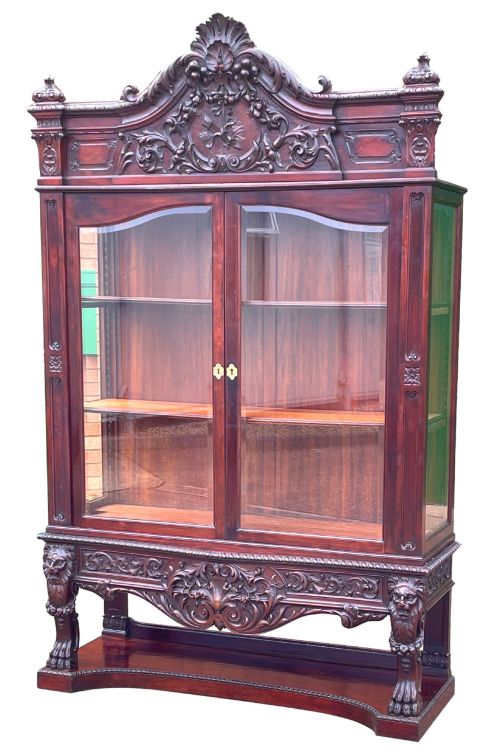
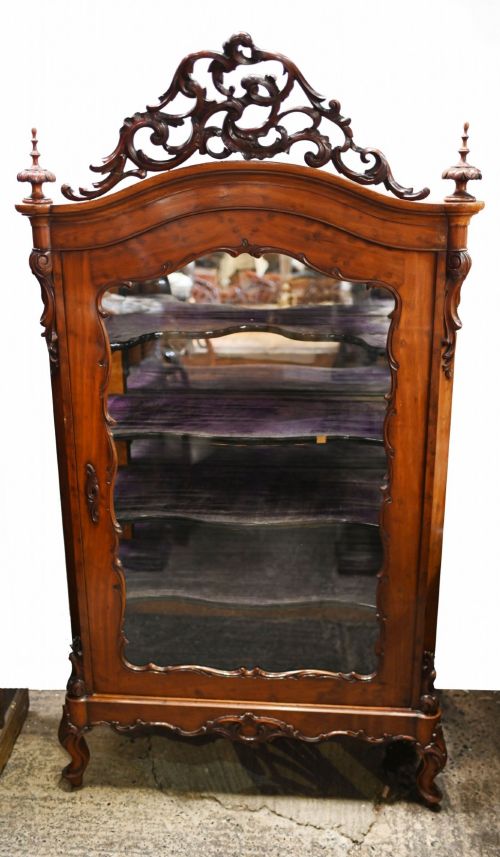
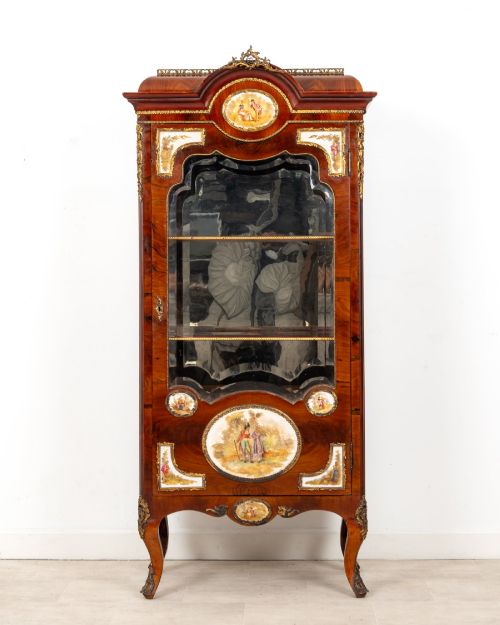
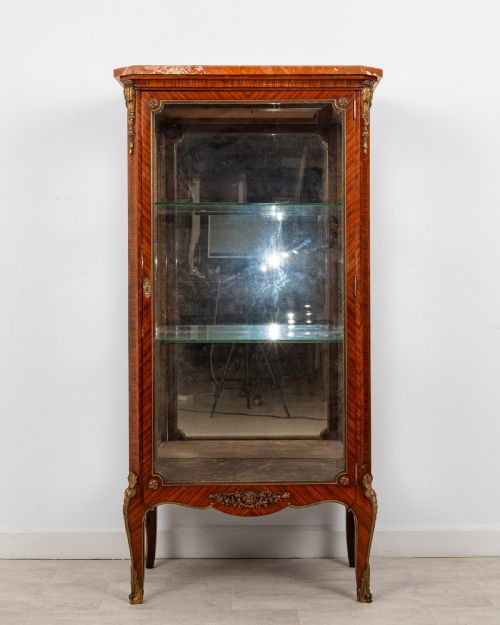
A rococo glass vitrine functions primarily as a display cabinet for decorative objects, porcelain, and bijouterie. These pieces emerge predominantly from nineteenth-century workshops inspired by Louis XV aesthetics and French chateau styles.
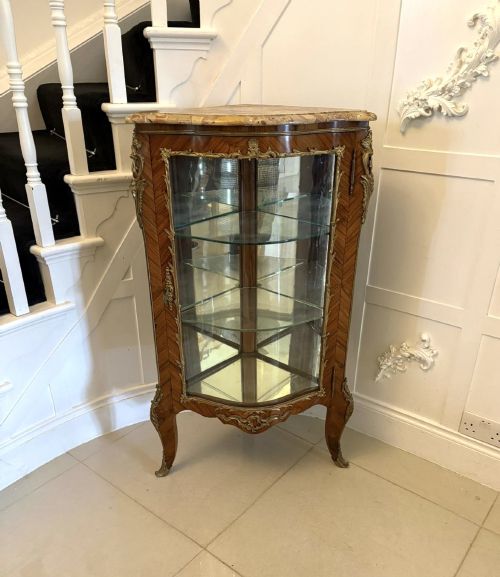
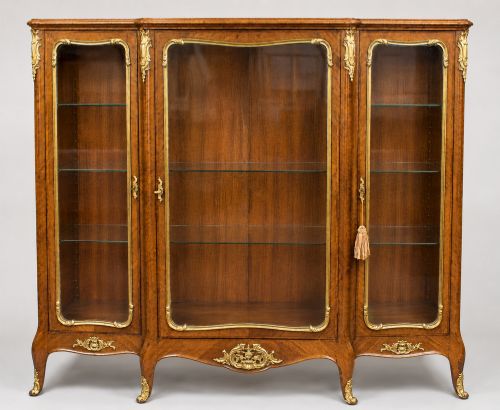
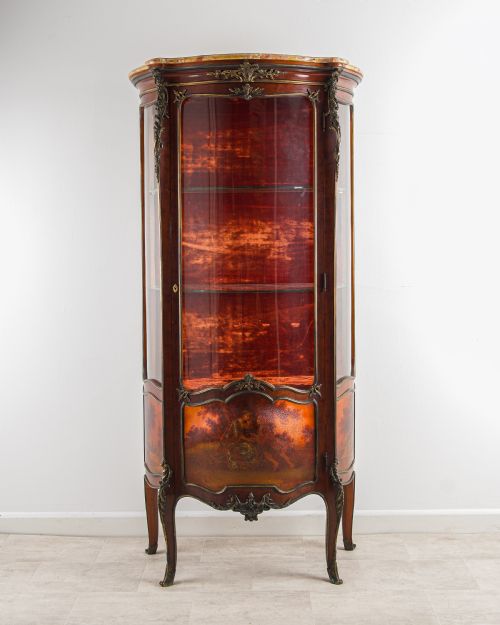
The selection here encompasses serpentine corner display cabinets, freestanding vitrines, and glazed bijouterie tables. Kingwood, mahogany, and walnut provide the primary timber foundations for these elaborately curved forms.
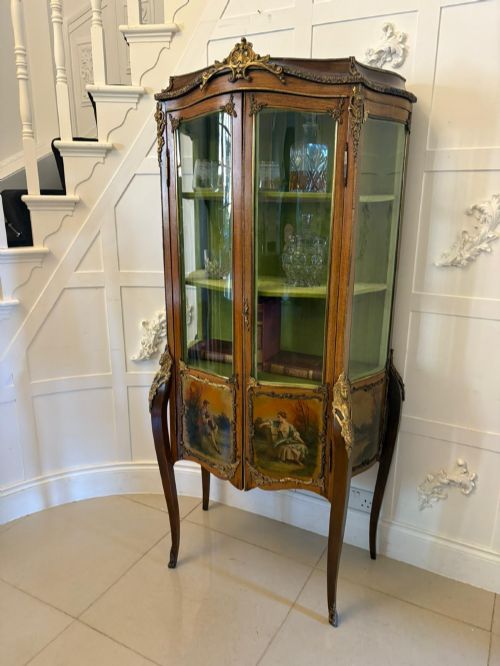
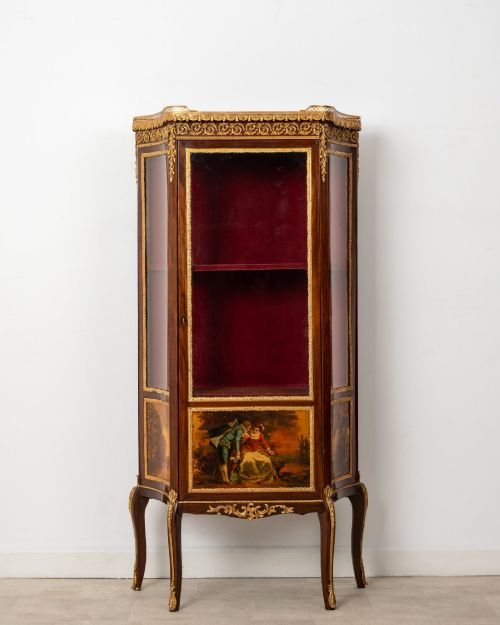
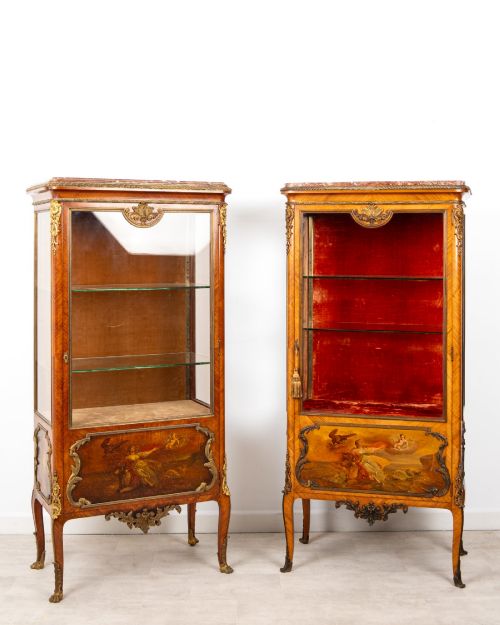
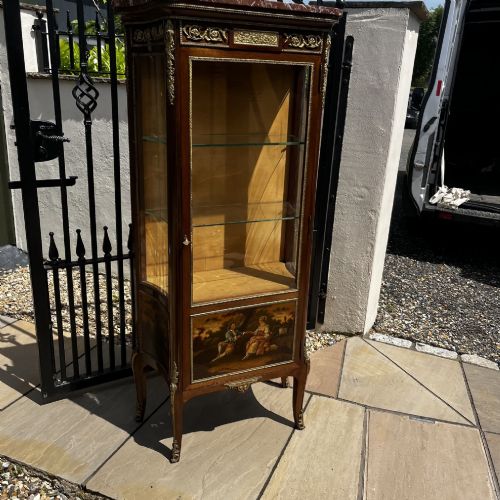
Makers frequently employed Vernis Martin painted panels alongside glazed sides to diffuse light across the displayed contents. The overall construction leans heavily on French rococo revival design principles developed during the Victorian era.
How They Were Made
Craftsmen built these cabinets using dense hardwoods such as kingwood, mahogany, and walnut, often applying parquetry and marquetry inlays to serpentine surfaces. Ormolu or gilt-bronze mounts decorate the corners, feet, and cornices, accentuating the organic curves of the revival style.
Glazed panels are fitted into doors and sides to maximise visibility, sometimes paired with lower painted panels executed in the Vernis Martin technique. Marble tops frequently complete the upper surface of kingwood and walnut carcases.
Rococo Glass Vitrine Retail Price Guide 2026
Typical asking prices for rococo glass vitrine among the pieces listed under this phrase on Sellingantiques today, from the lower quarter to the upper quarter. They describe what is for sale here now, not the wider market.
Vernis Martin painted panels appear frequently alongside Louis XV revival styles.
What Varies in Quality
The distinction between standard examples and top-tier pieces rests on the crispness of the ormolu mounts and the intricacy of the timber work. Heavier, finely chased gilt-bronze fittings and precise marquetry patterns separate master workshops from routine production.
Painted panels show variation in hand-painted detail and depth, particularly on Vernis Martin surfaces where figurative scenes demand skilled brushwork. The integration of serpentine marble tops and matched wood veneers further elevates the construction standard.
François Linke·Gouffel
The Rococo Glass Vitrine Glossary
- Vitrine
- A glass-fronted cabinet designed for displaying fine objects and porcelain. These pieces often feature glazed sides to admit maximum light.
- Ormolu
- Gilded bronze used for decorative mounts on furniture. The technique involves applying finely ground gold mercury amalgam to bronze.
- Vernis Martin
- A simulated Japanese lacquer technique developed by the Martin brothers in eighteenth-century France. Cabinet makers revived the process on panels depicting pastoral scenes.
- Serpentine
- A furniture front or side shaped with a double-curved line, convex in the centre and concave at the sides. This contour defines much of the revival cabinetry.
- Bijouterie Table
- A glazed display table with legs, created for holding small jewels and trinkets at tabletop height. They share the gilt mounts and fine timbers of larger cabinets.
Rococo Glass Vitrine: Frequently Asked Questions
What fits inside a rococo glass vitrine?
Owners typically place porcelain plaques, small sculptures, and delicate glassware inside these cabinets to catch the light through the glazed panels.
The glass shelves and mirrored backs amplify the visibility of collected objects without crowding the interior space.
How do I identify a nineteenth-century piece?
Nineteenth-century revival pieces display characteristic French Louis XV styling, featuring ormolu mounts, kingwood veneers, and serpentine front construction.
Examining the timber joints and the weight of the gilt-bronze mounts helps distinguish these nineteenth-century interpretations from later reproductions.
Where should I place a display cabinet?
These cabinets suit drawing rooms or formal reception spaces where natural light enhances the glazed sides and painted panels.
Keeping them away from direct sunlight protects the timber veneers and any delicate Vernis Martin decoration on the lower sections.
What is the difference between a vitrine and a bijouterie table?
A vitrine stands upright as a tall cabinet with multiple shelves, whereas a bijouterie table sits lower on legs with a shallow glazed top.
Both utilise ormolu mounts and fine woods, but they serve different display heights for smaller or larger decorative items.