

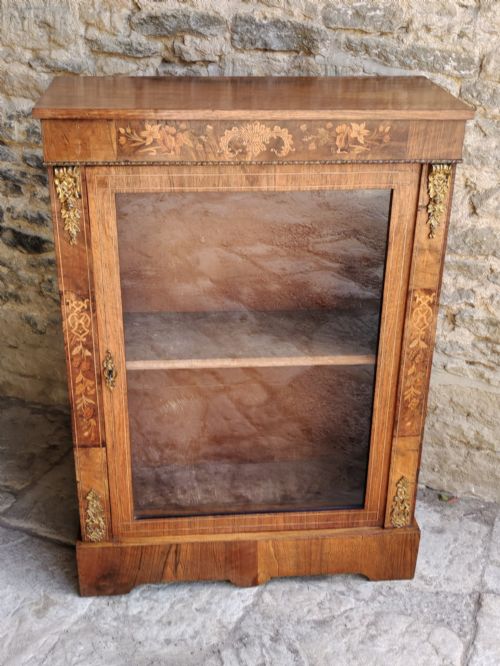
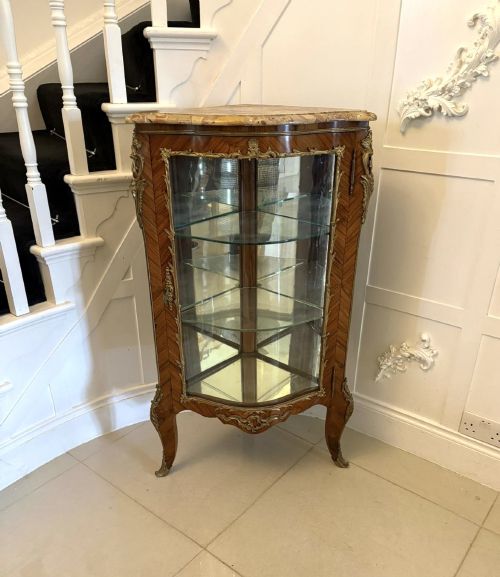
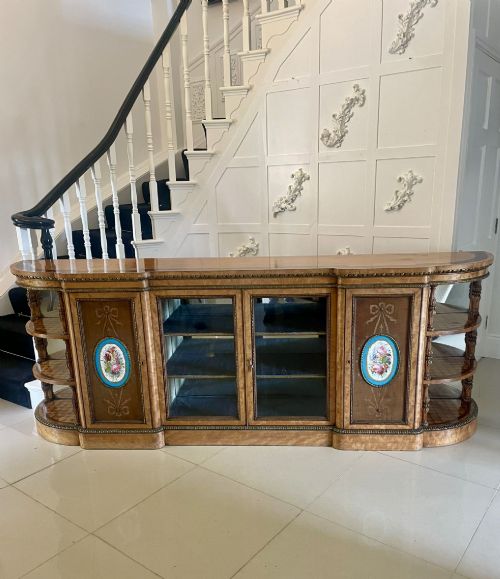
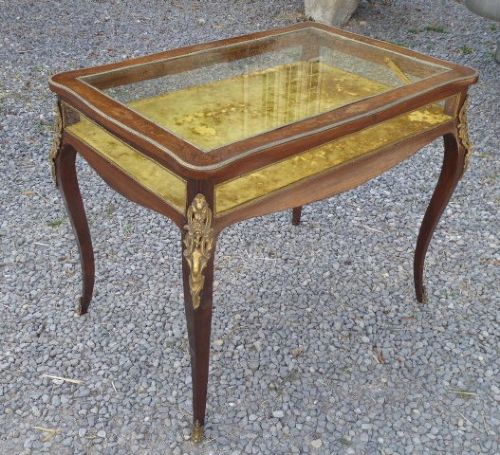
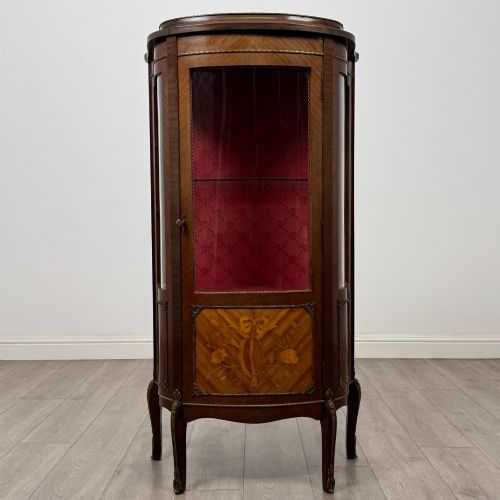
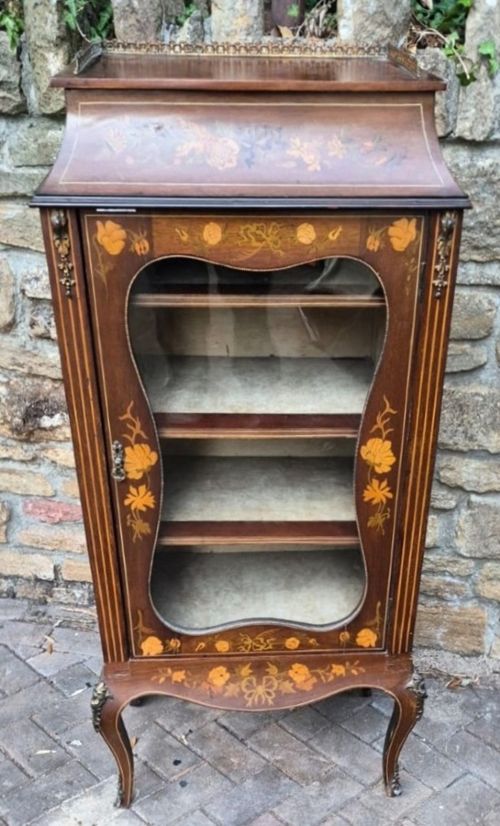
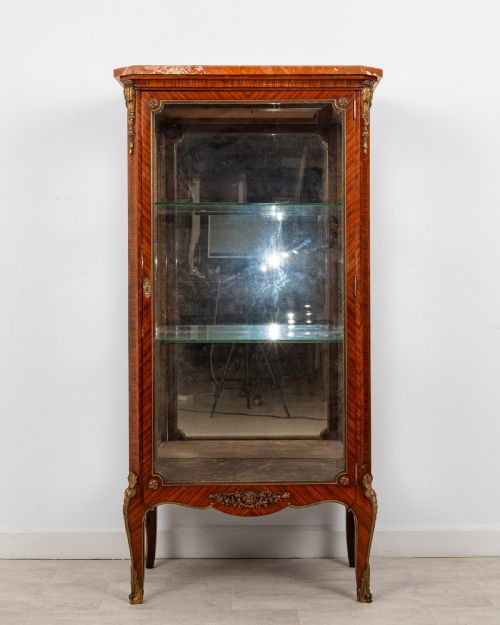
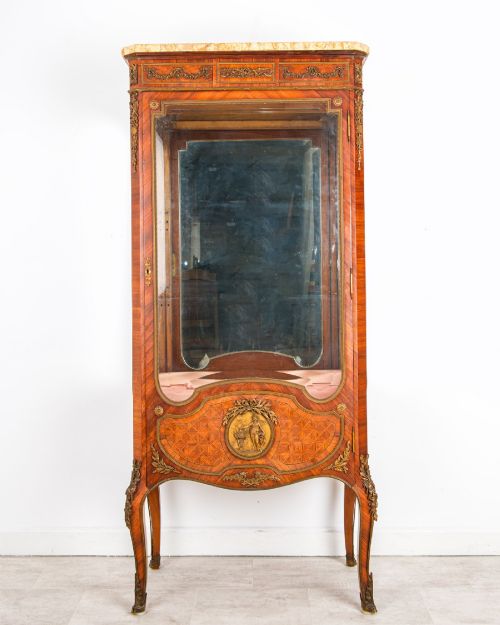


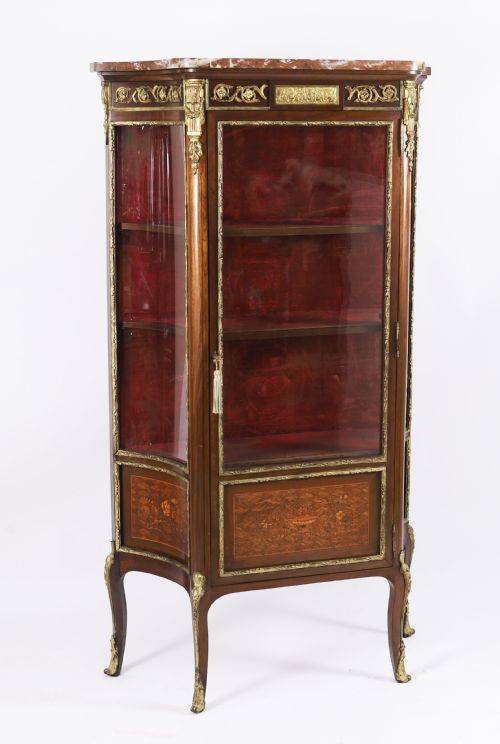

French Marquetry Vitrine
A french marquetry vitrine brings together intricate floral wood-inlays, gilt bronze mounts and glass display shelves to showcase treasured possessions in style.
French Marquetry Vitrine
A french marquetry vitrine is a glazed display cabinet designed to exhibit porcelain, silver and small collectibles behind glass panes. When searching for this phrase, buyers encounter glazed standing cabinets, corner cupboards and low pier units intended for formal reception rooms. The pieces recorded here span the nineteenth century and the Edwardian era, with a strong representation of Louis XV revival forms.
The construction typically relies on a carcass of oak or pine that supports decorative exterior veneers. These cabinets often feature curved serpentine fronts, bombé profiles or straight glazed doors flanked by gilt metal mounts. Many examples incorporate marble slabs to the upper surface, combining display utility with a solid stone top.
Materials and construction
Cabinet makers applied fine veneers of kingwood, walnut, mahogany and satinwood over sturdy timber frames to create patterned grain effects. Marquetry designs were hand-cut from contrasting wood species, sometimes combined with brass and tortoiseshell inlay known as Boulle work, then set flush into the surface. Vernis Martin painted panels also appear, depicting pastoral scenes alongside the floral wood-inlays.
Gilded bronze mounts, termed ormolu, were cast and chased to highlight the corners, feet and glass frames of each cabinet. Glass panels were hand-blown or cylinder-drawn, showing subtle surface imperfections characteristic of the period. Interior shelves of wood or velvet-lined board completed the structure, supported by brass fixing brackets.
French Marquetry Vitrine Retail Price Guide 2026
Typical asking prices for french marquetry vitrine among the pieces listed under this phrase on Sellingantiques today, from the lower quarter to the upper quarter. They describe what is for sale here now, not the wider market.
Materials recorded across the archive include kingwood, walnut, mahogany, satinwood, ormolu and marble.
Distinctions in quality
The distinction between standard commercial output and superior craftsmanship lies in the depth of the marquetry and the crispness of the bronze mounts. Finer pieces display intricate, multi-toned floral inlays that utilise natural grain shading rather than drawn ink lines to create dimension. The weight and hand-chasing of the ormolu mounts also indicate workshop standard, with better examples showing sharp relief and secure fixing.
Structural integrity and timber selection further separate cabinet tiers. Superior specimens utilise dense tropical hardwoods like kingwood throughout the carcass construction, maintaining alignment across serpentine and bombé forms over decades. Original marble tops, well-fitted doors and intact glass panes preserve the integrity of the piece.
François Linke·G. Durand
The French Marquetry Vitrine Glossary
- Marquetry
- A decorative technique of applying fine wood veneers to a structure to form pictorial or geometric patterns. Artisans cut various timber species to fit together like a puzzle before gluing them to the carcass.
- Ormolu
- Gilded bronze used for decorative mounts and furniture trim. The alloy is cast and hand-chased to produce sharp architectural and ornamental details.
- Vitrine
- A glass-fronted display cabinet or case designed to exhibit objects. These pieces often feature glazed sides as well as doors to maximise light exposure.
- Boulle
- A style of marquetry using contrasting brass and tortoiseshell inlay developed in France. The technique produces striking metallic patterns against a dark background.
- Bombe
- A swelling, outward-curving furniture profile popular in continental cabinet making. This shape requires advanced woodworking skill to veneer accurately.
French Marquetry Vitrine: Frequently Asked Questions
How do I identify a true period piece?
Examine the timber construction behind the veneer and check for hand-cut dovetails on internal drawers. Period cabinets show appropriate wear patterns on the feet and use traditional fixings like cast brass screws.
The quality of the ormolu casting and the depth of the wood patination offer further guidance. Modern reproductions often lack the subtle tonal variations found in nineteenth-century veneers.
What rooms suit a corner vitrine?
Corner vitrines fit effectively into underutilised dining room or drawing room angles where standard rectangular cabinets obstruct walkways. Their glass panels reflect natural light into darker corners while providing secure display space.
These units help balance room layouts by softening rigid right angles with curved glass doors and gilt bronze mounts.
How should I clean the marquetry?
Dust the wood surfaces regularly with a soft, dry lint-free cloth to prevent particle accumulation in the veneer joints. Avoid modern silicone sprays or abrasive household cleaners that can damage historic polishes.
Apply a microcrystalline wax sparingly once or twice a year to nourish the timber and protect the delicate inlay work from atmospheric moisture changes.