

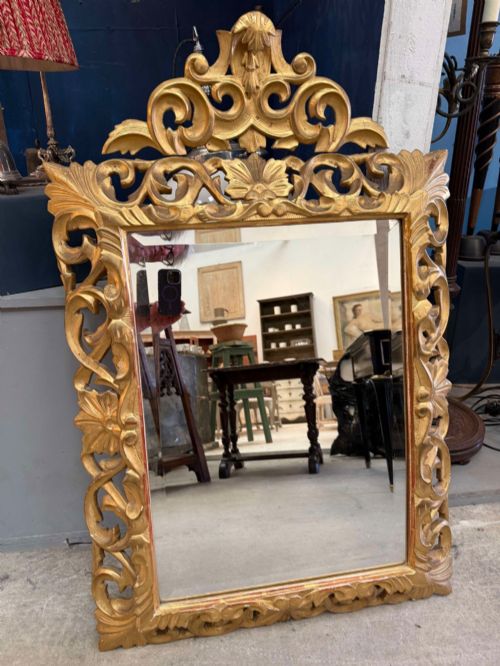
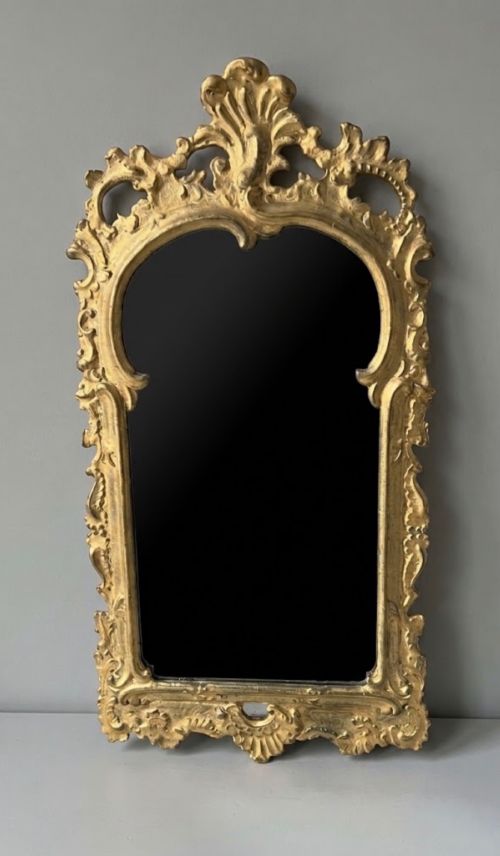
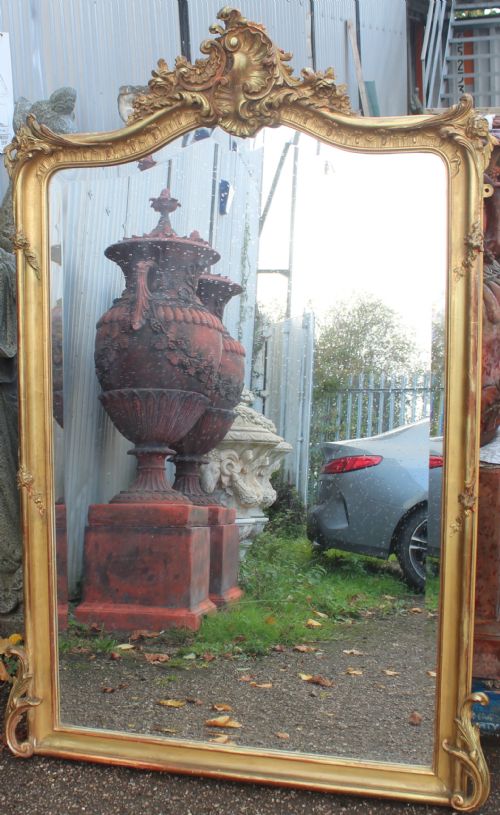

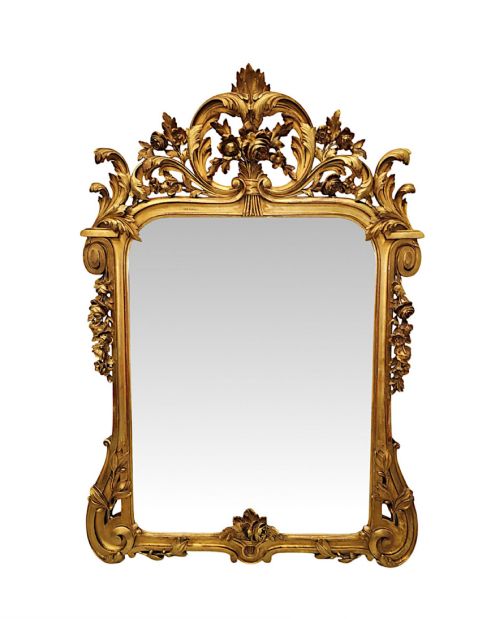
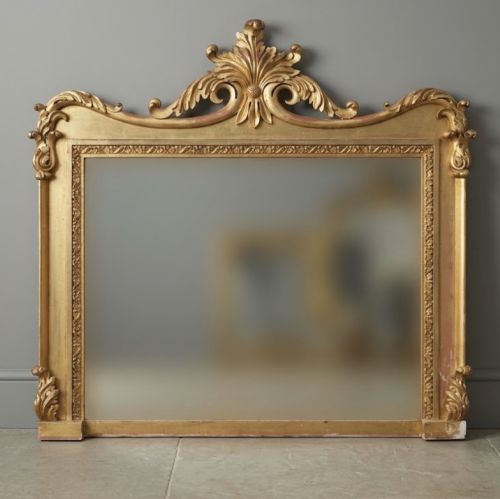


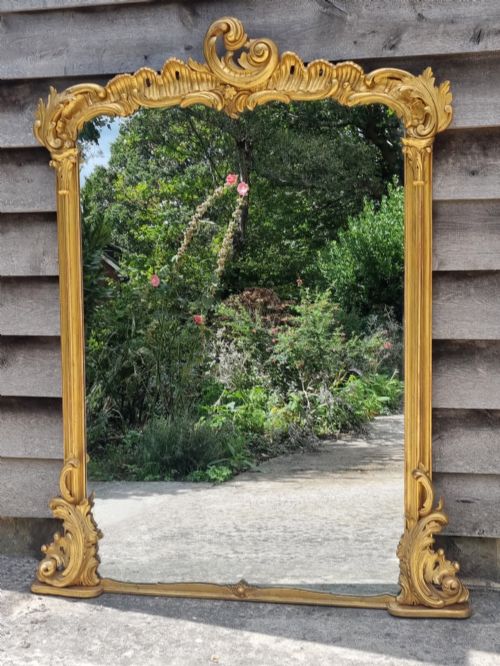
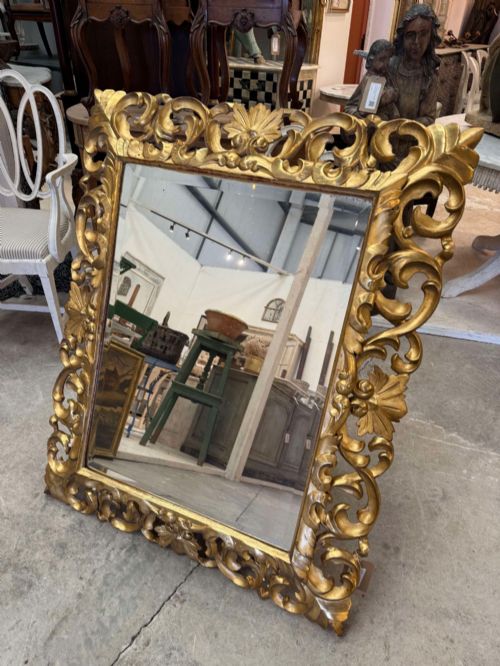
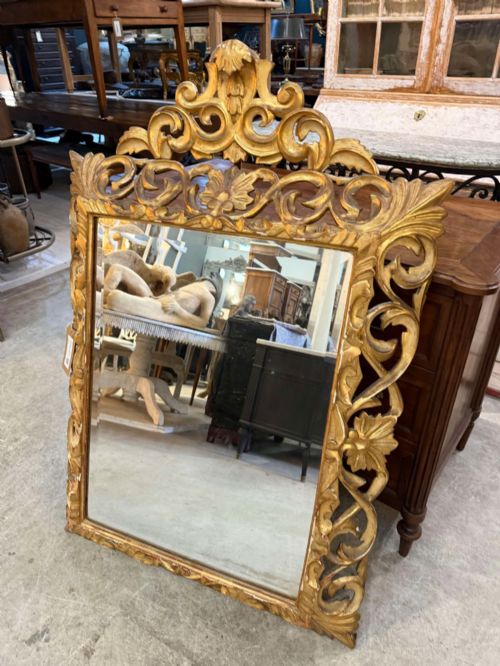
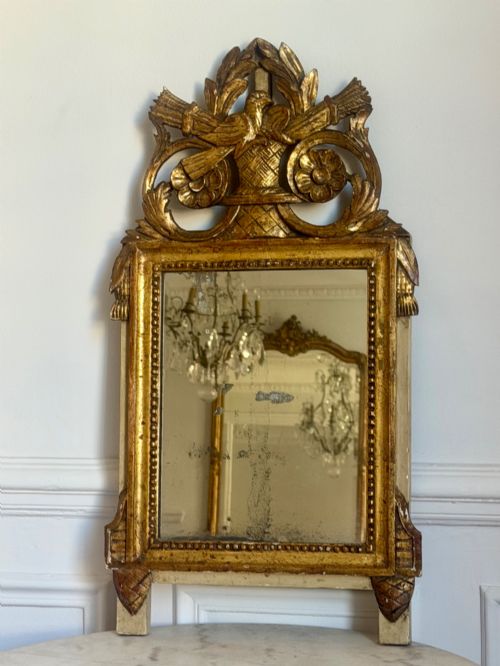
Rococo Giltwood Wall Mirror
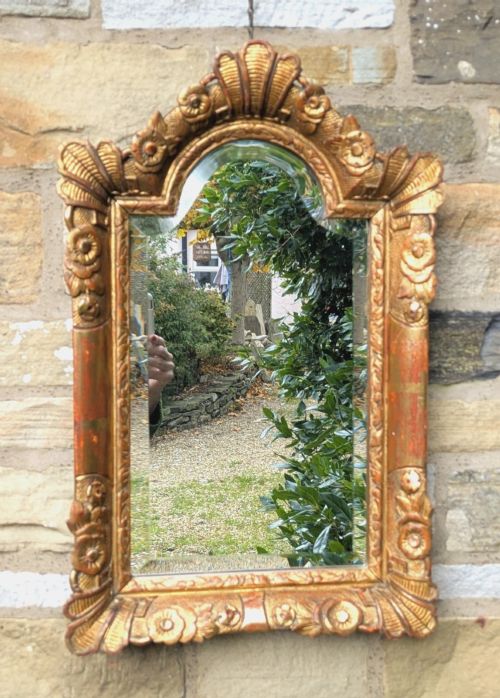
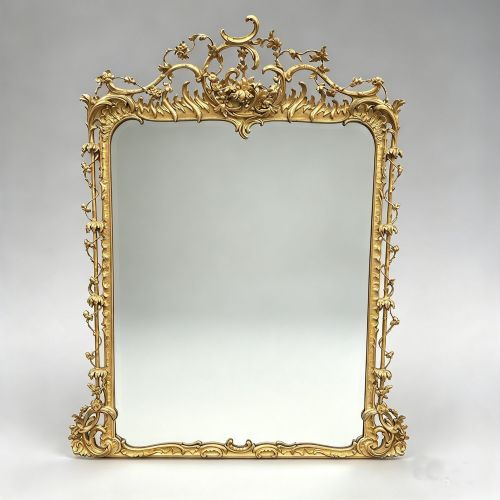
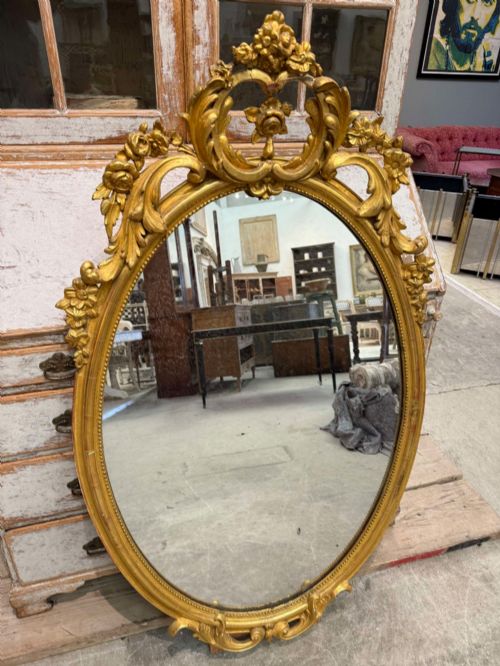
A rococo giltwood wall mirror brings fluid, asymmetric carvings and rich metallic warmth into a room.
Rococo Giltwood Wall Mirror
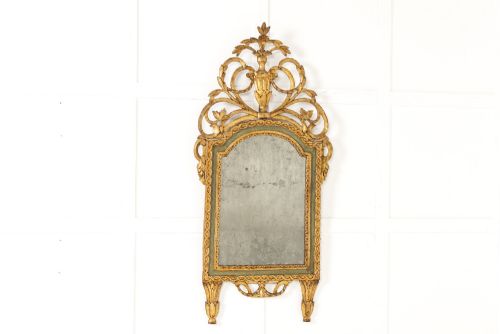
A rococo giltwood wall mirror combines organic, asymmetric scrolls, C-scrolls, and plant motifs with a gold-leafed surface.
The pieces appearing here span from the 18th century through the Victorian era and into the 20th century, encompassing French, Italian, and English origins.
Forms range from grand overmantels and tall leaner mirrors to girandoles, console pairs, and compact wall brackets.
How they were made
Carved timber provides the foundational structure for these frames, often supplemented with moulded composition or gesso to build up intricate relief details.
Gold leaf or silver-gilt is applied over a prepared bole layer to achieve the characteristic metallic sheen, sometimes alongside painted highlights or mercury glass plates.
Rococo Giltwood Wall Mirror Retail Price Guide 2026
Typical asking prices for rococo giltwood wall mirror among the pieces listed under this phrase on Sellingantiques today, from the lower quarter to the upper quarter. They describe what is for sale here now, not the wider market.
What varies in quality
The depth and crispness of the hand-carving distinguish finer examples from simpler moulded pieces, with deep undercutting showing greater artisan skill.
The preservation of the original gilding and the clarity or authenticity of the mirror plate, such as period mercury glass, define the character of an individual piece.
The Rococo Giltwood Wall Mirror Glossary
- Giltwood
- Wood that has been coated with gold leaf. This finish creates a warm, reflective metallic surface.
- Gesso
- A plaster-like mixture applied to wood frames. It is carved and smoothed before gilding.
- Overmantel
- A large mirror designed to hang above a fireplace mantel. These pieces often anchor a room's main reception space.
- Girandole
- A branched wall mirror holding candle sconces. The candle arms multiply the light within the space.
- Mercury glass
- An early form of double-walled glass with a reflective silvering solution inside. It yields a characteristic speckled appearance.
Rococo Giltwood Wall Mirror: Frequently Asked Questions
Where should I hang an overmantel mirror?
These large pieces fit naturally above a drawing room fireplace to draw the eye upward and reflect natural light. They also function well on main hallway walls as statement furnishings.
Ensure the wall structure supports the weight of the timber and gesso frame before mounting securely at eye level.
How do I care for antique giltwood?
Dust the intricate carvings gently with a soft, dry brush to prevent dirt buildup in the recessed scrolls. Avoid commercial cleaning liquids, as moisture damages fragile gold leaf and underlying gesso.
Keep the mirror away from direct sunlight and damp conditions to preserve the integrity of both the frame and the glass plate.
How do I distinguish 18th-century pieces from later revivals?
Examine the construction joints, the backing boards, and the wear patterns on the gold leaf. Eighteenth-century frames often show hand-wrought joinery and older mirror plates such as mercury glass.
Nineteenth-century revival examples utilise similar carved techniques but typically feature machine-sawn timbers and later plate glass.