






Rococo Giltwood Armchair
A rococo giltwood armchair brings flamboyant curves and luminous gilded surfaces into a room, originating in continental salons and later revivals.
Rococo Giltwood Armchair
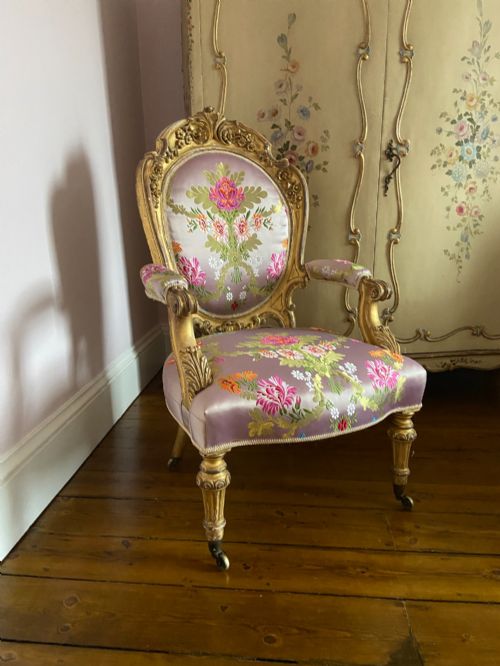
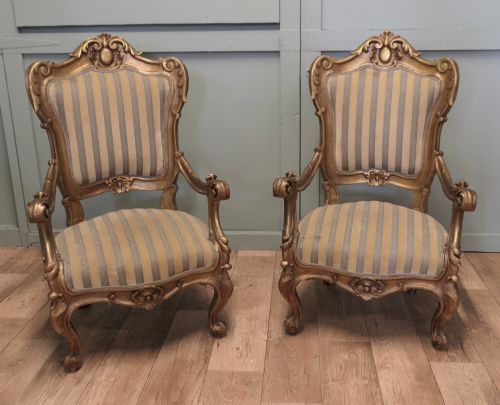
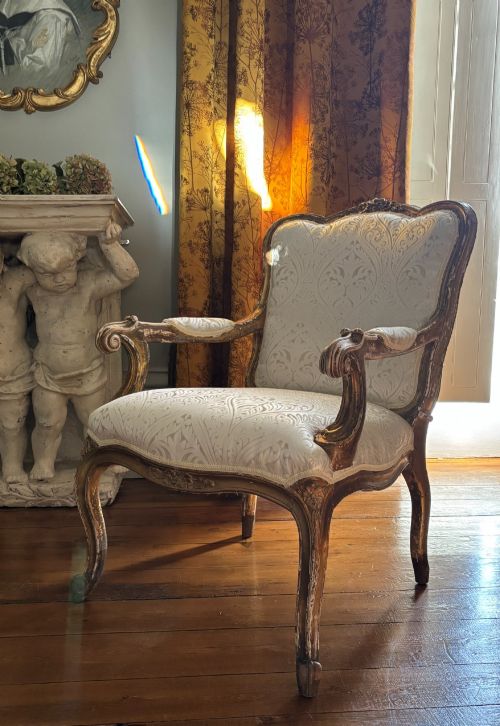
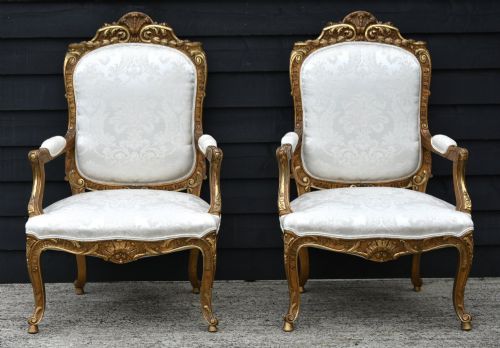
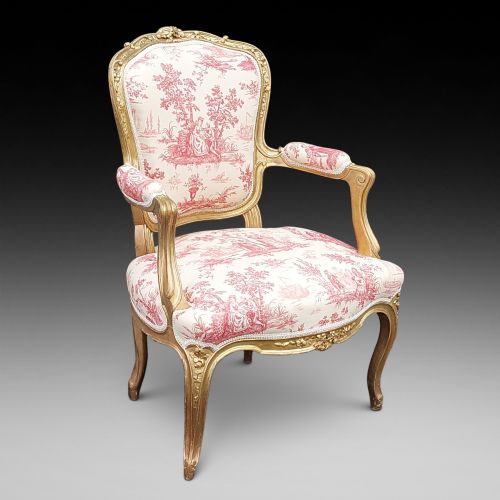
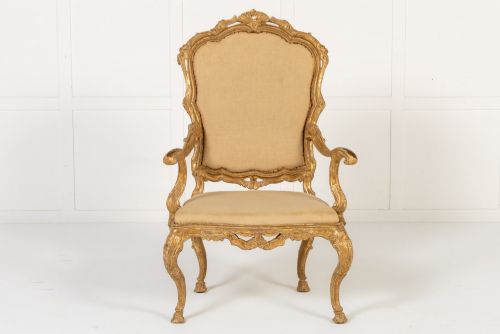
A rococo giltwood armchair represents a grand seating form defined by exuberant carved decoration, sweeping scroll arms, and an exposed gilded wooden frame. Buyers searching this phrase encounter examples stretching from authentic eighteenth-century French and Italian periods through to nineteenth-century revivals like Napoleon III and Louis XV styles.
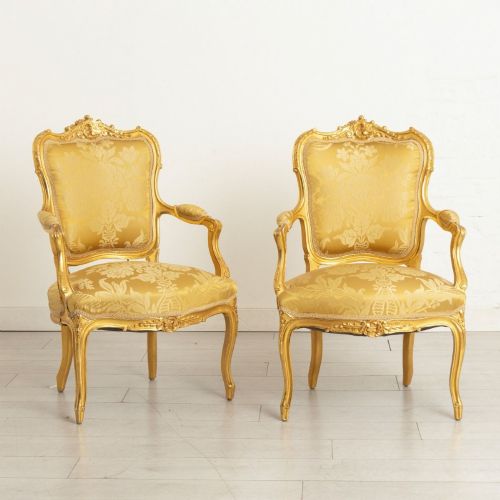
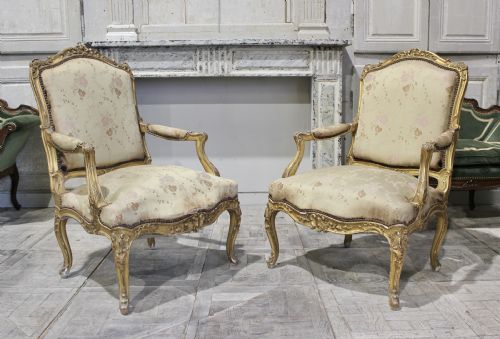
The selection here encompasses individual open armchairs, matched pairs, and larger salon suites featuring upholstered seats and backs. Beech, beechwood, and walnut form the structural carcasses beneath layers of applied gold leaf or silver gilt.
Most pieces date from the nineteenth century, reflecting the fervent Victorian and continental appetite for Louis XV and Regence revivalism. These chairs function equally well as standalone decorative statements or as functional seating in a formal drawing room.
How they were made
Carvers shaped native hardwoods like beech and walnut by hand, cutting deep asymmetrical motifs, acanthus leaves, and floral cartouches directly into the timber frame. Joinery relied on traditional mortise and tenon construction to support the dynamic, curving lines characteristic of the style.
Workers applied thin sheets of metal leaf over a prepared gesso and bole ground to achieve the characteristic gilded finish. Upholstery followed using traditional stuffing techniques, with modern restorations frequently employing silk damask, tapestry, or patterned silk fabrics.
Rococo Giltwood Armchair Retail Price Guide 2026
Typical asking prices for rococo giltwood armchair among the pieces listed under this phrase on Sellingantiques today, from the lower quarter to the upper quarter. They describe what is for sale here now, not the wider market.
Periods represented span from eighteenth-century pieces through nineteenth-century revivals up to twentieth-century dining chairs.
What varies in quality
The depth, crispness, and vitality of the wood carving separate superior seating from simpler production. Master carvers created organic relief work that feels integrated into the structural frame rather than applied as an afterthought.
The integrity and application of the gilding dictate visual richness, where burnished gold leaf reflects light with a warm glow compared to flat modern metallic paints. Furthermore, the originality of the wooden frame and the harmony of the proportion determine the piece's standing among collectors.
Blaise Maucuy
The Rococo Giltwood Armchair Glossary
- Giltwood
- Wood covered with thin sheets of gold leaf applied over a prepared base layer. This finish provides a bright, reflective surface characteristic of formal antique furniture.
- Bergere
- An enclosed armchair with upholstered sides and a padded back, built upon a wooden frame. These seats offer a deep, comfortable proportion.
- Duchesse brisee
- A multi-part chaise longue comprising an armchair and matching footstool, or two chair units joined by a stool. This form allows the user to recline fully.
- Regence
- A transitional stylistic period bridging seventeenth-century baroque and eighteenth-century rococo design. It is marked by lighter proportions and early asymmetrical curves.
Rococo Giltwood Armchair: Frequently Asked Questions
What is a rococo giltwood armchair?
A rococo giltwood armchair is a formal seat featuring an exposed carved wooden frame covered in gold leaf, defined by curving lines and ornate natural motifs.
Originating in eighteenth-century European design, these chairs prioritize decorative flair alongside comfortable upholstered seating for salons and drawing rooms.
How do I distinguish eighteenth-century pieces from later revivals?
Original eighteenth-century chairs exhibit hand-tooling marks, period timber ageing, and construction methods specific to early cabinet-making traditions.
Nineteenth-century revival pieces, such as those from the Napoleon III period, often use machine assistance while faithfully copying earlier French and Italian court styles.
Where were these armchairs placed historically?
These seating pieces occupied grand salons, withdrawing rooms, and bedchambers in French chateaux and Italian palazzos. They served both as functional seating for high society and as visual symbols of wealth and taste.
Pairs and full salon suites were arranged symmetrically to furnish large entertaining spaces.
How should I care for gilded wooden frames?
Giltwood requires gentle maintenance to protect the delicate gold leaf layer from moisture, direct sunlight, and abrasive cleaning materials. Dusting with a soft, dry brush preserves the original metallic finish without wearing away the gesso base.
Upholstery upkeep depends on the fabric used, requiring professional cleaning for delicate silk damasks and tapestries.