



Rococo Gilt Wall Clock
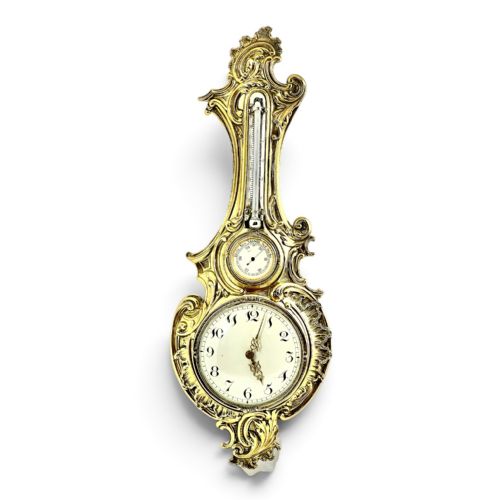
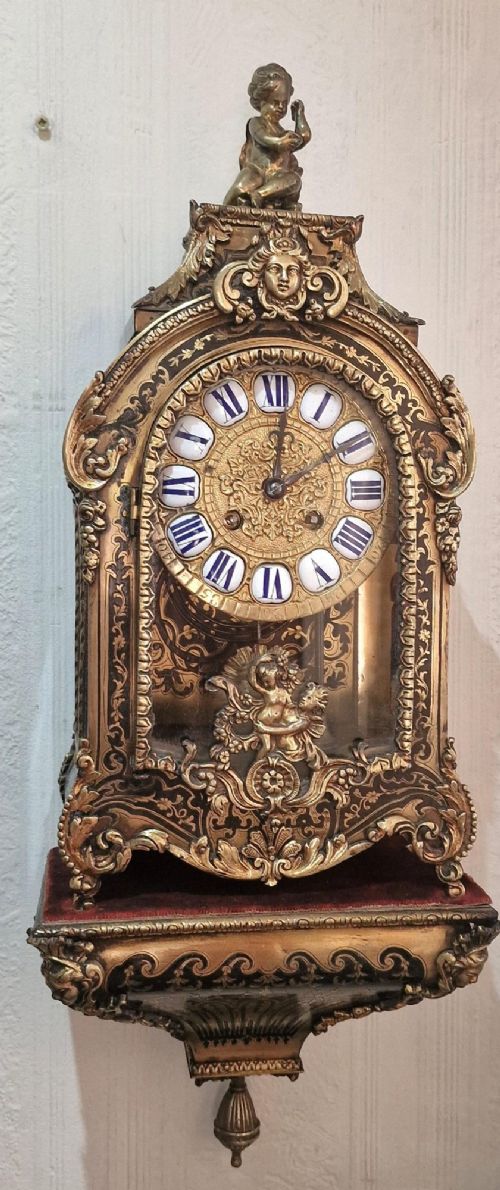
A rococo gilt wall clock brings sculptural French flair and ornate brass work into a room, making it a dramatic centrepiece for any traditional interior.

Rococo Gilt Wall Clock
A rococo gilt wall clock typically manifests as a cartel clock or a carved wooden timepiece designed to hang directly on a wall rather than rest on a mantel. The examples appearing on this page span from the eighteenth century through to the Victorian era, embracing both French rococo revival designs and Georgian aesthetics.
Most pieces you encounter take the form of French or English cartel clocks, alongside Scandinavian giltwood alternatives and Swiss Neuchatel examples. These items combine timekeeping with lavish wall decoration, utilising asymmetrical scrolling forms and elaborate metal or wooden framing.
Materials and construction methods
The construction relies heavily on cast or hand-carved foundations using materials such as ormolu, gilt bronze, brass, and giltwood. Many of the French and English pieces employ fire-gilt bronze to achieve a lasting metallic lustre over the brass base.
Makers integrated white enamel dials, protective glass covers, and occasionally tortoiseshell inlay within intricate wooden carcase structures. The metalwork is shaped into signature rococo C-scrolls and foliage, whilst the movements incorporate precision brass gear trains.
Rococo Gilt Wall Clock Retail Price Guide 2026
Typical asking prices for rococo gilt wall clock among the pieces listed under this phrase on Sellingantiques today, from the lower quarter to the upper quarter. They describe what is for sale here now, not the wider market.
One persistent seller listed a plain metal clock five times in a single breath just to make sure you were paying attention.
Distinctions in quality and execution
The standard of a rococo gilt wall clock rests on the crispness of the chasing in the bronze or the depth of hand-carving in the giltwood. Finer pieces display sharply defined botanical motifs and robust cast mounts rather than soft, shallow detailing.
The sophistication of the clock movement also dictates the tier of the piece, with quarter-striking mechanisms and signed maker dials elevating the engineering alongside the cabinetwork.
Henri Marc of Paris·William Webster·Japy Freres·Raingo Freres
The Rococo Gilt Wall Clock Glossary
- Cartel clock
- A wall clock enclosed in an ornamental frame, typically made of gilt bronze, brass, or carved wood. These items mount directly to the wall without a separate bracket.
- Ormolu
- Gilded bronze, produced by applying a mercury and gold amalgam to a bronze object and heating it to drive off the mercury. This technique creates a rich, durable golden surface.
- Giltwood
- Timber, often carved gesso-coated wood, covered with a thin layer of gold leaf. It is commonly found on eighteenth-century and Scandinavian wall clock frames.
- Boulle
- A form of marquetry utilising tortoiseshell and brass inlay, named after the famous cabinetmaker André-Charles Boulle. It appears on select clock cases and matching wall brackets.
- Enamel dial
- A metallic clock face coated with fused glass powder and fired in a kiln to produce a smooth, white surface with painted numerals.
Rococo Gilt Wall Clock: Frequently Asked Questions
What is the difference between a cartel clock and a bracket clock?
A cartel clock is designed specifically to hang flat against a wall, integrated entirely within its decorative frame. A bracket clock sits upon its own matching wall shelf or rests on a flat surface.
Some antique examples come together as a matched pair of clock and wall bracket, though many wall clocks require no shelf at all.
How should I clean the gilt surface on my clock?
Dust the ornate scrolls and glass gently with a soft, dry brush to prevent the accumulation of dirt in the crevices of the cast metal or carved wood. Avoid using chemical metal polishes, which can strip away the original fire-gilt or gold leaf finish.
Are these clocks difficult to maintain and wind?
The mechanical movements require regular winding using the appropriate key and professional servicing every few years to keep the gear trains functioning properly. Mechanical clocks are sensitive to out-of-level hanging, so ensuring the clock is plumb on the wall is essential for accurate timekeeping.