



Rococo Figural Stand
These rococo figural stand pieces bring high drama to a room, combining sculpted human or allegorical forms with ornate, flowing scrollwork.
Rococo Figural Stand
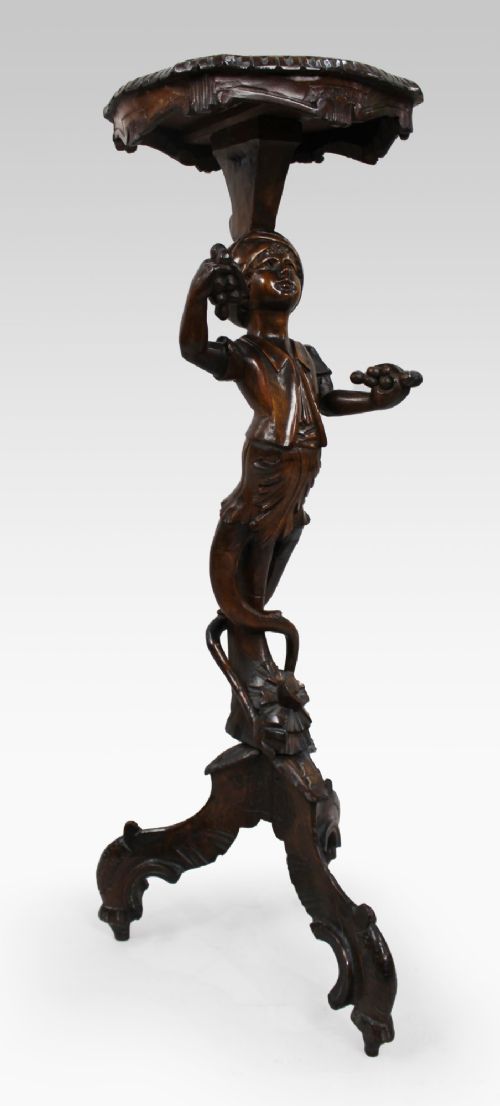
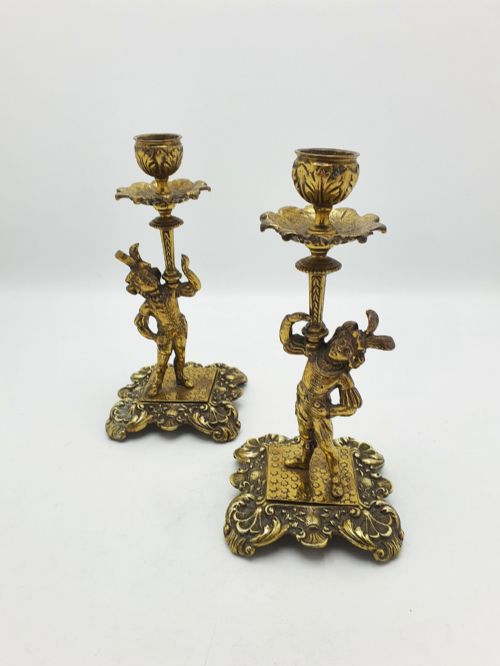
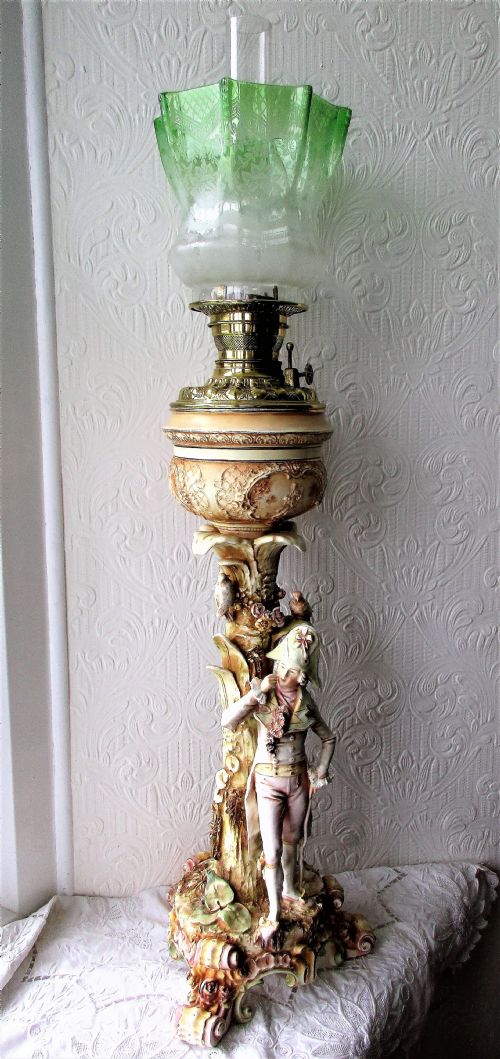
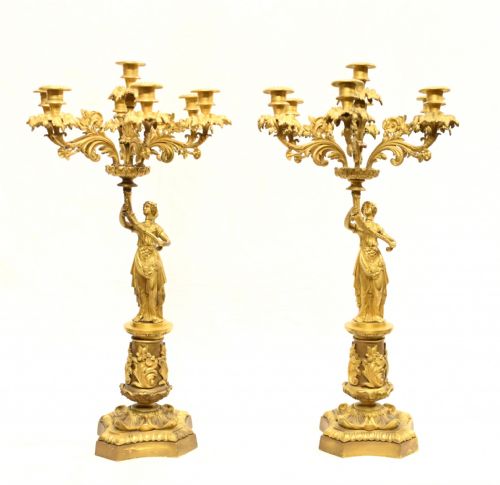
A rococo figural stand brings together sculpted human, putti, or allegorical figures with functional lighting or display architecture, appearing in forms such as candlesticks, candelabra, oil lamps, and pedestals. When searching for a rococo figural stand, a buyer encounters elaborate candle holders and centrepieces rather than simple flat supports, frequently taking the form of paired mantel ornaments. These pieces date predominantly from the nineteenth century, alongside earlier eighteenth-century examples, displaying the characteristic asymmetrical curves and naturalistic motifs of the style.
The decorative vocabulary draws heavily on revival aesthetics, including French rococo revival, Venetian baroque, and Victorian renaissance revival idioms. Figures range from mythological personifications like the seasons and continents to romanticized gardeners and putti perched upon scrolling bases. Most examples function simultaneously as sculpture and as practical furnishings for lighting or display, often featuring fitted marble bases or elaborate floral encrustations.
Materials and construction
Makers utilised a variety of media, pairing hard-paste porcelain and bone china with cast metals such as ormolu, gilt brass, bronze, and patinated cast iron. Porcelain figures were slip-cast or hand-modelled, then painted with enamels and highlighted with gold leaf before firing, while metal components involved detailed casting, chasing, and application of surface gilding or dark patination.
Support structures frequently incorporate carved walnut timber, cast bronze, or white marble plinths to anchor the weight of the central figures and candle branches. Multi-light candelabra often utilise modular construction, assembling distinct cast or modelled sections with threaded rods or pins to secure branches and drip pans.
Rococo Figural Stand Retail Price Guide 2026
Typical asking prices for rococo figural stand among the pieces listed under this phrase on Sellingantiques today, from the lower quarter to the upper quarter. They describe what is for sale here now, not the wider market.
Seventeenth-century gardeners manage to look remarkably unconcerned about dirt while hoisting gilded porcelain baskets.
Judging quality and execution
The integrity of the medium also dictates value, particularly in porcelain where firing cracks or heavy restoration detract from the sculptural form. Metal castings show distinction through sharp chased details and securely mounted constituent parts rather than hurried finishing and loose joints.
Derby Porcelain·Chelsea·Sitzendorf·Helena Wolfsohn·Triebner, ENS & Eckert Volkstedt
The Rococo Figural Stand Glossary
- Ormolu
- Gilded bronze, where finely ground gold is amalgamated with mercury and applied to a bronze base before heating to bond the finish. This technique creates a rich, warm golden lustre characteristic of luxury decorative objects.
- Hard-paste porcelain
- A dense, vitrified ceramic composed of kaolin and petuntse, fired at very high temperatures to produce a durable body. It resists scratching and takes enamels with great clarity.
- Putto
- A plump, naked male child figure, frequently winged, derived from classical art and heavily utilised in baroque and rococo decorative schemes. These figures often lounge around the base of candlesticks or support candle nozzles.
- Comport
- A decorative dish or bowl raised on a stem and foot, used as a centrepiece for fruit or sweetmeats on a dining table. They frequently incorporate figural porcelain supports.
- Blanc de chine
- White porcelain produced without coloured glaze, allowing the pure white body to highlight the subtle contours of modelled figures and drapery.
Rococo Figural Stand: Frequently Asked Questions
Were these always sold in pairs?
Many candelabra and candlesticks were manufactured as symmetrical pairs to flank a mirror, clock, or fireplace mantel. Single items do occasionally survive from larger sets or damaged groupings.
Matching pairs command stronger interest among collectors seeking balanced interior presentation. Minor variations in hand-painting often confirm authenticity in period pieces.
How do I distinguish eighteenth and nineteenth-century pieces?
Eighteenth-century examples typically display softer paste bodies, subtler polychrome enamel palettes, and less mechanical uniformity in their modelling. Marks on the base, where present, correspond to early factory periods.
Nineteenth-century revival pieces often utilise harder, whiter porcelain bodies, crisper press-moulding, and brighter, more saturated enamel colours. Heavier cast metal components also point toward Victorian manufacturing techniques.
Can these candelabra be wired for electricity?
Drilling or altering antique metal and porcelain candelabra destroys their original structural integrity and historical value. Most collectors prefer to retain them for wax candles or use them purely as sculptural display objects.
If lighting is essential, use non-permanent adapter sleeves or display them near modern lamps rather than modifying the antique components.