



Rococo Carved Settee
A rococo carved settee brings flowing lines and elaborate woodwork into a room, offering both seating and historic French or Victorian style.
Rococo Carved Settee
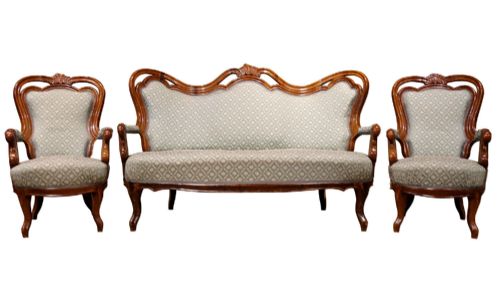
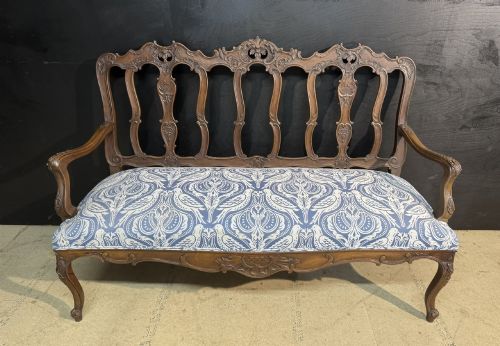
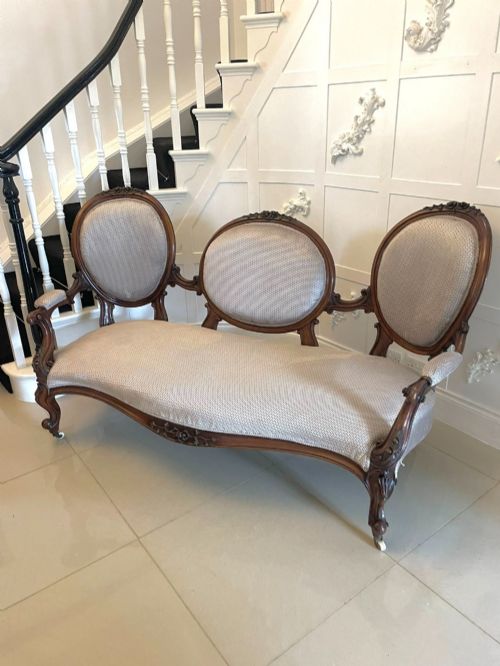
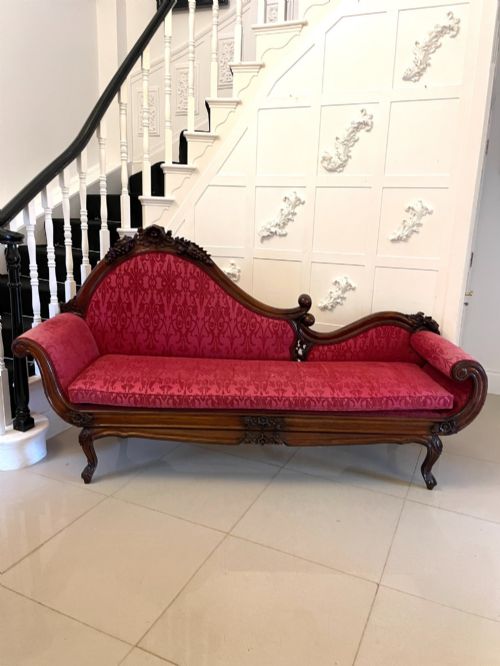
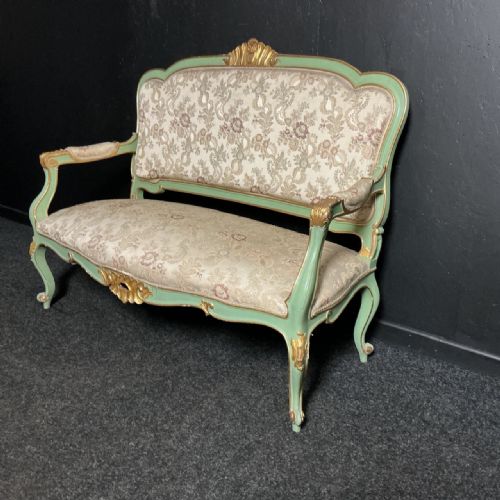
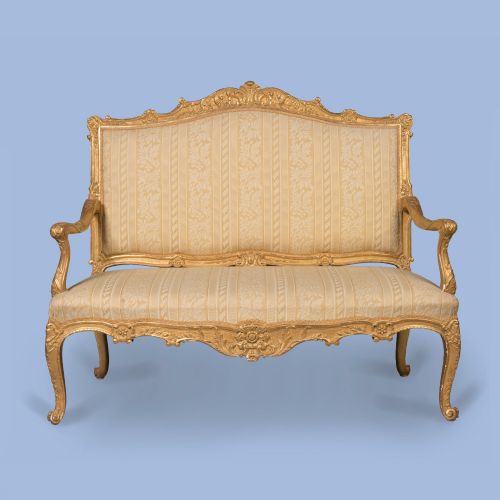
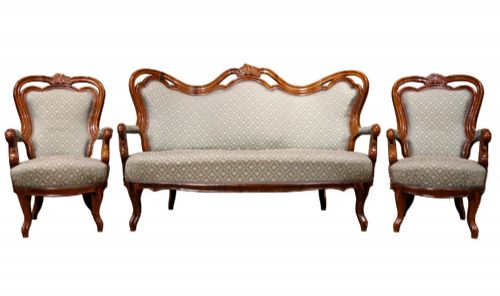
A rococo carved settee draws on the flowing, asymmetrical curves of the eighteenth century, though most examples encountered here date from the nineteenth century and later revival periods. These pieces take various forms, including French canapés, boudoir settees, three-piece salon suites, and mahogany or walnut sofas.
The selection ranges from Victorian walnut framed items to Continental giltwood pieces executed in the Louis XV manner. Buyers frequently encounter walnut and mahogany frames paired with cane, fabric, or silk upholstery.
Origin points span English, French, Italian, and German workshops, reflecting a widespread nineteenth-century enthusiasm for revival styles. Pieces appear as standalone couches or as parts of larger seating suites alongside matching armchairs.
How they were made
Frames rely principally on timber such as walnut, mahogany, rosewood, and giltwood, carved by hand with floral and scroll motifs typical of the rococo taste. Cabinetmakers shaped the structural wood to achieve the characteristic cabriole legs and serpentine rails.
Upholstery methods involve traditional stuffing techniques applied to cane, silk, velvet, and various textiles. Painted and polychrome finishes also appear on specific Continental frames, alongside original gilt surfaces.
Listings feature eighteenth-century pieces alongside nineteenth-century Victorian and revival works in walnut, mahogany, and giltwood.
What varies in quality
The depth and crispness of the wood carving distinguish standard production from exceptional pieces. Sharp, undercut floral details on walnut and mahogany frames show the hand of a skilled carver rather than mechanical replication.
Proportion and structural integrity separate fine salon furniture from heavier regional items. Balanced curves, well-fitted joinery, and the retention of original gilt or painted surfaces mark the upper tier of surviving pieces.
Morison and Co
The Rococo Carved Settee Glossary
- Canapé
- An upholstered French sofa or settee featuring an exposed wooden frame. These pieces typically display carved rails and cabriole legs.
- Cabriole leg
- A furniture leg that curves outward and then tapers inward to a foot. This form is common on rococo revival seating.
- Bergere
- An enclosed upholstered armchair or settee with wooden frames. Sides are frequently filled with cane or upholstery.
- Giltwood
- Wood that has been coated with gold leaf or gilt paint. This finish appears frequently on French revival salon pieces.
- Salon suite
- A matched set of seating furniture, usually comprising a settee and matching armchairs. These suites were designed for formal reception rooms.
Rococo Carved Settee: Frequently Asked Questions
How do I place a rococo settee in a modern room?
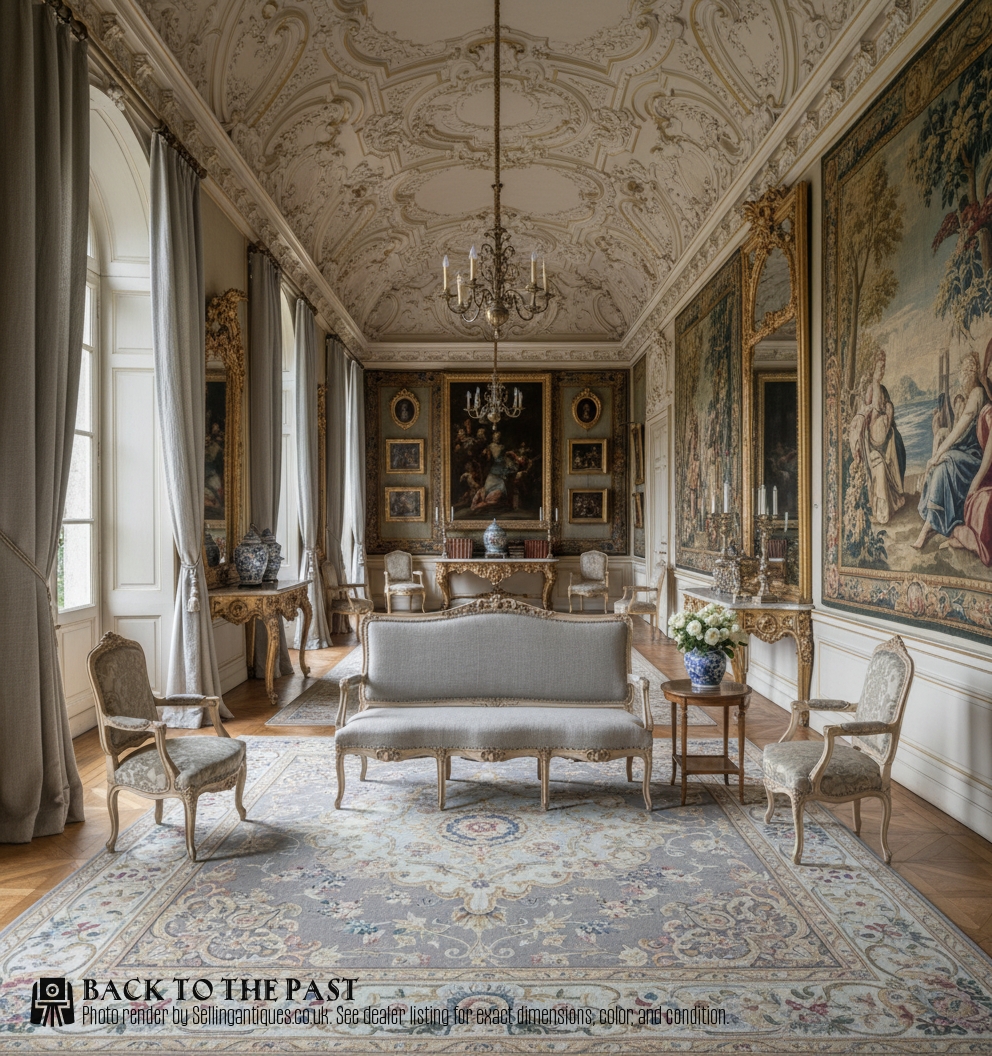
These settees work well as focal points in living rooms or bedrooms where their curved woodwork can be appreciated. Pair them with neutral walls to let the carved walnut or giltwood frame stand out.
Ensure there is enough clear floor space around the piece so the cabriole legs and serpentine lines are not crowded by other furniture.
What is the difference between a settee and a canapé?
A settee is a general term for a wide, upholstered seat for multiple people, often of English or Victorian origin. A canapé specifically denotes a French-style sofa with an exposed carved wooden frame.
Both types share rococo revival characteristics, but French canapés tend to feature lighter frames and more pronounced floral cresting.
Are these settees comfortable for daily use?
Nineteenth-century revival settees were built for formal entertaining rather than lounging, so the seats are typically firm and upright. Upholstery support relies on traditional webbing and springs which may feel different from modern sofas.
Adding small cushions can improve comfort while preserving the historic character of the piece.
How can I tell an 18th-century piece from a 19th-century revival?
Examine the wood beneath the upholstery and the style of the carving. Most pieces found on the market date from the nineteenth-century revival periods, showing machine assistance or nineteenth-century tool marks.
Eighteenth-century examples feature distinct timber ageing, hand-cut joinery, and patination specific to earlier European workshops.