


Rococo Carved Appliques
Rococo carved appliques bring dynamic scrolls and asymmetrical movement to a wall, offering rich ornamental detail derived from 18th-century forms.
Rococo Carved Appliques
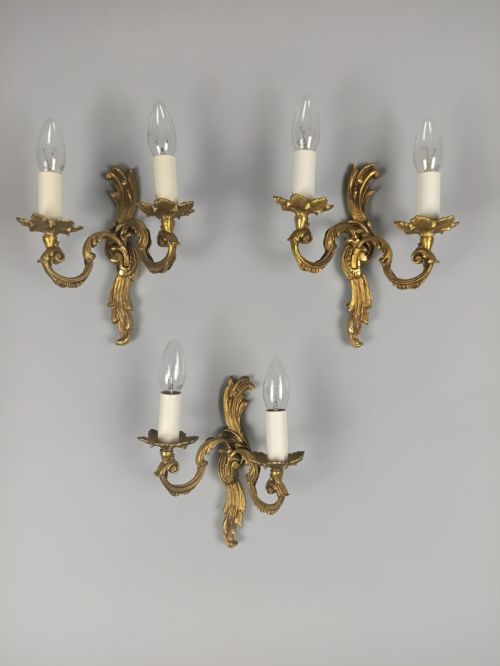
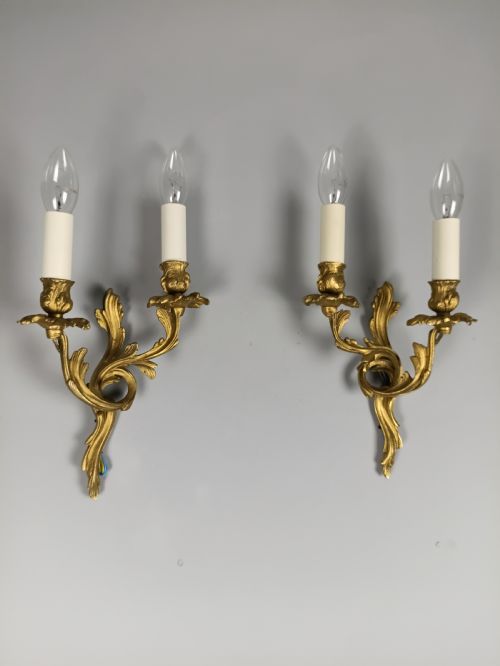
When searching for rococo carved appliques, buyers encounter architectural fragments, wall brackets, wall lights, and wall sconces designed to mount directly onto vertical surfaces. These items function primarily as decorative wall fittings that incorporate scrolling foliage and organic motifs characteristic of the style.
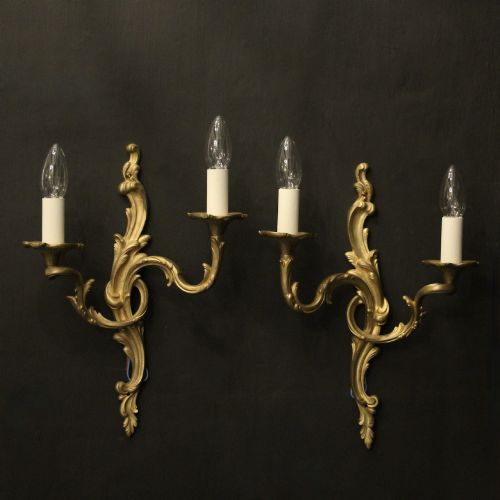
The selections available here span from the 18th century through the 19th century and into early 20th-century revivals, encompassing French and Italian origins. Wall lights and sconces dominate the selection, frequently appearing as matched pairs with multiple arms for illumination.
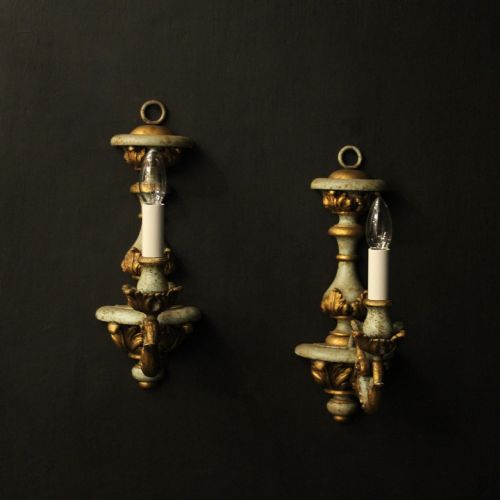
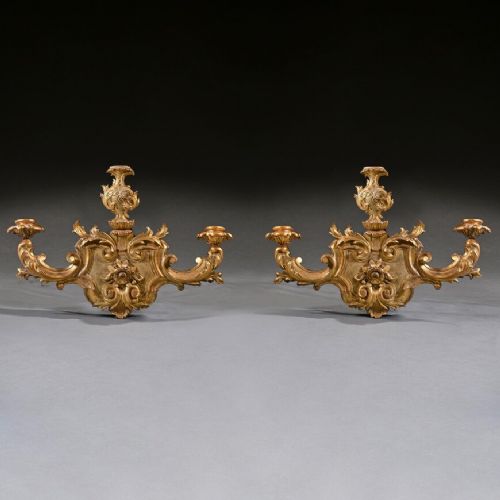
Makers and workshops utilised distinct regional interpretations, ranging from Venetian and Florentine giltwood pieces to French ormolu and gilded bronze fixtures. Buyers find both simple single-arm brackets and large multi-branch arrangements equipped with wooden or metal armatures.
How they were made
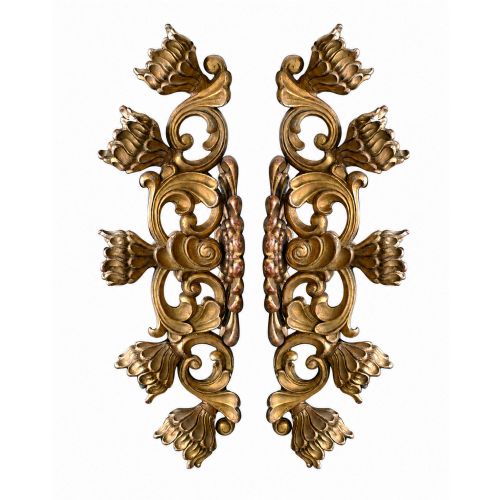
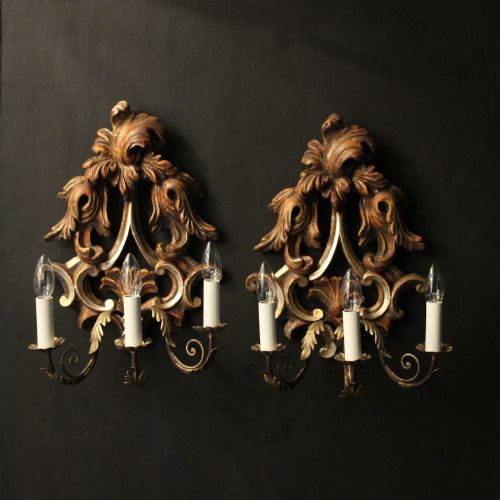
Craftsmen utilised carved wood, limewood, and gesso as substrates for traditional gilding techniques involving gold leaf and silver gilt. These wooden components demonstrate deep relief carving shaped into C-scrolls, acanthus leaves, and asymmetrical cartouches.
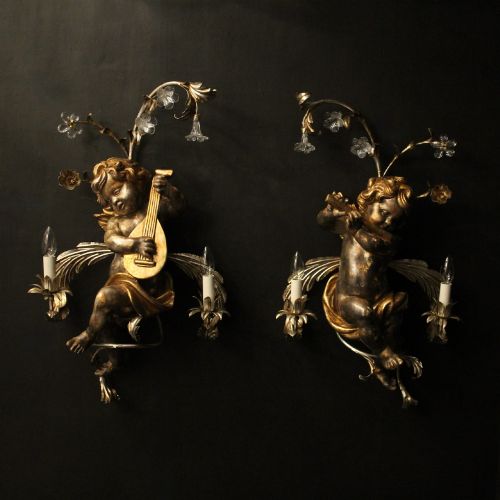
Metal elements incorporate cast gilt bronze, ormolu, and gilded brass, shaped into sinuous arms and drip pans. Artisans frequently combined carved wooden backplates with metal candle branches or integrated Murano glass elements into the composition.
Some 18th-century wall lights quietly hide tiny wooden cherubs amongst their gilded scrolls, watching over the room from the shadows.
What varies in quality
The crispness and depth of the carving determine the visual impact of wooden appliques, separating deeply undercut foliage from softer, more generalized moulding. Superior examples display meticulous hand-tooling that accentuates the natural asymmetry of the design.
Finishes show considerable variation, from thick modern repainting to delicate historical layers of gold leaf over gesso. The integration between metal branches and wooden or cast backplates reveals the maker's structural joinery and attention to balance.
Thomas Chippendale
The Rococo Carved Appliques Glossary
- Appliqué
- An ornamental fitting applied to a wall or surface rather than standing independently. These objects often take the form of carved wooden panels or sconces.
- Giltwood
- Wood that has been coated with a thin layer of gold leaf or gold paint. This finish protects the carved surface while providing a reflective metallic sheen.
- Gesso
- A plaster-like mixture applied to wood as a smooth base for gilding. Artisans carve fine details directly into this preparation layer before applying leaf.
- Ormolu
- Finely chased and gilt bronze mounted on decorative objects or lighting fixtures. The technique produces a bright, golden finish popular in French interior design.
- Cartouche
- An ornamental tablet or frame resembling a rolled-up piece of parchment. It frequently forms the central motif of rococo wall brackets and appliques.
Rococo Carved Appliques: Frequently Asked Questions
What is a rococo carved applique?
A rococo carved applique is a decorative wall-mounted fixture or architectural fragment featuring asymmetrical scrolls, C-curves, and organic foliage patterns. They often serve as wall lights or decorative brackets.
These pieces were traditionally designed to reflect candlelight and enhance the interior architecture of formal rooms during the 18th century and later revival periods.
How do I distinguish French and Italian pieces?
French appliques frequently showcase refined cast bronze, ormolu, and controlled symmetrical giltwood framing derived from Louis XV styles. Italian pieces often lean towards exuberant Florentine or Venetian carved wood, polychrome highlights, and silver gilt.
Examining the underlying material and the style of the scrollwork helps indicate the regional workshop origins and period preferences.
Were these always wired for electricity?
Original pieces were made exclusively for candles, utilising wooden sockets or metal drip pans to catch wax. Many surviving examples have been subsequently rewired for modern electrical use.
Buyers should inspect the backplates and arms to see how wiring has been integrated without compromising the antique carved wood or gilt metal structure.
How should I hang a heavy wooden applique?
Heavy carved wood and bronze appliques require secure wall fixings anchored directly into studs or solid masonry. The weight of multiple metal arms or dense giltwood necessitates robust load-bearing brackets.
Consulting a professional installer ensures that the wall structure safely supports the combined weight of the wooden backplate and branching arms.