


Carved Acanthus Appliques
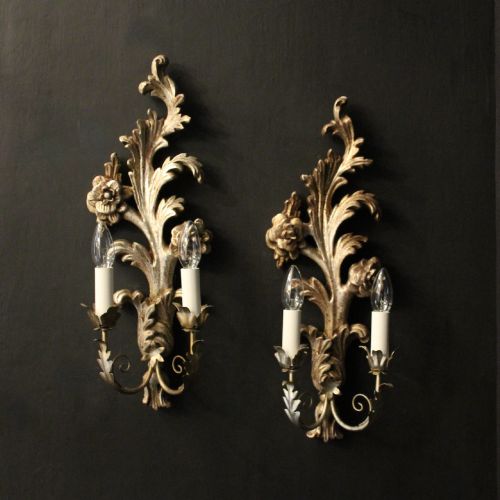
These carved acanthus appliques are decorative wall lights and architectural elements bringing classic ornamentation to interiors.
Carved Acanthus Appliques
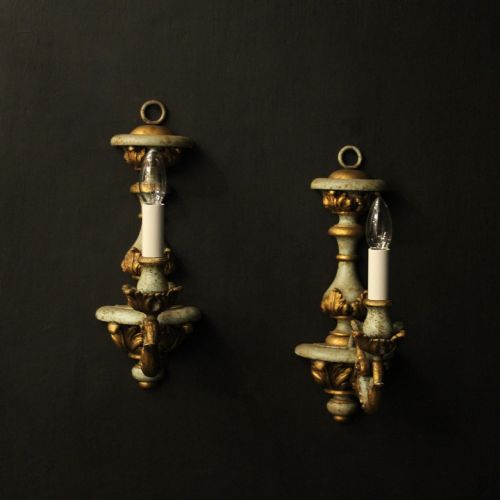
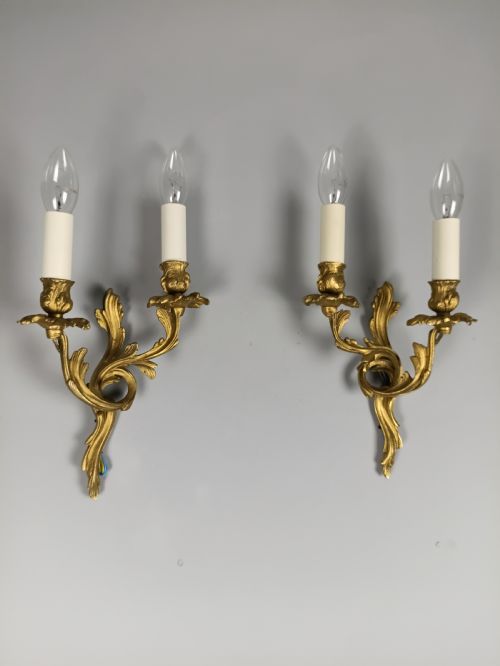
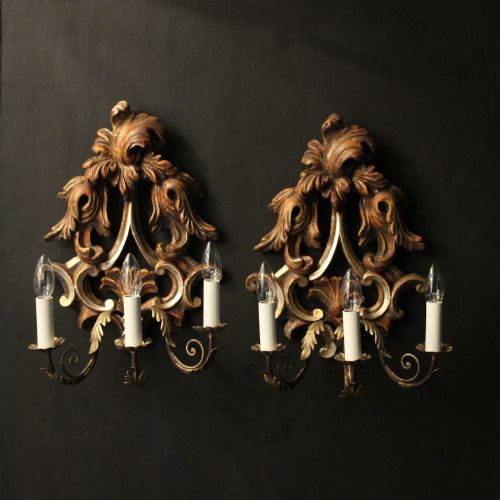
Carved acanthus appliques appear primarily as wall lights and sconces decorated with leaf motifs. You will most frequently encounter pairs from the 1920s and 1930s rendered in Florentine giltwood or French gilded styles.
The selection ranges from twin arm and triple arm wall lights to single arm versions and architectural salvage. Eighteenth-century examples also appear, notably in Thomas Chippendale style limewood carvings.
Origins span Italy and France, featuring Florentine Rococo, Italian Neoclassical, and French Chateau aesthetics. These pieces serve functional lighting roles while adding traditional ornamental detail to walls.
How they were made
Wood serves as the primary substrate for traditional pieces, shaped into intricate foliage through hand carving. Giltwood and silver leaf applications provide reflective surfaces over gesso and wood.
Metal alternatives utilise brass, gilt metal, and gilded bronze for durable armatures and sconces. Polychrome finishes also appear, adding colour alongside metallic gilding.
Several pairs of wall lights from the 1920s and 1930s share identical Florentine addresses, suggesting a tight cluster of skilled workshops.
What varies in quality
Quality rests on the depth and precision of the hand carving within the foliage details. Crisp leaf edges and balanced proportions distinguish finer examples from simpler production.
The finish also determines grade, with meticulous application of gold leaf or silver leaf creating richer patination than basic paint or standard metal treatments.
The Carved Acanthus Appliques Glossary
- Giltwood
- Wood that has been coated with gold leaf or powder over a preparation of gesso. This finish provides a warm, reflective surface common on traditional wall lights.
- Applique
- An ornamental fitting applied to a larger surface such as a wall or furniture piece. In lighting, these often take the form of sconces.
- Gesso
- A plaster-like mixture applied to wood surfaces to create a smooth base for gilding. It allows carvers to achieve fine detail before applying metal leaf.
- Limewood
- A timber traditionally favored by carvers for its fine, even grain and lack of prominent growth rings. It permits intricate undercut foliage without splitting.
- Rococo
- A decorative style characterised by asymmetrical scrollwork, C-curves, and organic plant motifs. It heavily influences many Florentine and French lighting designs.
Carved Acanthus Appliques: Frequently Asked Questions
What are carved acanthus appliques?
These pieces are ornamental wall lights and architectural carvings shaped with classical leaf motifs. They function as both lighting fixtures and decorative wall ornaments.
Most items seen are pairs originating from early twentieth-century Italy and France, finished in giltwood or bronze.
How do I date these wall lights?
Dating relies on stylistic markers, materials, and construction methods. Pieces range from eighteenth-century Chippendale limewood to 1920s and 1930s Florentine giltwood.
Earlier examples display hand carving characteristics specific to their century, whereas twentieth-century items often reflect revived regional styles.
Where should I place wall sconces?
Wall sconces suit hallways, living rooms, and dining areas where accent lighting enhances the interior atmosphere. Pairs are typically mounted symmetrically beside mirrors, fireplaces, or architectural doorways.
Ensure the electrical setup matches the wiring requirements of antique fixtures before installation.
What is giltwood?
Giltwood is timber coated with a thin layer of gold leaf applied over a gesso ground. This technique creates a luminous finish that catches and reflects ambient room light.
Over time, giltwood develops a subtle patina that distinguishes genuine antique pieces from modern reproductions.