



Rococo Bronze Sculpture
These rococo bronze sculpture pieces bring the dynamic movement and playful mythology of eighteenth-century France into any interior.
Rococo Bronze Sculpture
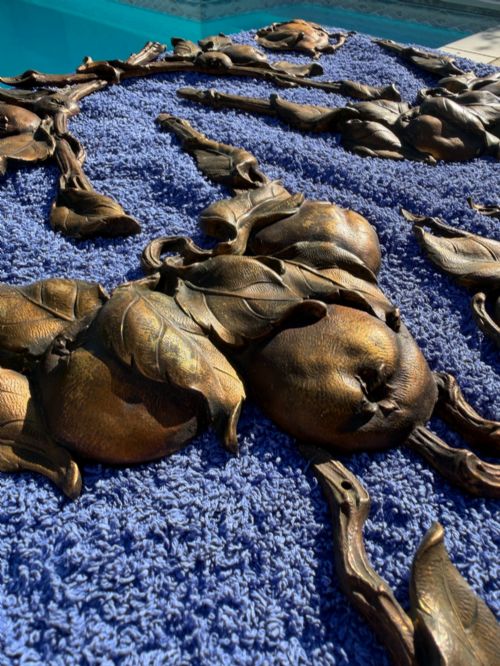
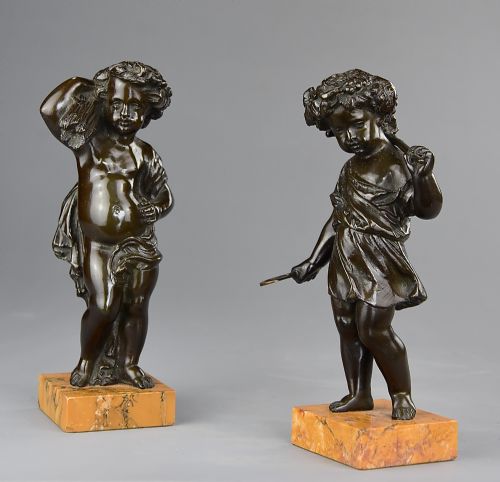
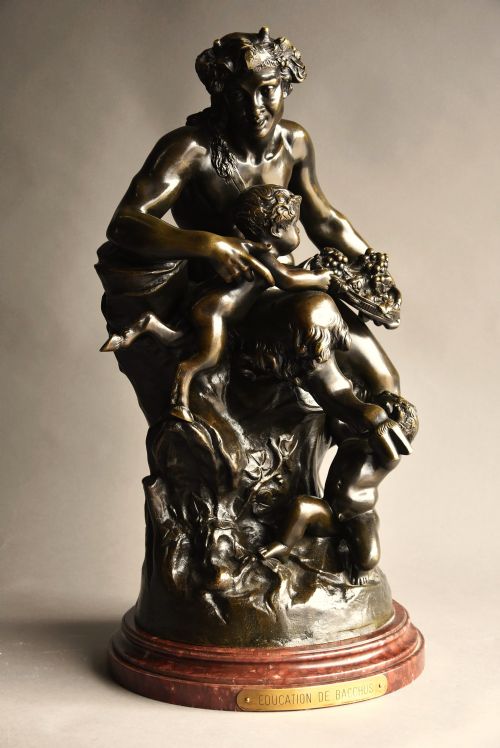
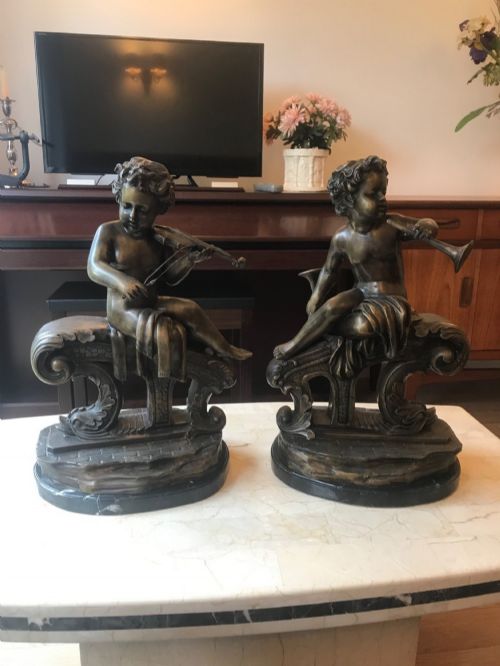
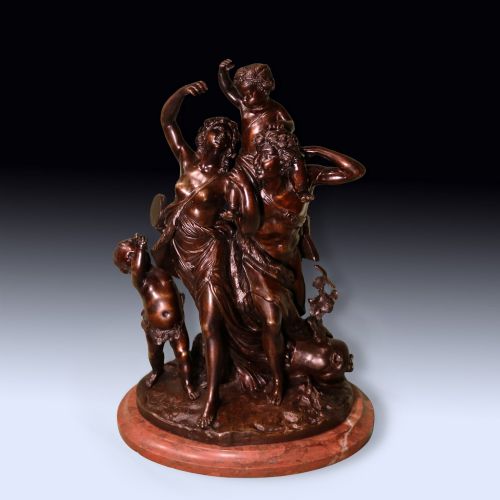
When you search for rococo bronze sculpture, you encounter a selection spanning the eighteenth, nineteenth, and twentieth centuries, dominated by French revival pieces. The forms range from figurative groups of putti, satyrs, and dancers to functional decorative objects such as mantel clocks, andirons, and furniture mounts. Many of these figures reference the classical pastoral themes popularised by sculptors like Clodion.
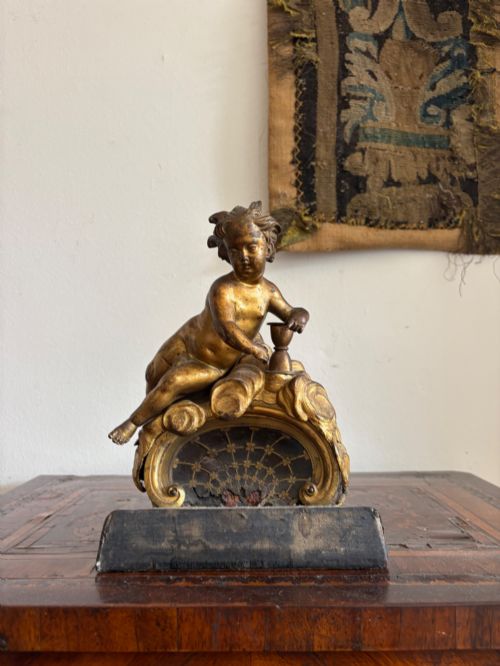
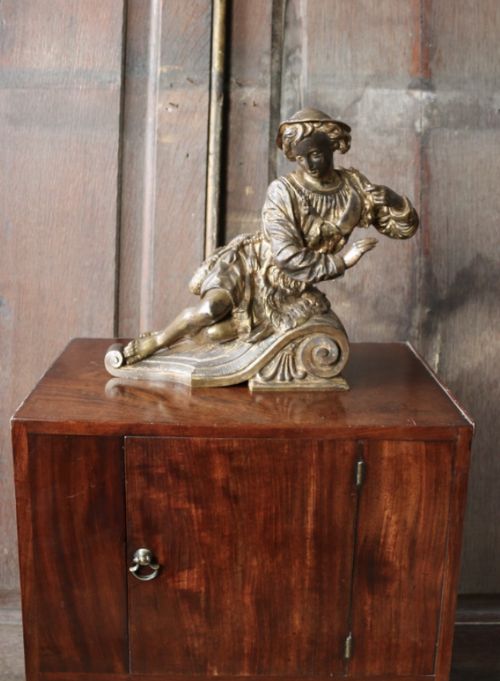
You are most likely to meet nineteenth-century bronze and ormolu figures or clock mounts cast in the French rococo revival style. These often feature cherubs, musicians, or allegorical figures mounted on marble bases or integrated with porcelain and enamel. The selection demonstrates how later makers reinterpreted earlier French models for nineteenth-century interiors.
What varies in quality
The integration of mixed materials affects the overall success of the piece. High-quality mountings fit closely to their marble bases, wood pedestals, or porcelain bodies without visible gaps or rough joins. The warmth and durability of the original gilding remain intact on better preserved specimens.
Object types seen across the listings include sculptures, furniture mounts, decorative objects, mantel clocks, and wall appliques.
Poix Blin·Claude Michael Clodion·Leon Message·Jollet et Cie·Charpentier Paris
The Rococo Bronze Sculpture Glossary
- Ormolu
- Gilt bronze, created by applying an amalgam of gold and mercury to a bronze base and heating it to drive off the mercury. This technique produces a rich, durable golden finish found on many French decorative objects.
- Putto
- A plump, often winged male child figure common in classical and rococo art. These figures appear frequently as musicians, harvesters, or playful attendants in sculptural groups.
- Andiron
- A horizontal metal support used in pairs inside an open fireplace to hold logs. Some decorative examples feature cast bronze or ormolu statuettes on the upright front standards.
- Finial
- A relatively small decorative ornament that terminates the top of a clock, mount, or furniture piece. They provide a visual apex to symmetrical compositions.
- Applique
- A decorative wall bracket or mount designed to be fixed to a vertical surface, often holding candles or serving purely ornamental purposes.
Rococo Bronze Sculpture: Frequently Asked Questions
What is rococo bronze sculpture?
These works are decorative metal castings that reflect the playful, asymmetrical aesthetic of eighteenth-century French design. They frequently depict mythological figures, putti, and pastoral scenes.
The category encompasses freestanding statues, clock cases, andirons, and decorative mounts. Most examples on this page date from the nineteenth century as revivals of earlier French models.
How were these bronzes used originally?
Many pieces served as garnitures on mantelpieces, often flanking clocks or acting as decorative focal points in formal reception rooms. Others functioned as functional mounts on luxury furniture and architectural woodwork.
Smaller figures and groups were designed to sit on tables, pedestals, or brackets where their detailed chasing could be admired close up.
How can I tell a nineteenth-century piece from an eighteenth-century one?
Distinguishing the periods requires examining the casting technique, chasing quality, and the wear on the metal surfaces. Eighteenth-century originals often show distinct tool marks from hand-chasing and softer, warmer patination developed over centuries.
Nineteenth-century revival pieces frequently display heavier casting methods and different mounting hardware. Signatures or foundry marks can also help narrow down the date of production.
How do I care for bronze and ormolu?
Bronze and ormolu require gentle dusting with a soft, dry cloth to prevent the accumulation of grit in recessed details. Avoid using commercial metal polishes, which can strip away original mercury gilding and patination.
Keep these objects away from high humidity and direct heat sources to protect any underlying wooden bases, marble plinths, or porcelain elements.
Who was Clodion and why is he mentioned?
Claude Michel, known as Clodion, was an eighteenth-century French sculptor famed for his terracottas and small-scale mythological groups. His lively representations of satyrs, nymphs, and putti became deeply influential.
Later nineteenth-century founders frequently cast bronze figures after his compositions to satisfy the Victorian appetite for French rococo style.