
Rococo Bronze Sconces
Rococo bronze sconces bring ornate French lighting and asymmetric character to interior walls through cast metal forms.
Rococo Bronze Sconces
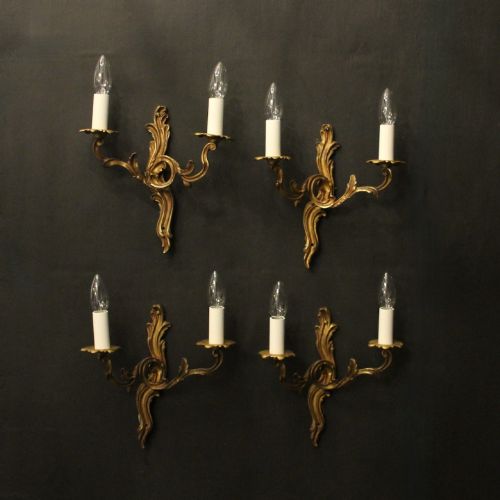
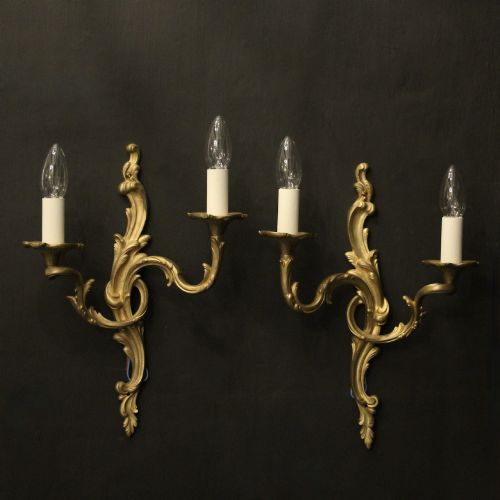
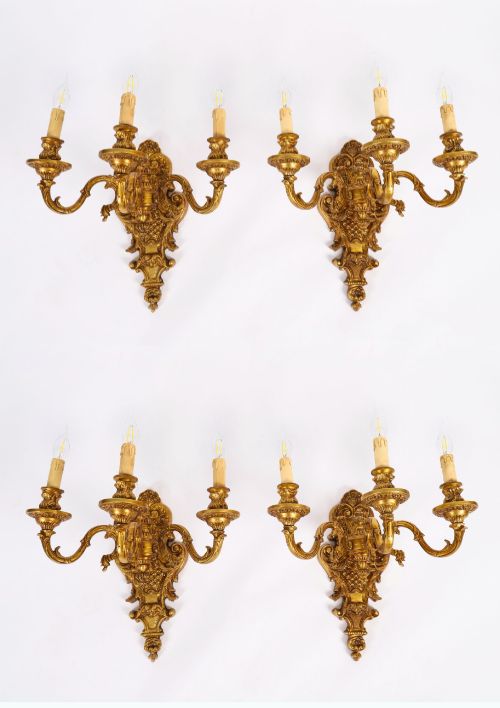
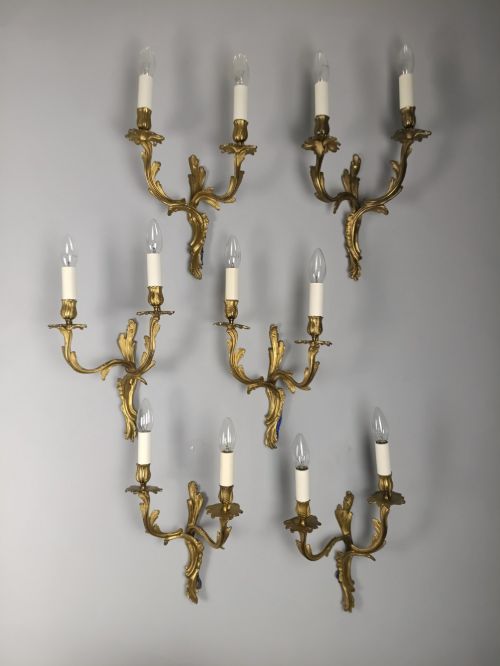
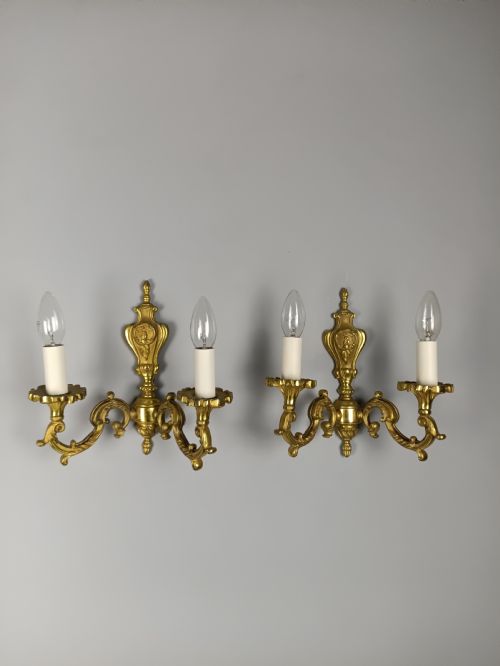
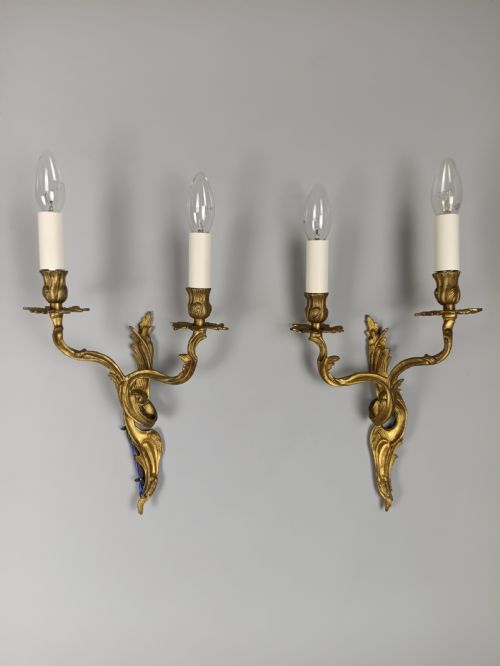
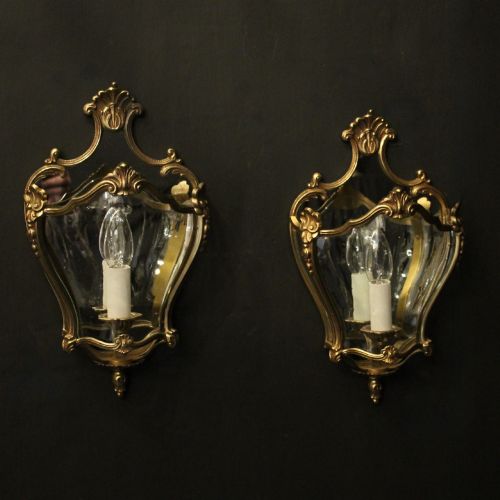
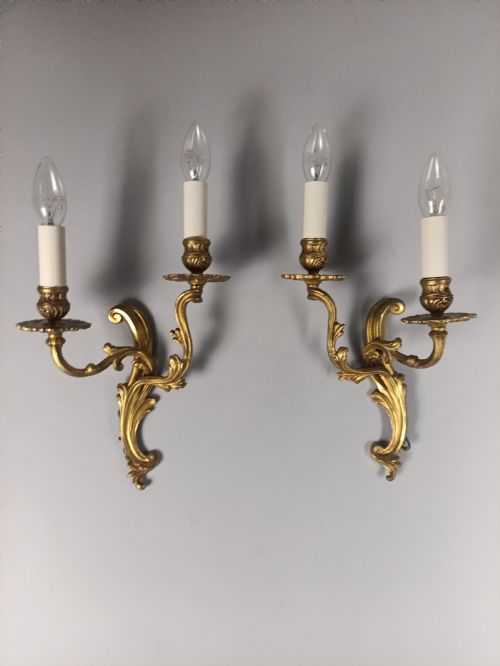
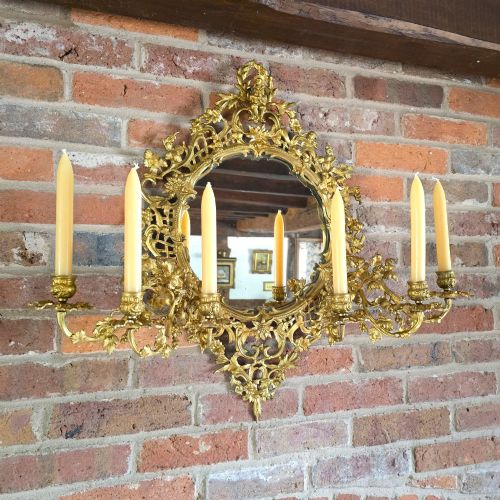
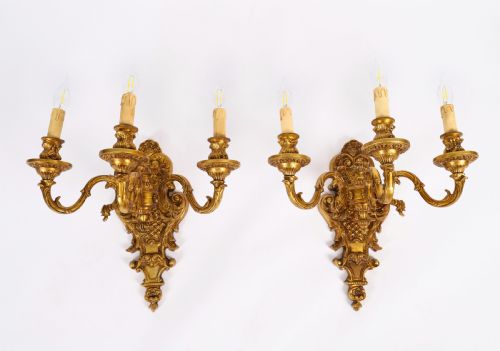
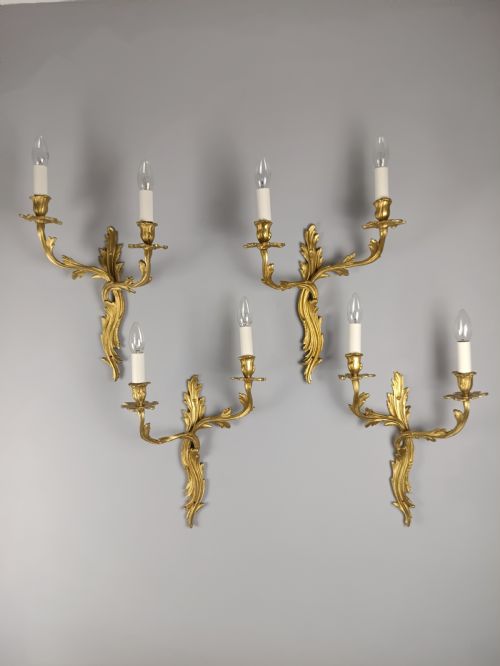
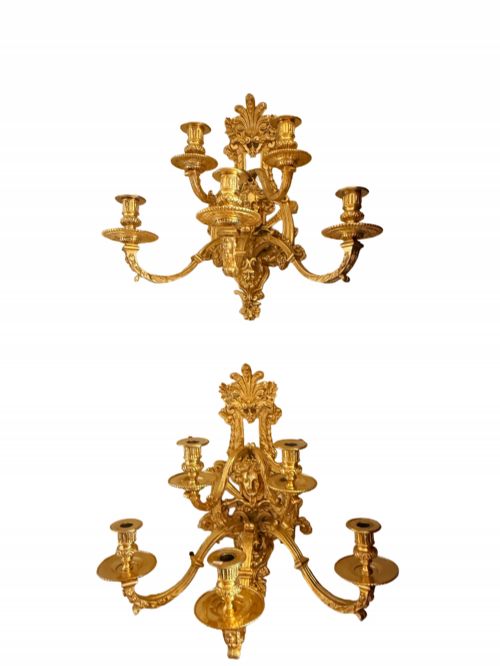
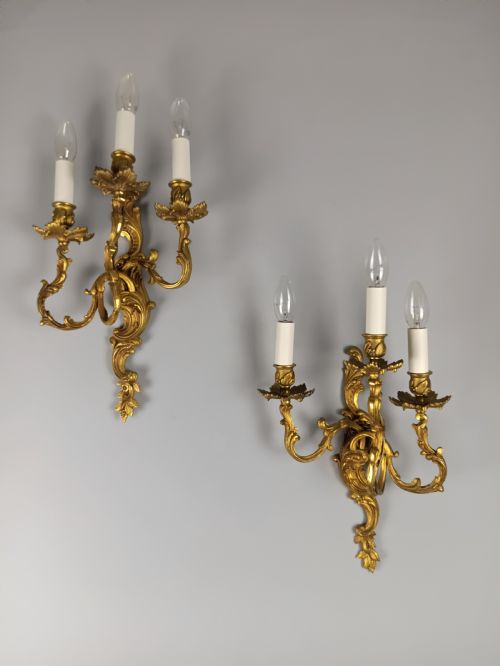
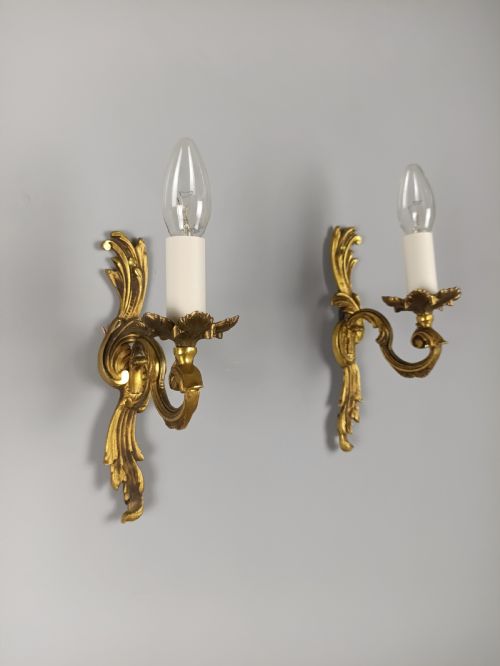
Rococo bronze sconces appear primarily as wall lights, appliques, and girandoles designed to mount on interior surfaces and hold multiple candles or bulbs. The inventory leans heavily toward French models taking the form of twin-arm or triple-arm fixtures alongside half lanterns and wall mirrors fitted with candelabra.
The aesthetic bridges several periods, with pieces originating from the eighteenth century through the nineteenth century and into the nineteen-twenties and nineteen-thirties. Buyers encounter matching pairs and larger sets intended for coordinated installation across larger rooms or hallway spaces.
Design vocabulary draws directly on French Rococo, Louis XV, and Rococo Revival styles, often incorporating scrolling foliage, cherubs, and porcelain flowers alongside standard branch configurations.
How they were made
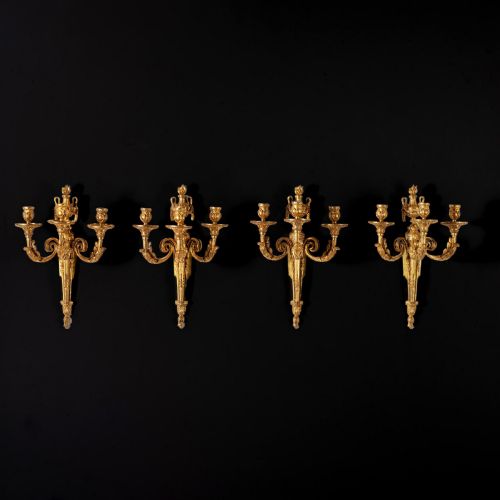
Makers utilised bronze, brass, and metal as base foundations, casting the metal into complex, flowing botanical and scroll motifs characteristic of the style. Many examples received a layer of ormolu, gilded bronze, or gilded brass to impart a bright, reflective golden surface.
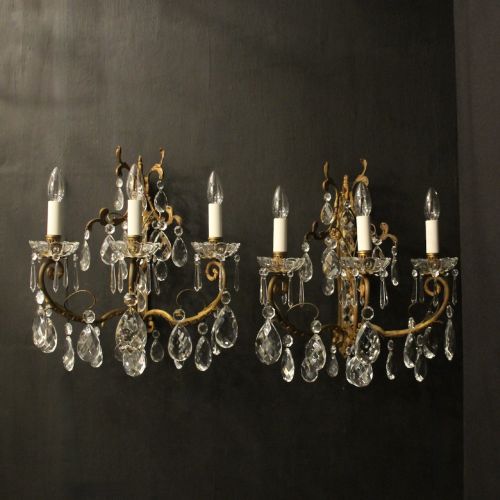
Detailing often included applied glass or crystal elements, alongside hand-painted porcelain flowers integrated into the metal armature. Secondary components involved silver plating in select nineteenth-century and turn-of-the-century variations.
A few unexpected sconces trade pure metal for delicate porcelain flowers and cheerful cherubs peering out from the candle branches.
What varies in quality
Quality separates along the crispness of the cast ornamentation and the depth of the gilding applied to the bronze or brass body. Finer examples display deeply chased surface details and heavy metal gauges rather than light, flat pressings.
The completeness of matching sets, from pairs up to sets of six, dictates much of the standing within the range. Additionally, the presence of integrated elements like crystal drops or porcelain flowers distinguishes standard branch lights from elaborate decorative appliques.
The Rococo Bronze Sconces Glossary
- Ormolu
- A metallic technique involving the application of finely ground high-carat gold to a bronze object. It provides a durable, bright finish typical of high-end French metalwork.
- Applique
- A wall-mounted light fixture designed to hold candles or electric bulbs against wood panelling or plastered walls. The term is frequently used interchangeably with wall sconce.
- Girandole
- An ornamental branched wall light or candelabrum, often incorporating a mirror to reflect and multiply the candlelight within the room.
- Louis XV Style
- A decorative design movement characterised by organic asymmetry, C-scrolls, and shell motifs. It forms the stylistic backbone of the Rococo Revival period.
- Twin Arm
- A configuration where the main backplate splits into two distinct candle-holding branches. Sets often comprise matching pairs or groups of three and four.
Rococo Bronze Sconces: Frequently Asked Questions
How do I install antique wall sconces safely?
Many period pieces arrive rewired and ready for direct mounting onto standard wall electrical boxes by a qualified electrician.
Original brass and bronze frames require secure anchoring due to the substantial weight of cast metal and crystal components.
What is the difference between ormolu and gilded brass?
Ormolu specifically denotes mercury gilding on a bronze substrate, producing a rich and warm golden lustre historically associated with French workshops.
Gilded brass represents a generally brighter, less complex surface treatment applied to a lighter copper and zinc alloy.
How do I date an antique bronze sconce?
Dating relies on observing the casting technique, fastener types, and stylistic adherence to periods like Louis XV or the later Rococo Revival of the nineteenth century.
Twentieth-century reproductions often feature standardised modern wiring channels and uniform casting marks absent in older pieces.
Can I mix different sets of sconces in one room?
Coordinating pieces of a similar height and metal tone works well when maintaining a consistent nineteenth-century or twentieth-century French decorative scheme.
Matching sets of four or six are typically preferred for symmetrical placement flanking fireplaces or large mirrors.