
French Twin Arm Appliques
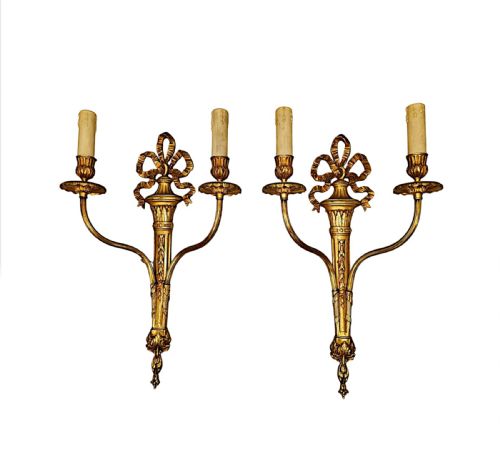
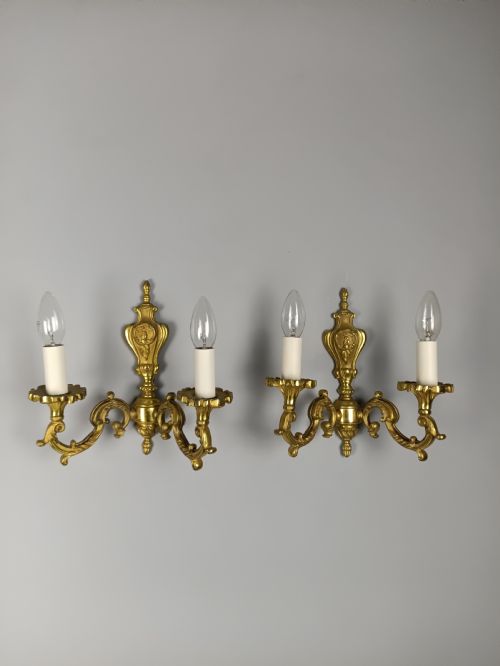
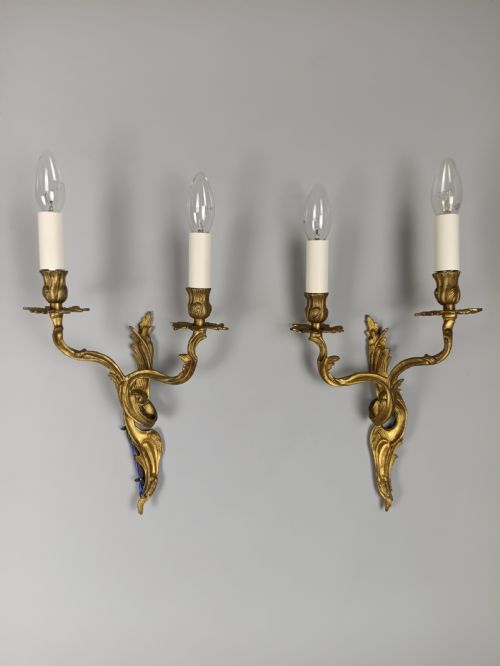
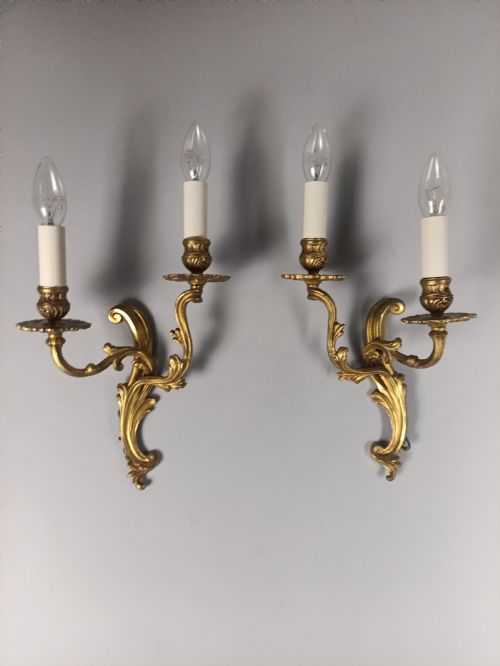
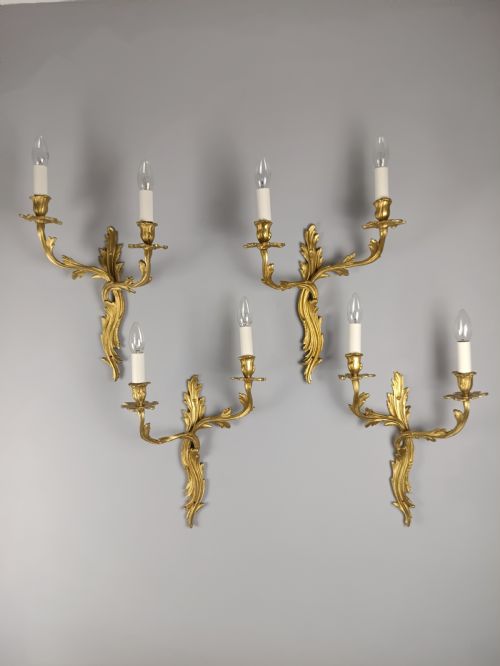
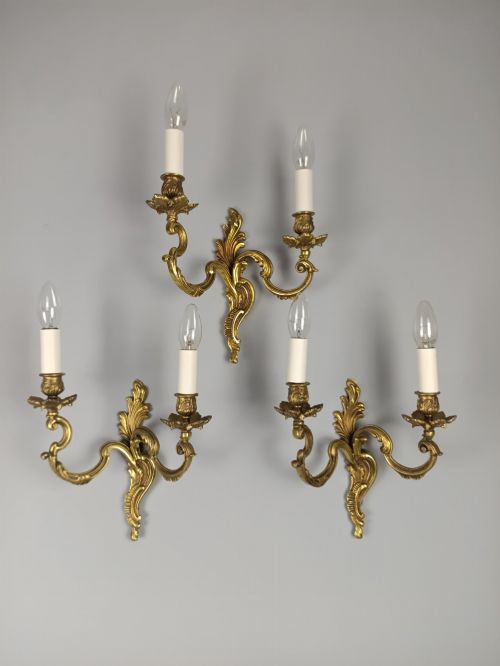
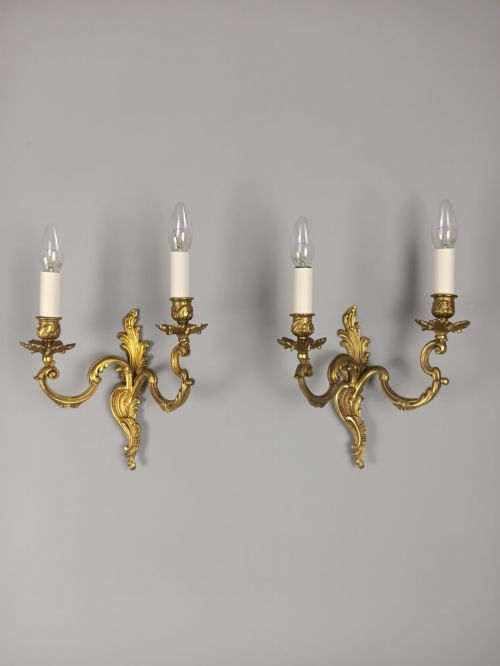
These French twin arm appliques bring a distinct continental glow to a room, cast in heavy gilt metals and formed for balanced wall lighting.
French Twin Arm Appliques
French twin arm appliques emerge primarily as wall lights and wall sconces designed to mount directly onto panelled or plastered surfaces, carrying two branches for illumination. The pieces appearing here span the nineteenth century through the early decades of the twentieth century, with a notable concentration originating in the 1920s and 1930s.
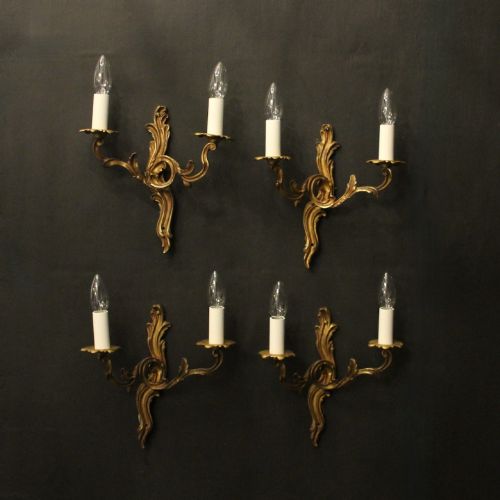
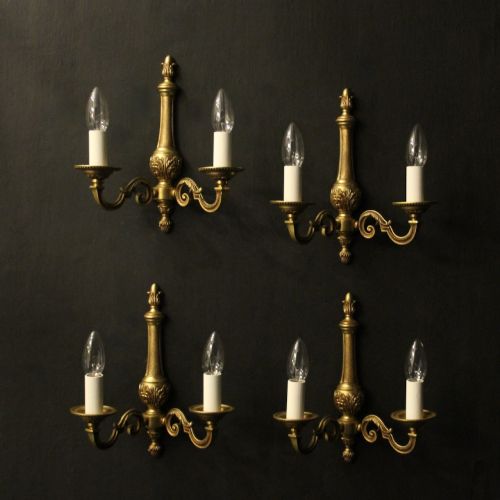
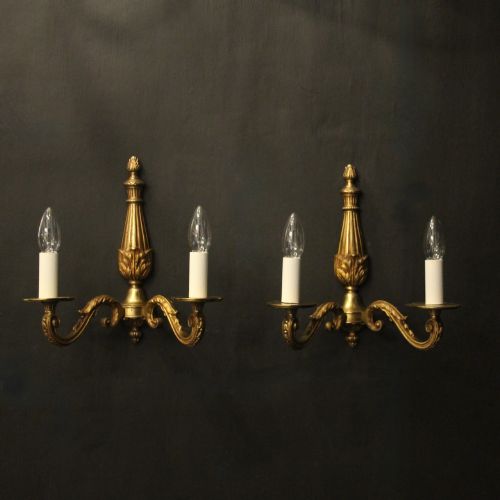
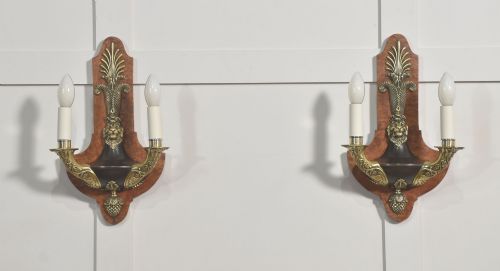
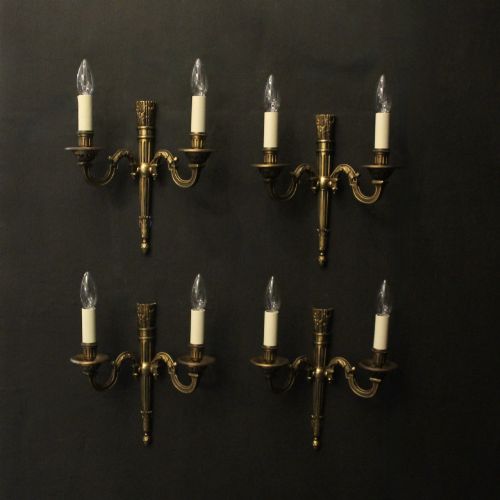
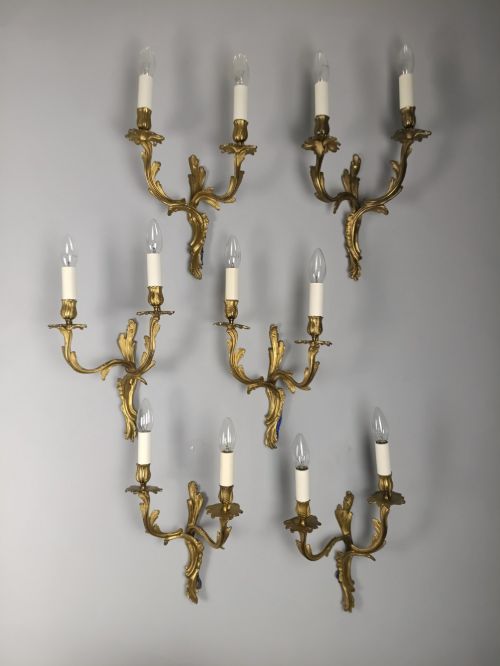
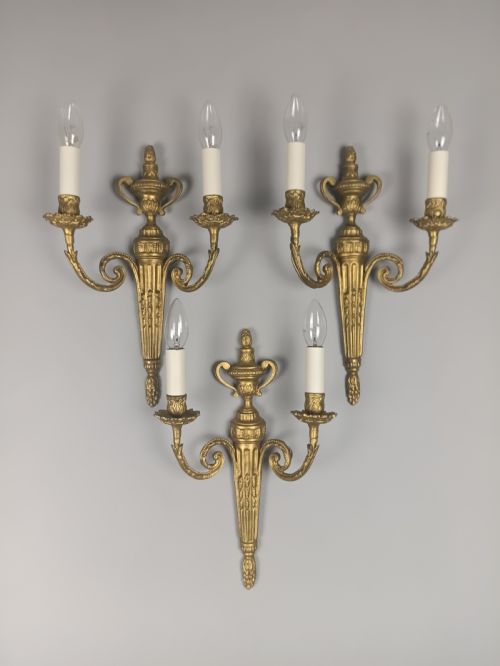
Buyers encounter matching pairs alongside larger sets numbering three, four, or six fixtures, all sharing dual candle or lamp arms. The design vocabulary draws heavily on continental traditions, showing French Rococo, Neoclassical, Louis XVI, and Empire influences alongside simpler chateau forms.
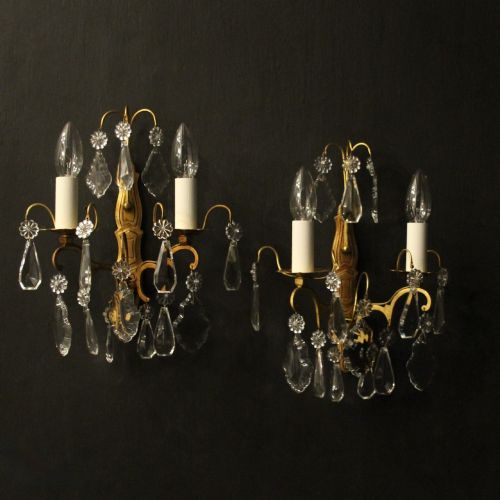
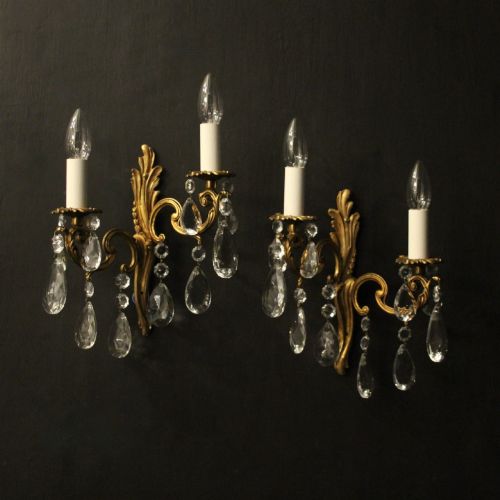
The physical scale ranges from compact pairs suitable for intimate alcoves to substantial multi-piece sets intended for principal reception rooms. Metal construction dominates the selection, occasionally augmented with crystal drops or contrasting enamel details.
Materials and construction methods
Foundry work relies heavily on cast bronze and brass, shaped into flowing floral motifs, classical ribbons, and symmetrical acanthus leaves. Many surfaces receive a layer of gilding, whether through traditional fire gilding or applied ormolu, which imparts a warm metallic sheen under artificial or natural light.
Structural elements are assembled from multiple cast components secured with threaded rods and screws, allowing intricate scrollwork arms to project firmly from backplates. Crystal pendants and bobeches occasionally supplement the metalwork, catching light from the dual arms.
Listings feature brass, bronze, and gilt metal alongside crystal accents across Victorian and twentieth-century periods.
Distinctions in execution
The refinement of the casting separates standard production from superior examples, with finer pieces displaying crisp chisel work that defines leaf veins and scroll edges after the metal leaves the sand or lost-wax mould. Heavier gauge brass and bronze provide structural rigidity to the arms and backplates, preventing distortion over decades of mounting and maintenance.
The depth and durability of the original gilding dictate the visual impact of each sconce, where uniform application over complex contours maintains integrity across matching sets. Subtleties in proportion between the backplate and the twin branches determine how harmoniously the fixture sits against a wall.
The French Twin Arm Appliques Glossary
- Applique
- A wall-mounted lighting fixture attached directly to a vertical surface. The term derives from the French practice of applying decorative elements to walls.
- Ormolu
- Gilded bronze produced by applying a mercury-gold amalgam to a bronze base and heating it until the mercury vaporised. This historic technique leaves a dense, dull-gold finish.
- Bobeche
- A small collar or drip pan fitted beneath the candle position to catch melting wax. These glass or metal discs protect the arms below.
- Rococo
- A decorative style characterised by asymmetrical curves, C-scrolls, and naturalistic plant motifs. It appears frequently in nineteenth-century and revival-era castings.
- Empire
- A neoclassical style drawing on ancient Roman and Greek motifs such as wreaths, urns, and eagles. It developed during the early nineteenth century and influenced later twentieth-century revivals.
French Twin Arm Appliques: Frequently Asked Questions
How do I wire old wall lights?
Rewiring involves passing modern insulated flex through the internal channels of the backplate and arms to meet current electrical standards. Qualified electricians handle this adaptation to ensure safe connection to household circuits.
Historic fixtures often require careful disassembly to thread modern wiring without disturbing the structural integrity of the cast metal arms.
Are sets of four matched?
Sets assembled in the period share identical casting moulds, decorative chasing, and metal composition across every piece. Minor variations in surface wear can occur due to individual positioning on different walls.
Checking the backplates and mounting points reveals consistency in workshop origin and confirms whether the set belongs together.
How do I clean gilded brass safely?
Dusting with a soft, dry brush removes surface particles without disturbing delicate gilt surfaces. Water and chemical polishes strip historic finishes and must be avoided.
Gentle maintenance preserves the underlying patina developed over decades of exposure to indoor environments.
What is the difference between Empire and Rococo styles?
Empire designs rely on strict symmetry, classical military trophies, and geometric restraint inspired by antiquity. Rococo pieces embrace fluid asymmetry, swirling foliage, and organic rockwork motifs.
Recognising these distinct ornamentations helps date the manufacture and place the fixture within a specific decorative tradition.