
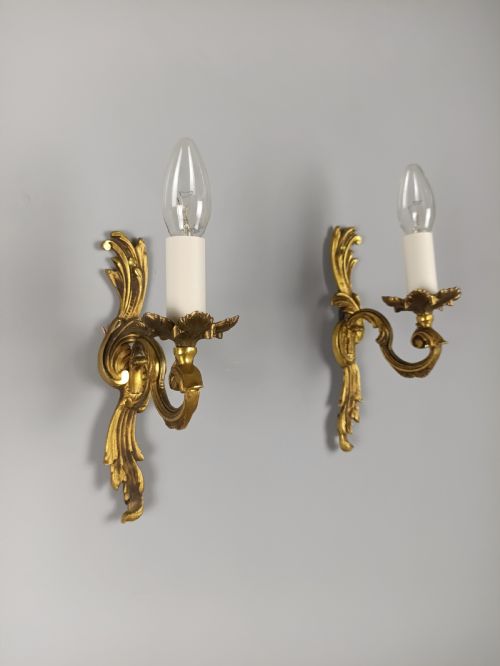
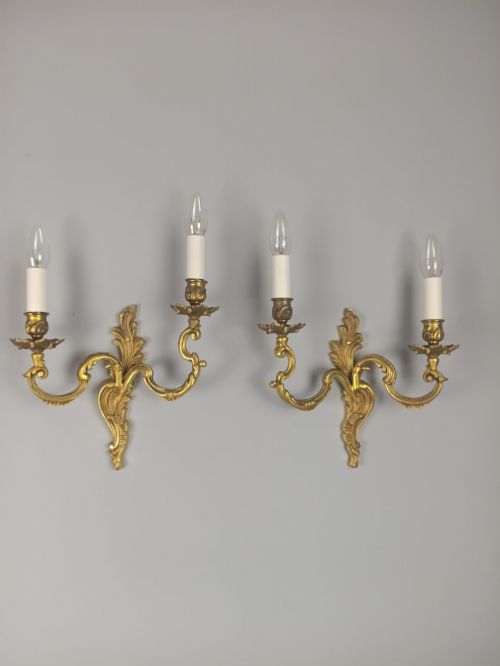
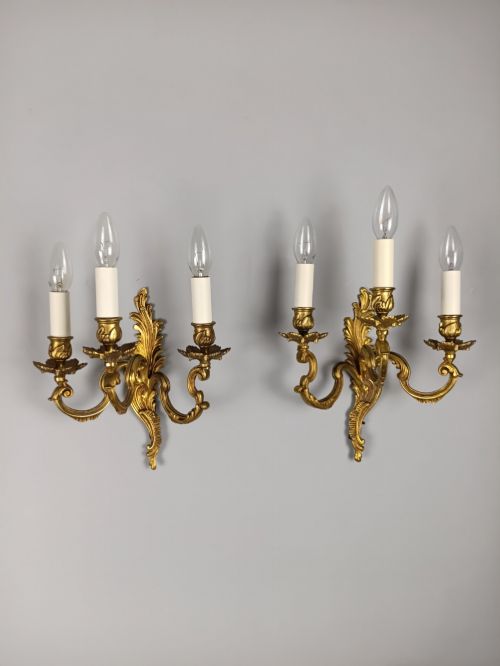
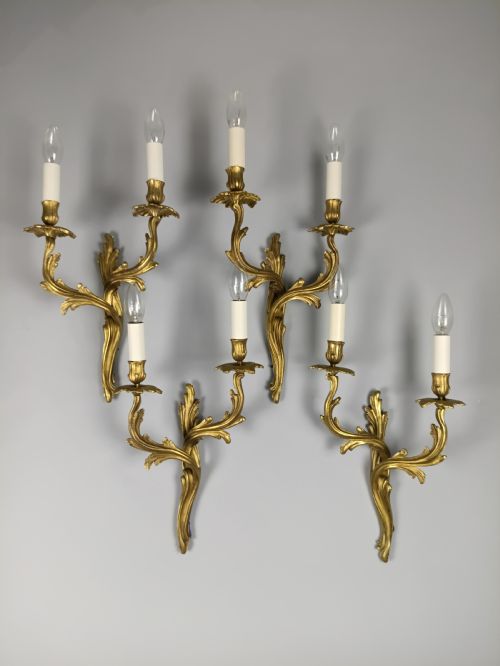
Rococo Bronze Candle Sconces
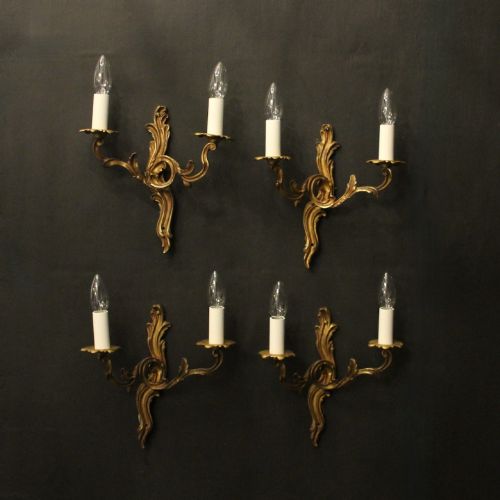
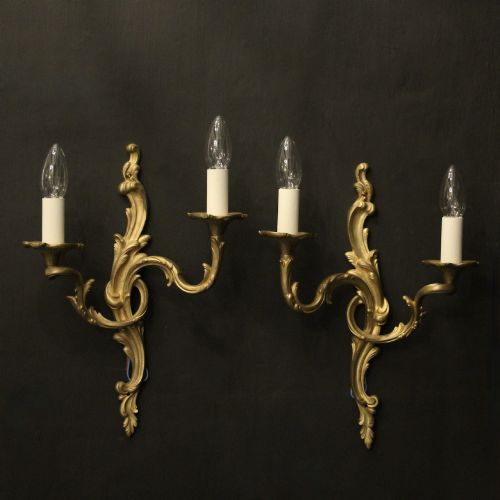
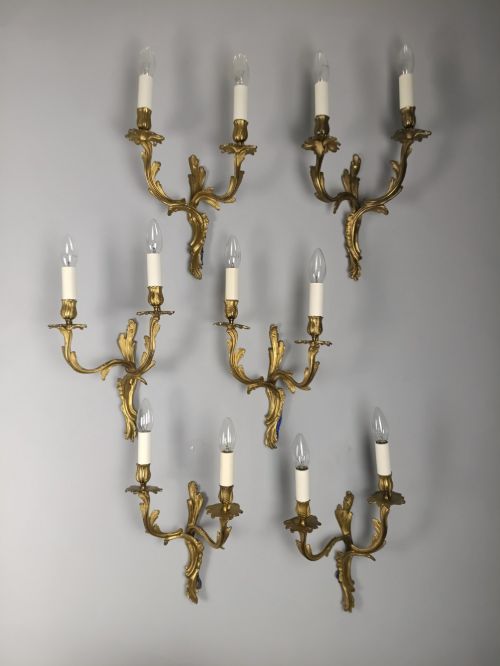
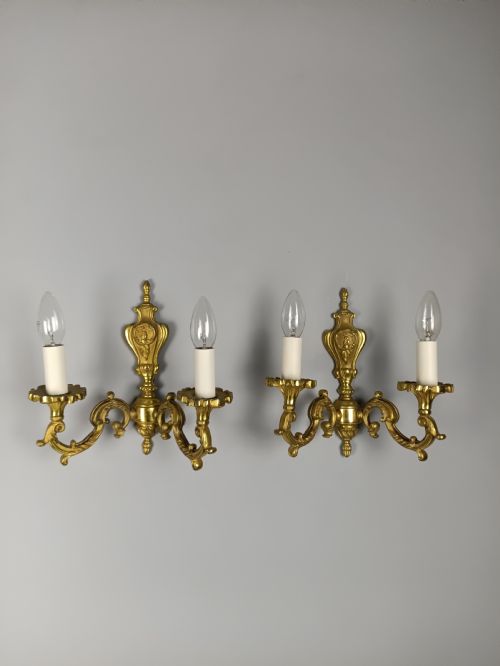
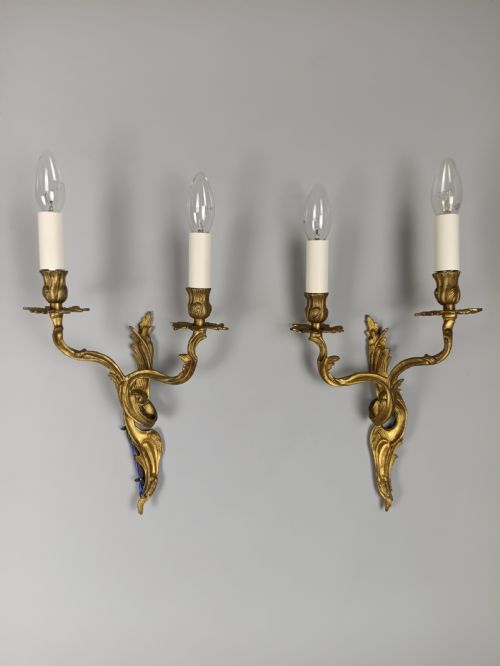
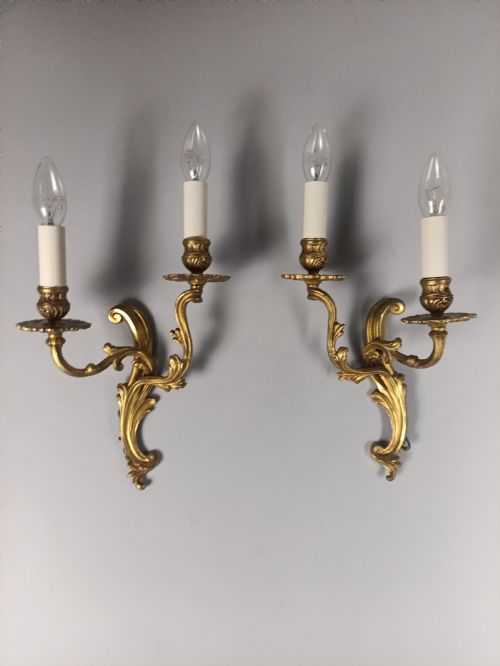
These rococo bronze candle sconces bring heavy French character to a wall, offering rich castings and undulating frames that pull the eye.
Rococo Bronze Candle Sconces
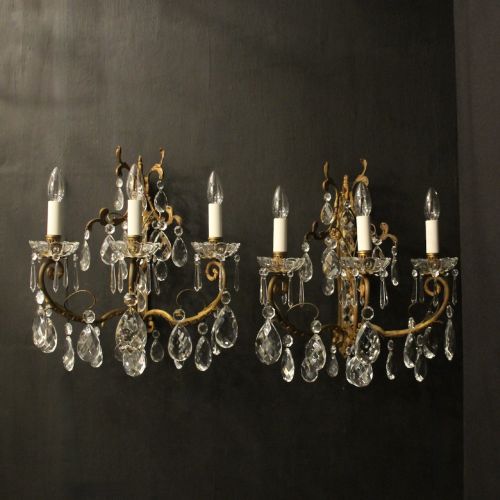
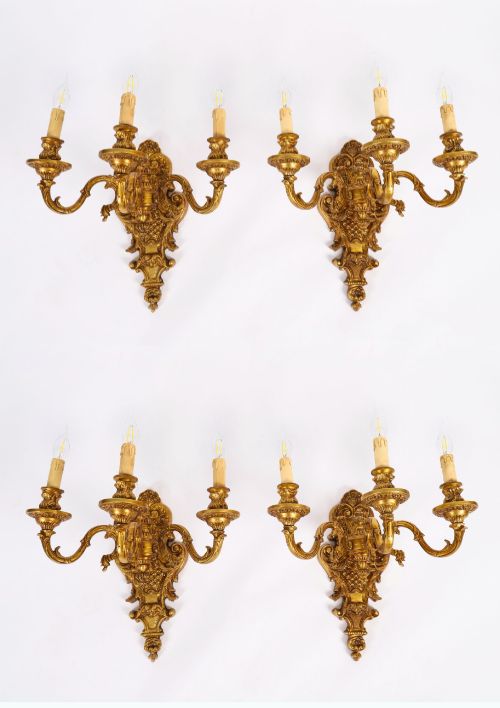
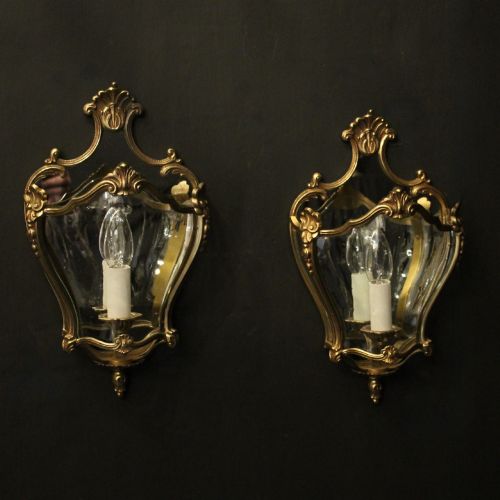
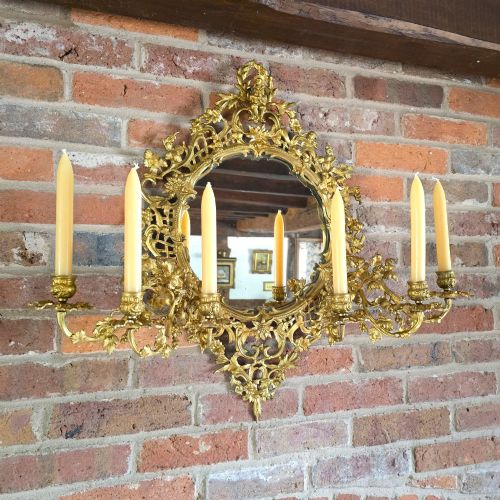
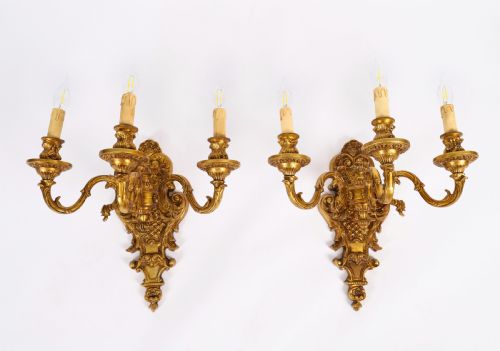
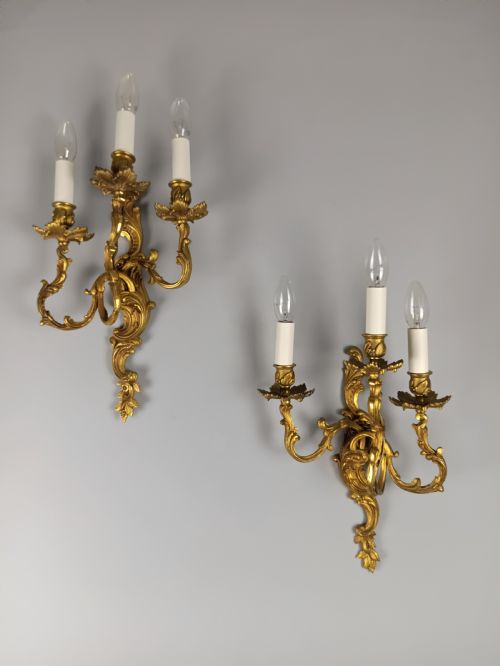
When searching for rococo bronze candle sconces, buyers encounter decorative wall lighting designed to mount directly onto wood paneling or plaster. The forms span twin-arm and triple-arm wall lights, alongside larger mirrored appliques and girandoles.
Most examples found here originate from France, spanning the nineteenth century through the early twentieth century. Common periods represented include the Napoleon III era and the later revival decades up to nineteen thirty.
How they were made
The construction relies on cast bronze, brass, and ormolu, shaped into asymmetrical scrolls, C-scrolls, and floral motifs. Many pieces utilise fire-gilding or applied surface gold to achieve a rich metallic sheen.
Workshops combined metal casting with hand-chasing to sharpen foliage and rocaille details. Selected pieces incorporate porcelain flowers, glass drops, or mirrored backplates to catch and multiply the candlelight.
The listings span from eighteen fifty through nineteen thirty, with the nineteen twenties and thirties representing the largest share of available wall lights.
What varies in quality
Quality rests primarily in the crispness of the bronze chasing and the depth of the casting. Superior pieces retain sharp leaf veins and deep relief work, whereas simpler items show softer, shallower contours.
The preservation of the original gilding or ormolu surface defines the visual weight of the fixture. Heavy, substantial armatures with integrated drip pans and secure backplates command more presence than lighter constructions.
The Rococo Bronze Candle Sconces Glossary
- Ormolu
- Gilded bronze produced by applying a mercury and gold amalgam to a bronze base, then firing to leave a rich layer of gold. This finish provides a warm, durable lustre on nineteenth-century French lighting.
- Girandole
- A branched wall sconce or ornamental candlestick featuring mirrored glass or crystal drops. The reflective backing increases the spread of light within a room.
- Applique
- A wall-mounted light fixture designed to hold candles or electric lamps. These pieces sit flat against the vertical surface.
- Rococo
- An artistic style characterised by elaborate ornamentation, asymmetrical curves, and naturalistic motifs such as shells and foliage. It originated in France during the eighteenth century and saw major revivals in the nineteenth and twentieth centuries.
- Candelabra
- A multi-branched candleholder used as a tabletop piece or adapted for wall mounting. These fixtures typically hold two or more distinct light sources on separate arms.
Rococo Bronze Candle Sconces: Frequently Asked Questions
How do I wire antique wall lights?
Most antique sconces require professional rewiring to meet modern electrical safety standards before installation. Electricians thread new wiring through the hollow cast arms and backplates.
Buyers should confirm whether the sconces are already modified or remain in original un-electrified condition. Professional installation ensures the heavy bronze fixtures mount securely to wall studs.
Are these sconces French or Italian?
The majority of pieces originate from France, following Louis XV and Napoleon III revival styles. Certain examples trace to Italian workshops, often incorporating distinctive elements like carved cherubs.
Examining the casting style and backplate construction helps determine the regional origin of the metalwork. French pieces dominate the selection across these nineteenth and twentieth-century dates.
What is the difference between brass and bronze?
Bronze is an alloy of copper and tin, while brass combines copper and zinc. Bronze allows for sharper detail when cast and accepts ormolu gilding effectively.
Many listings describe items as gilded brass or gilt bronze interchangeably. Heavier castings generally indicate bronze construction rather than stamped brass.
How do I clean gilded bronze sconces?
Dusting with a soft, dry cloth preserves the fragile gold surface on antique ormolu and gilded metal. Avoid harsh commercial metal cleaners that strip away the original finish.
Gentle care maintains the patina built up over decades. Stubborn grime requires professional conservation rather than abrasive rubbing.