






Rococo Branch Candle Sconce
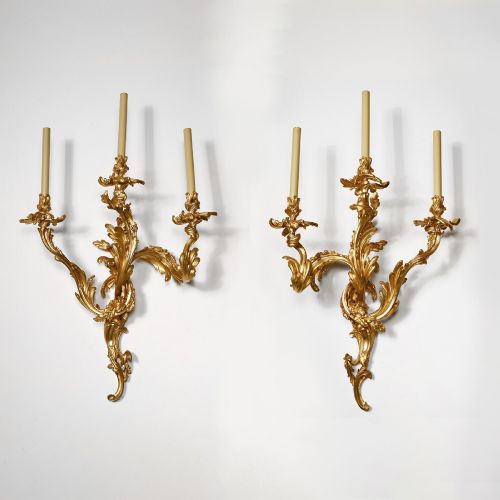
A rococo branch candle sconce brings asymmetric curves and dynamic branch arms to interior walls, offering atmospheric illumination for period and traditional schemes.
Rococo Branch Candle Sconce
A rococo branch candle sconce takes the form of wall-mounted lighting designed with multiple branching arms, echoing the organic asymmetry characteristic of the style. Buyers searching this phrase encounter examples ranging from mid-nineteenth-century French and Victorian pieces to early twentieth-century revivals.
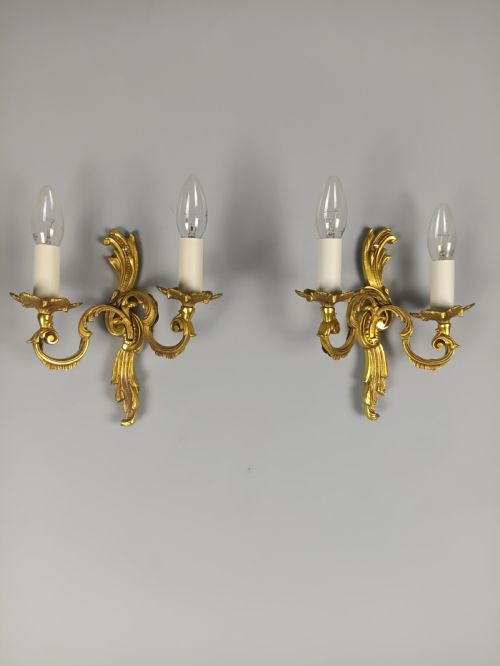
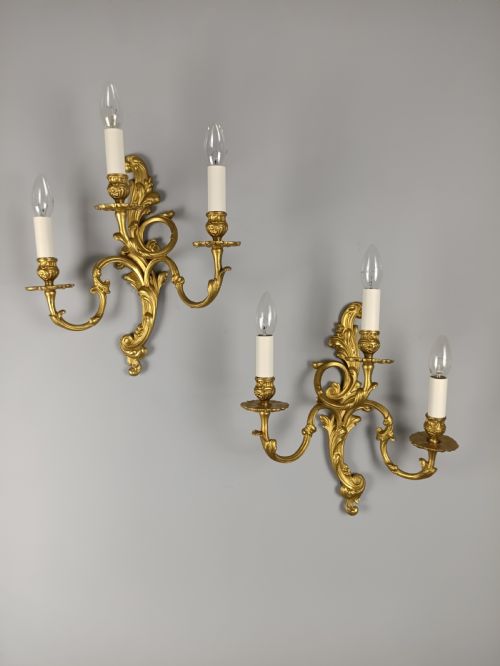
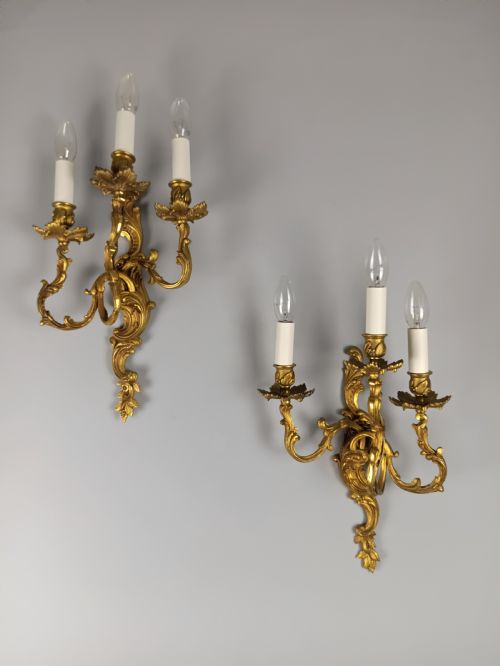
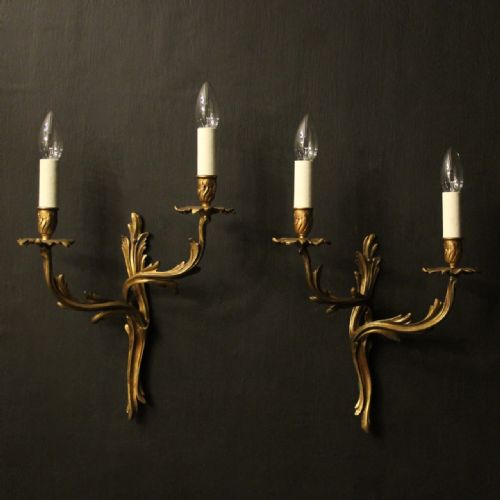
The most common versions met on this page are pairs and sets of twin-arm or triple-arm wall lights, executed in gilded brass, ormolu, or gilt bronze. These pieces frequently incorporate French Rococo and Louis Revival design motifs that emphasise scrolling foliage and naturalistic forms.
Makers and manufacturers across France, Italy, and Britain produced these sconces to provide both direct illumination and decorative weight to formal interiors. Their survival spans from the mid-nineteenth century through the 1930s, reflecting enduring enthusiasm for ornate wall lighting.
How they were made
Metal-based pieces rely primarily on cast brass, bronze, and ormolu, often finished with fire-gilding or applied surface gilding to catch the candlelight. Workshops utilised detailed sand-casting and lost-wax methods to achieve the fluid, sculptural C-scrolls and natural leaf motifs.
Giltwood and gesso alternatives depend on carved wooden substrates built up with plaster layers before receiving gold leaf. These wooden frames and branch elements offer lighter physical weight while maintaining the opulent visual standards of the revival periods.
Rococo Branch Candle Sconce Retail Price Guide 2026
Typical asking prices for rococo branch candle sconce among the pieces listed under this phrase on Sellingantiques today, from the lower quarter to the upper quarter. They describe what is for sale here now, not the wider market.
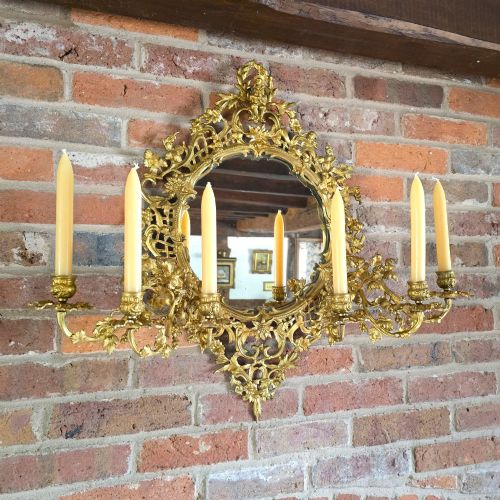
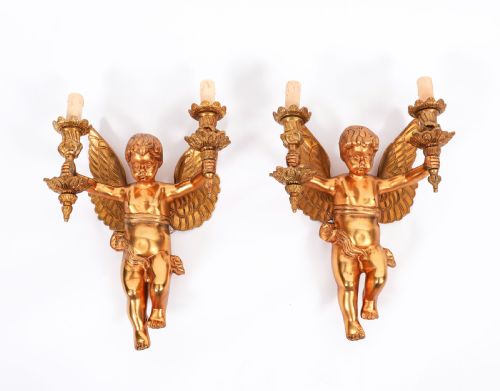
Several brass sconces stubbornly insist on dangling cherubs from their branches.
What varies in quality
Quality separates in the crispness of the chasing and the depth of the casting, where superior examples display sharp, hand-finished detail across every leaf and scroll. Finer pieces maintain balanced proportions between the backplate and the branching arms, ensuring structural harmony.
The choice of base metal and the richness of the gilding dictate the longevity and visual warmth of the object. Heavier bronze and true ormolu castings hold their finish and structural integrity far better than lighter stamped or plated metal alternatives.
The Rococo Branch Candle Sconce Glossary
- Ormolu
- Finely detailed gilded bronze or brass, popular in French decorative arts. This technique uses a mercury-gilding process on bronze to achieve a rich, enduring golden lustre.
- Rococo Revival
- A nineteenth-century design movement resurrecting eighteenth-century asymmetrical motifs. It favours scrolls, shell forms, and naturalistic plant tendrils over strict symmetry.
- Girandole
- An ornamental branched wall light featuring a reflective mirror backplate. The mirrored surface multiplies the flickering candle illumination within the room.
- Candelabra
- A branched candlestick holder designed to support multiple candles simultaneously. In wall-mounted formats, these arms project outward to distribute light across the wall surface.
- Gesso
- A plaster-like material applied to carved wood as a base for gilding. It allows craftsmen to carve intricate relief details before applying gold leaf.
Rococo Branch Candle Sconce: Frequently Asked Questions
What is a rococo branch candle sconce?
A rococo branch candle sconce is a wall-mounted lighting fixture featuring multiple curved, organic arms designed to hold candles. These pieces draw heavily on eighteenth-century French design principles, using scrolling vegetation and asymmetric forms.
They serve as both functional illumination and decorative wall art, frequently appearing in pairs or larger sets to balance a room's interior scheme.
How were these wall lights used originally?
Originally, these sconces held wax or tallow candles to light parlours, dining rooms, and hallways before the widespread adoption of electricity. Placed near mirrors or above furniture, their branching arms helped multiply and cast ambient light across the space.
Many surviving examples have since been professionally adapted for electrical wiring while retaining their original candle-form drip pans.
How do I date a nineteenth-century wall sconce?
Dating relies on examining the casting techniques, fixing screws, metal composition, and stylistic revival markers. Mid-nineteenth-century pieces often display heavier bronze castings and hand-finished chasing typical of French manufacturing from that era.
Later twentieth-century revivals tend to use lighter brass stampings or simplified assembly methods, distinguishing them from earlier nineteenth-century originals.
Can these antique sconces be wired for electricity?
Yes, many period wall sconces are successfully adapted for modern electrical circuits by running hidden wiring through the hollow arms or backplate. Professional electricians usually perform this conversion while preserving the exterior historical finish and structural components.
Buyers should check individual listings to see whether a specific pair remains in its original candle-only state or has already been rewired.