




French Provincial Crystal Lights
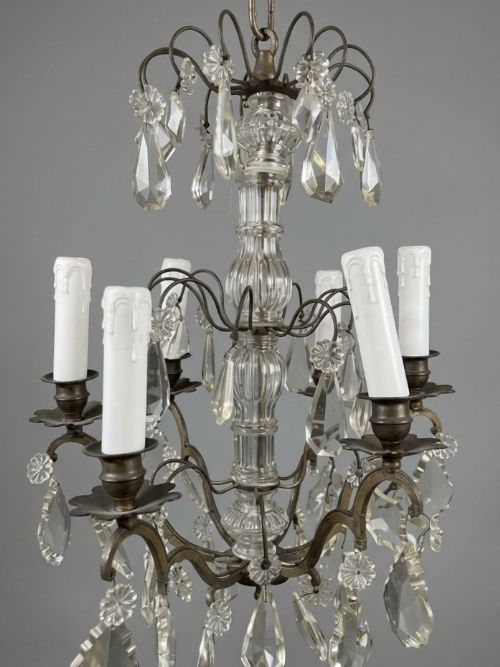
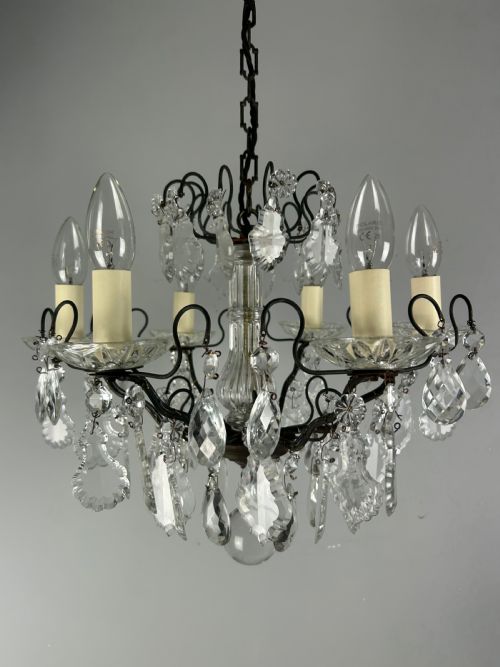
These French provincial crystal lights are grand chandeliers forged in iron, brass and gilt metal, dripping with cut glass to catch every glimmer of light in a room.
French Provincial Crystal Lights
These French provincial crystal lights are ornate chandeliers designed to illuminate grand interiors with a distinctly continental aesthetic. When you search for French provincial crystal lights, you encounter overhead light fittings originating from periods spanning the late nineteenth century through to the nineteen-thirties. The pieces on this page take the form of multi-light chandeliers ranging from six-bulb setups up to large eighteen-light double-tiered centrepieces.
The aesthetic draws heavily on traditional French chateau and rococo styles, often employing birdcage frames or dark metal armatures. You are most likely to meet examples featuring wrought iron, gilt bronze or dark brass, heavily hung with crystal teardrops and cut glass elements. Certain pieces incorporate polychrome finishes or coloured glass, bringing a decorative variation to the standard metallic frame.
How they were made
Makers constructed the structural frames of these chandeliers using robust metals such as wrought iron, brass, bronze and steel. Artisans shaped these materials into scrolling arms, birdcage configurations and dark framed armatures capable of supporting numerous candle or bulb tiers.
The defining characteristic is the extensive use of glass and crystal ornamentation, wired or pinned directly to the metal framework. Cut glass drops, coloured crystal teardrops and large glass drips are suspended across the tiers to refract the illumination produced by the lights.
French Provincial Crystal Lights Retail Price Guide 2026
Typical asking prices for french provincial crystal lights among the pieces listed under this phrase on Sellingantiques today, from the lower quarter to the upper quarter. They describe what is for sale here now, not the wider market.
Materials utilised across these listings include wrought iron, gilt bronze, brass, cut glass and coloured crystal.
What varies in quality
The quality of these chandeliers rests primarily on the substance of the metalwork and the precision of the glass cutting. Heavier bronze, gilt metal and hand-wrought iron demonstrate superior craftsmanship compared to simpler steel frames.
The richness of the hanging elements further distinguishes the tier of the piece. Finely cut crystal teardrops and complex birdcage structures represent a higher grade of manufacture than basic glass drops hung from standard frames.
The French Provincial Crystal Lights Glossary
- Chandelier
- A branched ornamental light fitting suspended from the ceiling. These fixtures are designed to hold multiple bulbs or candles across single or double tiers.
- Birdcage frame
- A structural metal cage enclosing the central stem of a chandelier. This framework provides multiple attachment points for cascading crystal drops.
- Gilt metal
- Metal coated with a thin layer of gold paint or leaf. This finish gives the brass or bronze armature a rich, reflective surface.
- Cut glass
- Glass shaped by abrasive wheel cutting to create faceted surfaces. These facets maximise the sparkle and light refraction.
- Wrought iron
- Iron beaten into shape by hand tools or machinery. It forms the sturdy, dark-toned scrollwork found on provincial frames.
French Provincial Crystal Lights: Frequently Asked Questions
How do I clean a crystal chandelier?
Cleaning requires a gentle hand and specialised glass cleaner applied with a soft cloth rather than submerging the fixture. Each crystal drop should be wiped individually while still attached to the frame to avoid damaging the delicate wiring.
Take care not to twist the metal pins holding the glass teardrops in place. Regular dusting with a feather duster helps maintain the sparkle between deeper cleans.
What periods do these chandeliers come from?
The available lighting spans from the nineteenth century through the Edwardian era and into the nineteen-thirties. Earlier pieces often display heavier bronze or dark brass structures, whilst later twentieth-century examples incorporate painted steel or polychrome finishes.
Stylistic cues such as rococo scrolls and chateau birdcage frames persist across these decades. Examining the wiring and metal casting helps pinpoint the exact manufacturing era.
How many lights do I need for a room?
Selection depends on the dimensions of your space and the height of the ceiling. Smaller rooms suit six-light fixtures, whereas grander reception spaces accommodate eighteen-light double-tiered chandeliers.
Larger configurations cast a wider pool of illumination through their multiple glass drops. Ensure the drop length leaves adequate clearance below the lowest tier.
Are these lights compatible with modern wiring?
Most antique fixtures require professional rewiring to meet contemporary electrical safety standards. Electricians can adapt the internal lamp holders to accept standard modern bulbs while preserving the original frame.
It is advisable to have a qualified specialist inspect the ceiling anchor points before hanging heavy iron or bronze pieces. The robust weight of these chandeliers demands secure structural support.