
Traditional Crystal Drop Chandelier
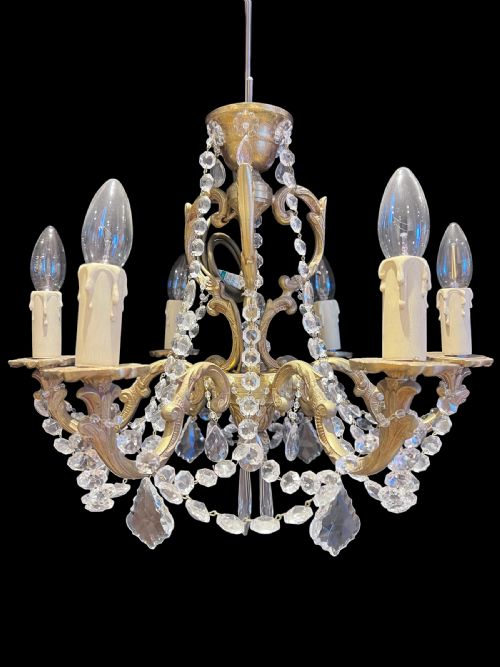
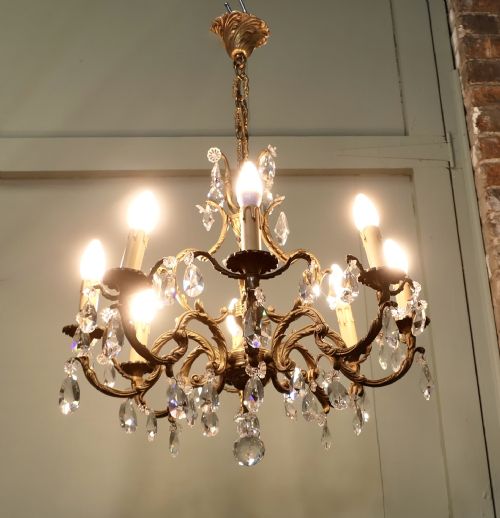
A traditional crystal drop chandelier brings remarkable illumination to a room, catching the light through cut glass and polished brass.
Traditional Crystal Drop Chandelier
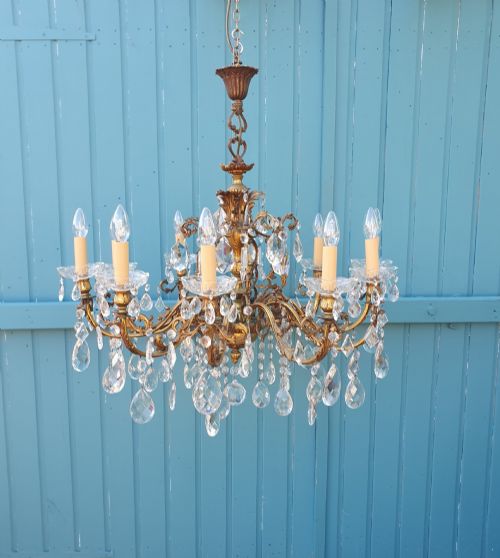
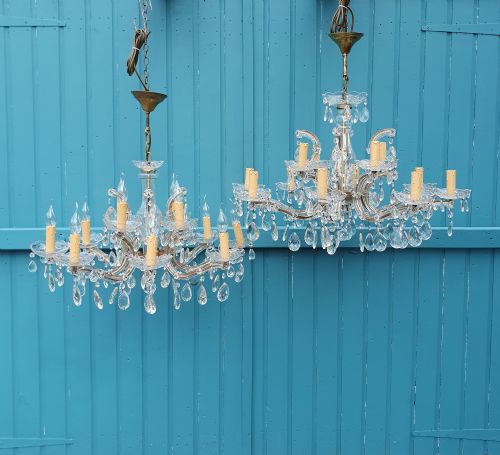
When you search for a traditional crystal drop chandelier, you enter a world of multi-armed ceiling lights designed to hang centrally in principal rooms. These fixtures span from the late nineteenth century through the Edwardian era and into the 1930s, encompassing styles from French Empire and Rococo to Italian Florentine Baroque.
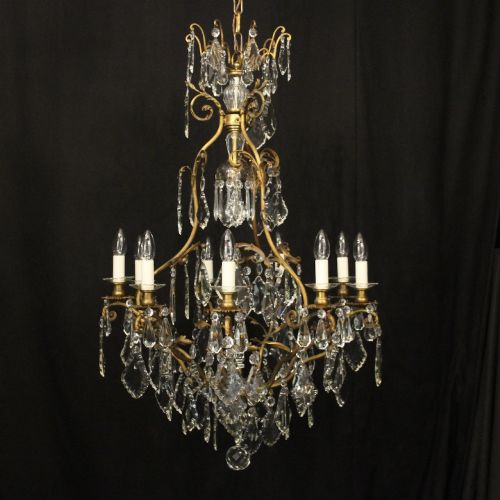
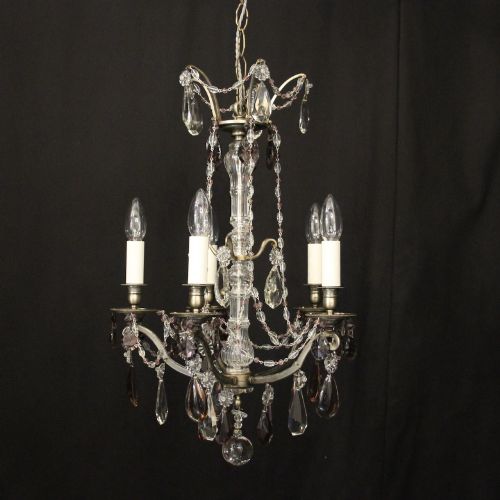
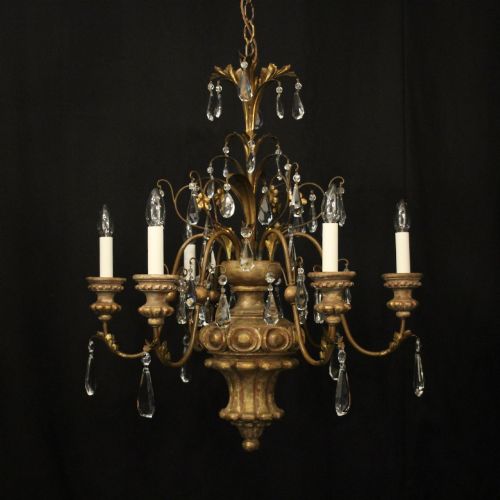
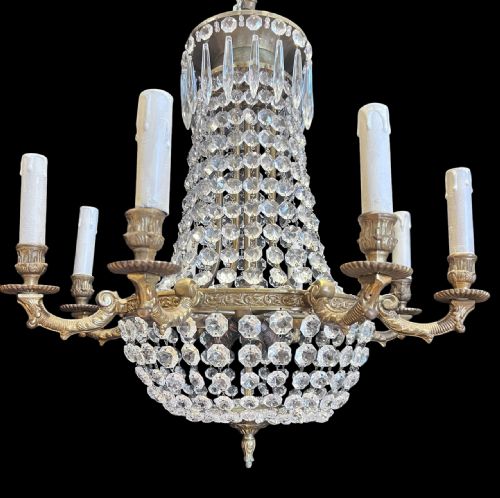
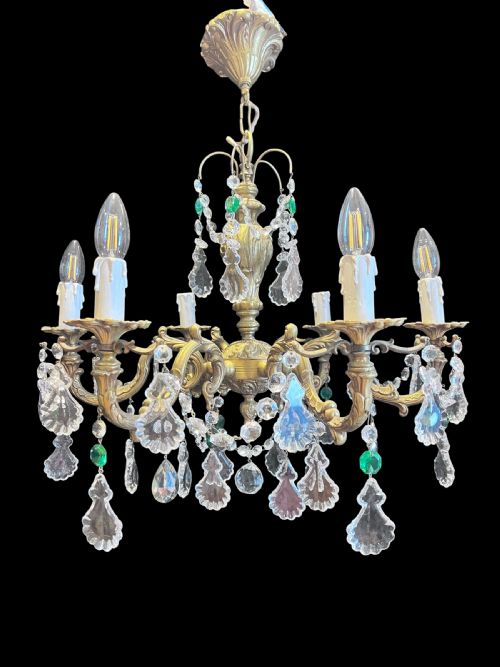
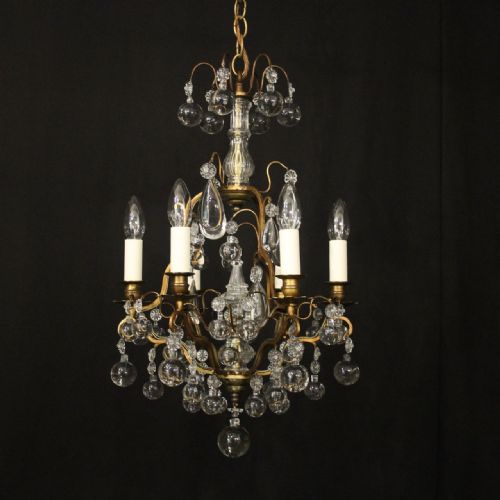
On this page, the most common pieces you will meet are French brass, gilt bronze, and gilded metal chandeliers dating predominantly from the 1920s and 1930s. They arrive in various sizes, ranging from compact bag chandeliers and spike designs to large ten or twelve light fixtures hung with cascading lustres.
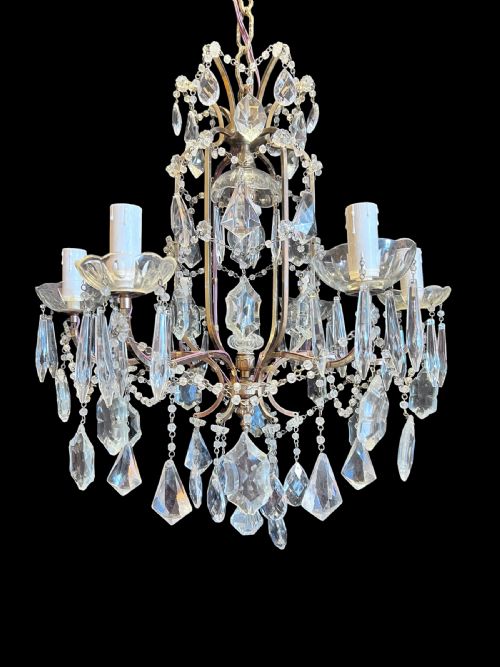
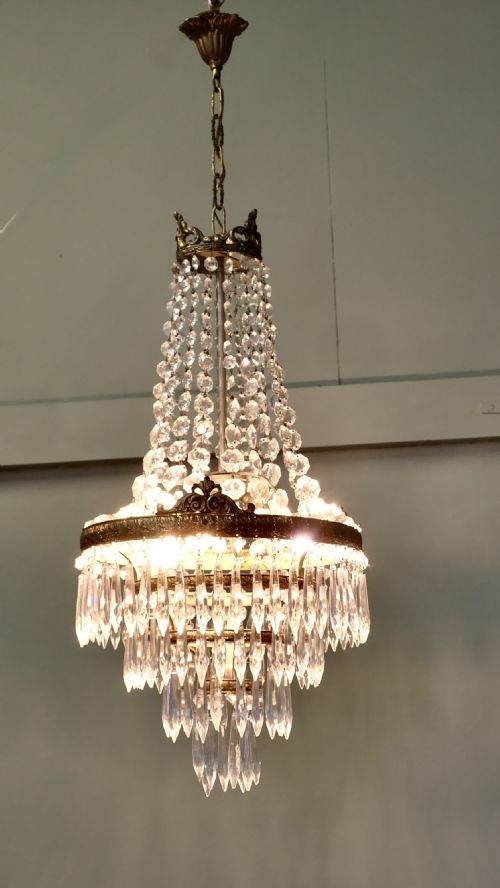
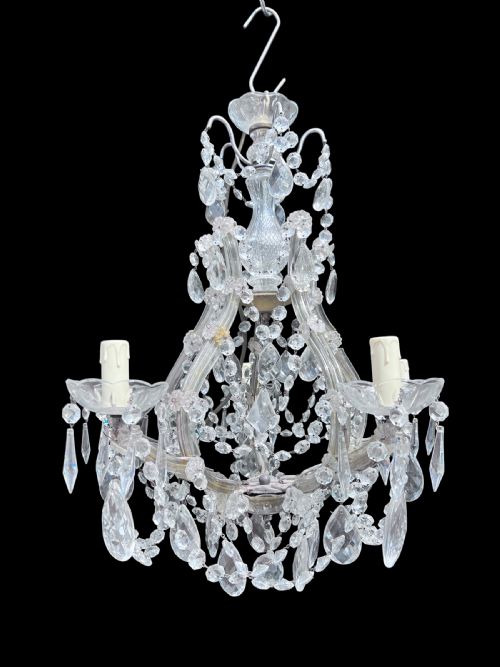
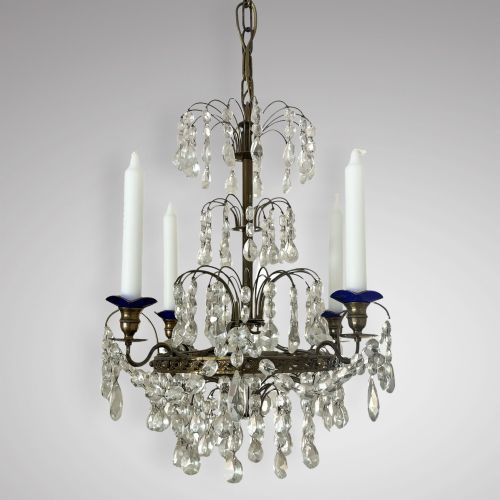
The selections also include Italian Marie Theresa types, Swedish pieces, and Bohemian creations alongside English examples. Many incorporate specific structural forms such as cage frames, tent and waterfall arrangements, or beaded arms that define their historical aesthetic.
How They Were Made
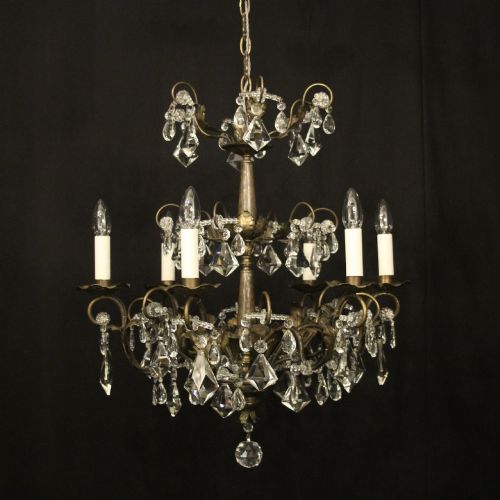
The foundational frames of these fixtures rely primarily on brass, gilt bronze, iron, and toleware, shaped into arms, cages, and tiers to support multiple candle-style lights. Gilded finishes and silver plating were frequently applied to the metal skeletons to enhance their reflective brilliance.
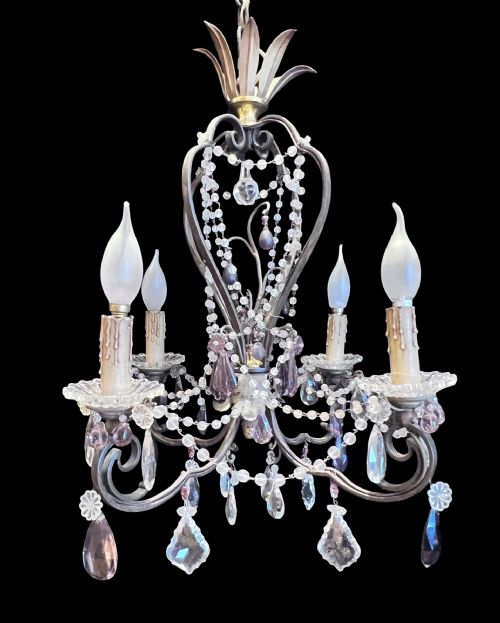
Suspended from these metal frameworks are components of crystal, glass, and cut crystal, formed into teardrops, beads, and lustres. Artisans wired and pinned these glass elements by hand, creating complex tent and waterfall cascades that disperse illumination across the room.
Several examples feature coloured crystal teardrops, proving that historical interiors enjoyed a vibrant splash of amethyst and jewel tones long before modern lighting.
What Varies in Quality
The distinction between tiers of quality rests in the density and purity of the glass elements, where heavy cut crystal produces sharper light refraction than standard moulded glass. The metalwork itself tells a similar story, as finely chased gilt bronze and substantial brass frameworks display superior sculptural definition compared to lighter stamped metal.
Scale and ambition also dictate standing, with multi-tiered structures holding numerous arms commanding greater presence than simple single-tier variants. Original gilding and complete, matching sets of coloured or clear crystal drops preserve the integrity of the piece far better than mismatched replacements.
The Traditional Crystal Drop Chandelier Glossary
- Bag chandelier
- A light fixture featuring a flattened upper crown that tapers down into a basket or bag shape formed of dense crystal beads and hanging drops. This enclosed profile gained popularity during earlier eras and persists in various vintage iterations.
- Waterfall chandelier
- A lighting design where concentric tiers of crystal drops cascade downward like cascading water from a central crown. The arrangement maximises the reflective surface area visible from below.
- Marie Theresa
- A specific style of chandelier characterised by flat metal arms clad in glass strips and secured with rosette pins, often associated with Austrian and Italian craftsmanship. Named in honour of the Empress, these fixtures present a distinctive flattened silhouette.
- Lustre
- A cut glass or crystal pendant suspended from the arms or crown of a light fixture to catch and scatter illumination. These elements vary from simple teardrops to complex multi-faceted prisms.
- Toleware
- Painted or lacquered sheet metal utilised in the construction of select antique light frames. It provides a contrasting matte texture against the high-gloss sparkle of hanging glass.
Traditional Crystal Drop Chandelier: Frequently Asked Questions
How do I hang a heavy chandelier safely?
Installation requires anchoring directly into the ceiling joist using a heavy-duty electrical box and a rated steel support hook. The weight of brass and crystal demands professional structural assessment.
Electrical wiring must be checked to ensure it handles the multi-bulb capacity safely, particularly on fixtures with ten or more lights.
What rooms suit a large crystal chandelier?
High-ceilinged dining rooms, entrance halls, and grand reception spaces provide the ideal vertical clearance and proportional balance for multi-armed fixtures. These spaces allow the light to disperse effectively across the room.
Placing them centrally ensures the fixture acts as the primary visual focus without obstructing movement below.
How should I clean hanging crystal drops?
Cleaning involves wiping each glass pendant individually with a mild solution of warm water and specialised glass cleaner while it remains attached to the frame. Alternatively, drops can be unhooked and washed by hand in a lined basin.
Avoiding harsh chemical sprays prevents damage to the surrounding brass, bronze, or gilt metalwork.
Can I date a chandelier by its frame?
The transition of metalworking techniques helps indicate the era, moving from heavier nineteenth-century cast bronze and dark brass to the lighter gilded brass and iron typical of the 1920s and 1930s. Edwardian examples often feature substantial multi-arm configurations.
Wiring methods and socket types also offer clues, though many antique fixtures have been rewired for modern domestic use.