
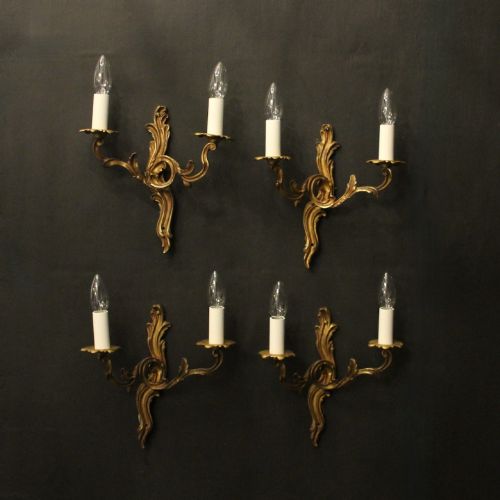
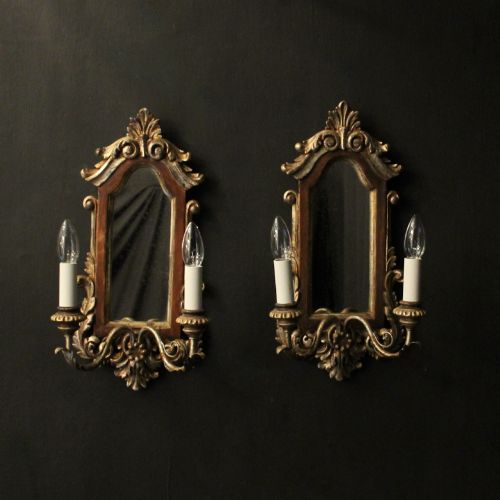
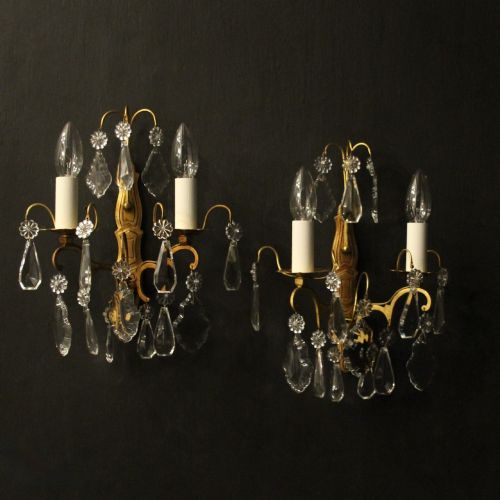
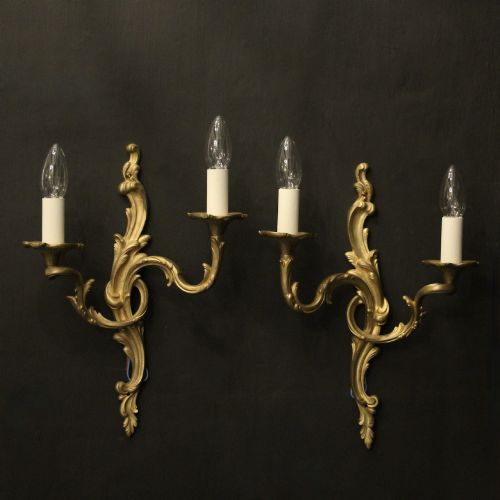
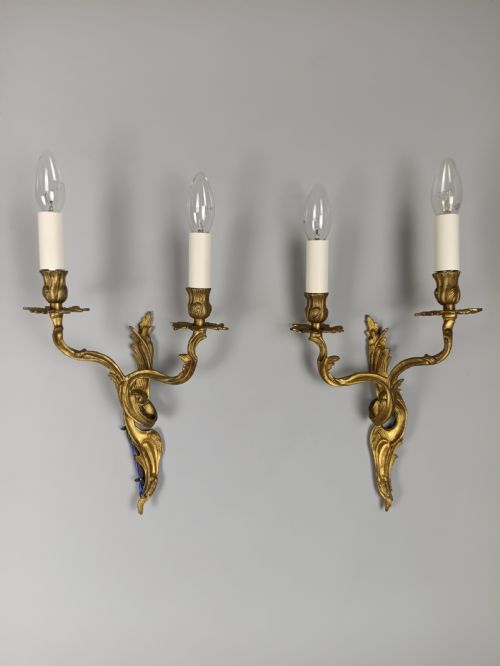
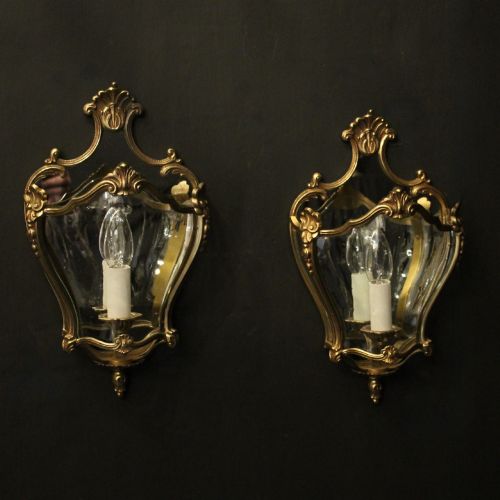
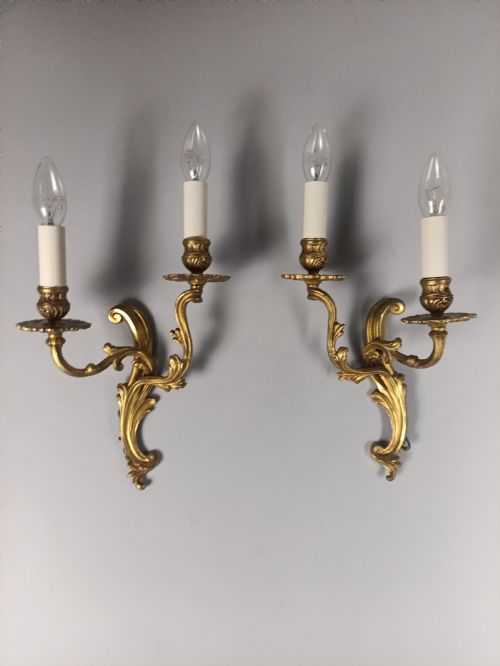
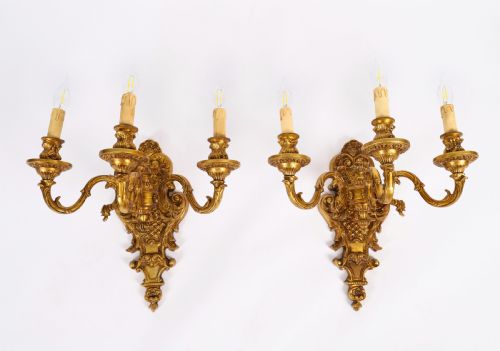

Vintage Rococo Sconces
These vintage rococo sconces bring asymmetric scrolls and ornate metalwork to an interior, offering period illumination with sculptural presence.
Vintage Rococo Sconces
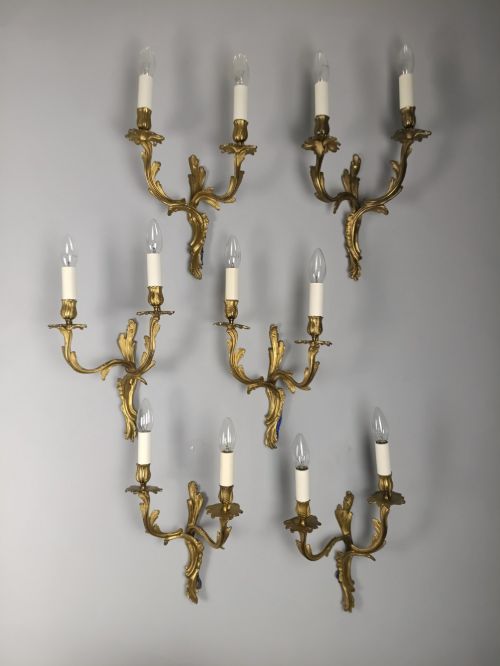
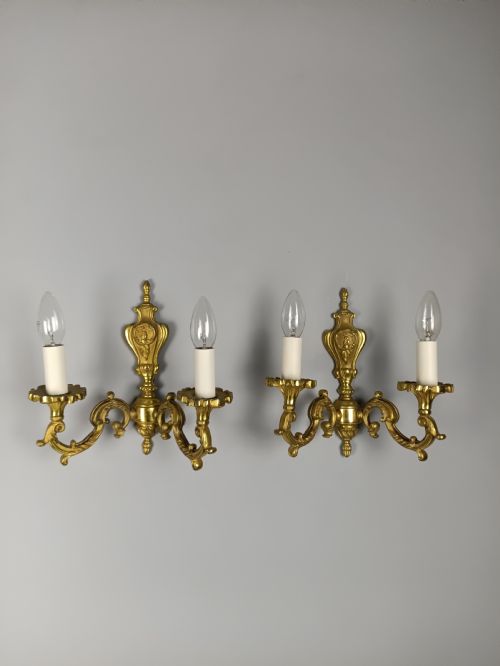
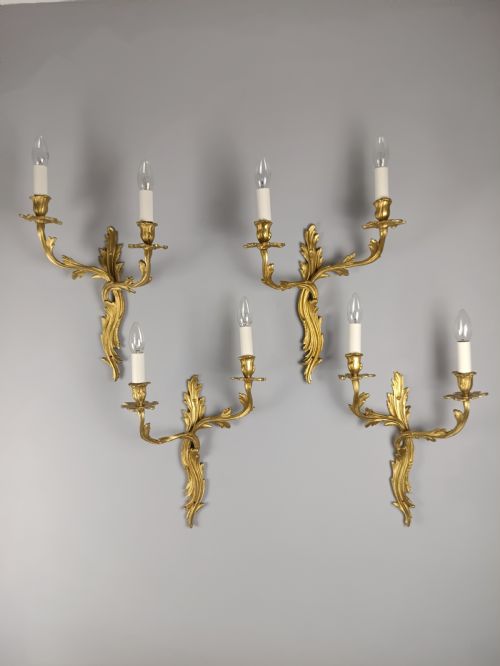
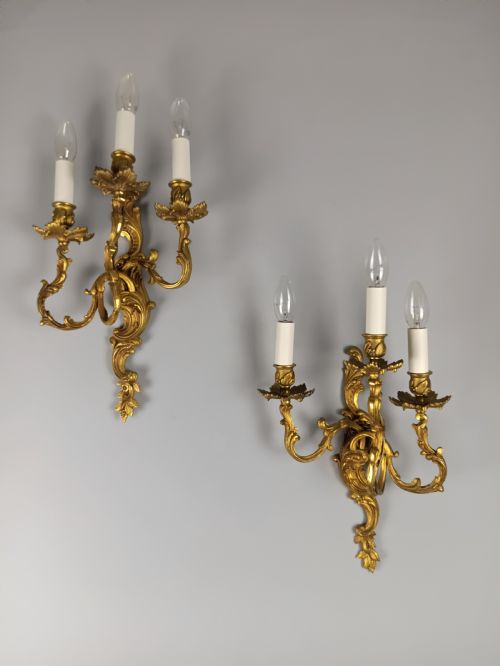
Vintage rococo sconces encompass wall lights, girandoles, and appliques originating mainly from French and Italian workshops during the nineteenth and early twentieth centuries. The selection centres heavily on twin and triple arm wall lights dating from the nineteen-twenties and nineteen-thirties, alongside examples from around nineteen hundred and the nineteenth century.
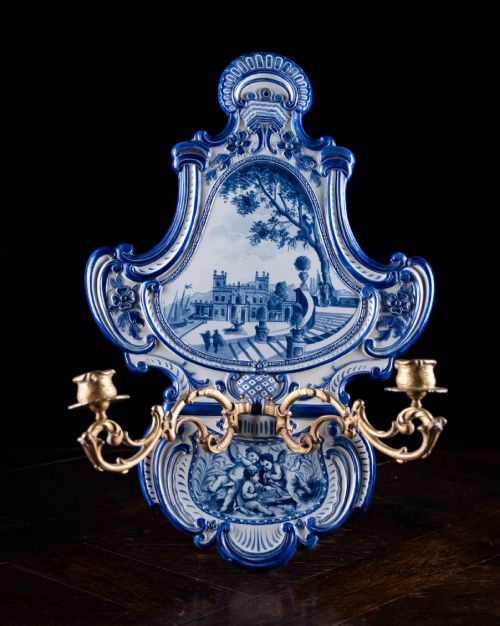
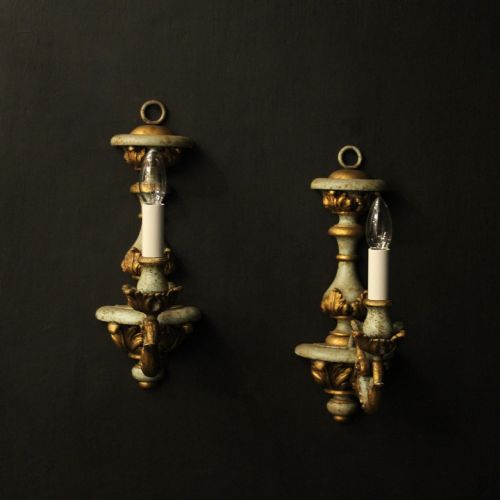
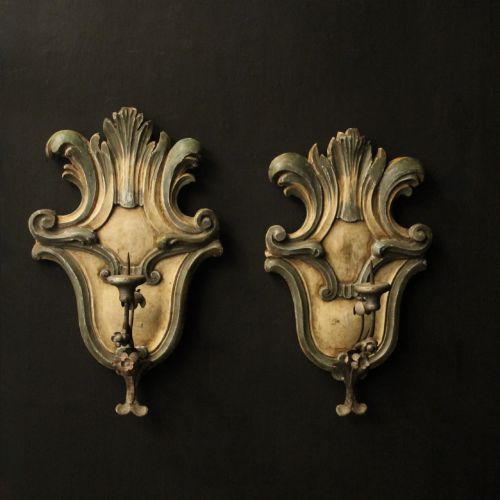
Buyers encounter decorative variations featuring cherubs, putti, and floral porcelain elements attached to gilded brass, bronze, or giltwood frames. Many pieces reflect French rococo revival and Florentine baroque styles, designed to mount directly onto walls for ambient candle or electric illumination.
Materials and Technique
Maker workshops cast metal components in brass, bronze, and ormolu, applying gilding or silver plating to achieve reflective metallic surfaces. Carved wooden frames utilise giltwood, while specific examples incorporate ceramics such as Delft and Meissen porcelain alongside glass and polychrome painted details.
Casting and chasing techniques create the characteristic asymmetric scrolls, foliage, and figurative motifs associated with the style. Artisans assembled multi-arm branches and backplates using mechanical fixings, preparing structural mounts for wall installation.
Several sconces feature cheerful porcelain cherubs and putti peering out from leafy metal branches to hold the illumination.
Craftsmanship and Definition
Quality rests in the crispness of the chased detail across the metalwork and the depth of the applied gilding. Finer pieces display sharply defined acanthus leaves and modelled figures without soft edges from worn moulds.
Substantial weight in the bronze or brass components and the integrity of the structural joints separate superior examples from simpler production. Original surface treatments and well-preserved carved wood or porcelain elements contribute to the standing of an individual piece.
The Vintage Rococo Sconces Glossary
- Ormolu
- Gilded bronze produced by applying a mercury and gold amalgam to a bronze base and heating it. This historic technique yields a durable, warm metallic lustre.
- Girandole
- A decorative wall bracket fitted with a mirror or designed to hold candles. The reflective glass multiplies the light cast by the branches.
- Applique
- A wall-mounted lighting fixture attached directly to the surface. The term frequently applies to decorative French sconces.
- Pricket
- A sharp spike on a candlestick or sconce designed to hold a candle in place. Older ecclesiastical and decorative pieces often utilise this method.
- Putti
- Depictions of plump, winged infant figures found frequently in rococo ornamentation. Sculptors cast them in metal or carved them in wood to adorn backplates.
Vintage Rococo Sconces: Frequently Asked Questions
How do I wire vintage sconces?
Many surviving wall lights date from eras when conversion to electricity occurred later in their lifespan, or they have undergone rewiring to meet modern electrical standards. Professional installation by a qualified electrician ensures safe connection to standard domestic wall supplies.
Qualified practitioners adapt internal channels or backplates to house contemporary wiring safely while preserving the external antique metalwork and original mounting points.
How do I clean gilded metal?
Gilded brass and bronze surfaces require gentle dusting with a soft dry cloth to remove accumulated particles. Avoid abrasive cleaning agents, harsh chemical polishes, and excessive moisture, which can degrade historic gilding.
Preserving the original surface patina involves minimal intervention and careful handling around delicate elements like porcelain flowers or carved wooden details.
How do I date these sconces?
Dating relies on examining manufacturing methods, fixing types, material composition, and stylistic details associated with periods like the nineteenth century or the nineteen-twenties. Maker marks, casting quality, and wiring remnants provide further clues to chronological origin.
Comparing the decorative motifs, such as rococo revival scrolls or Florentine baroque carving, against documented examples helps narrow the production era.