




Riveted Copper Vessel
These heavy riveted copper vessels hold the warmth and utility of past centuries, bringing raw industrial character and deep metallic tone into modern rooms.
Riveted Copper Vessel
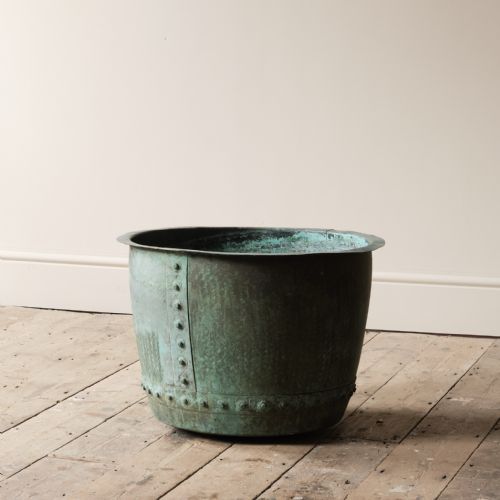
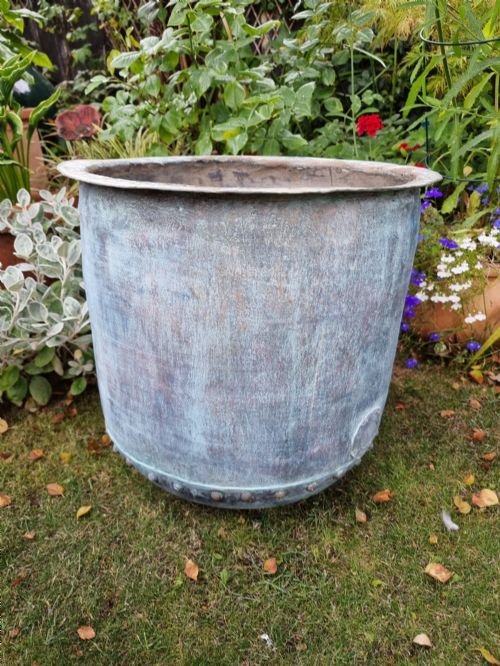
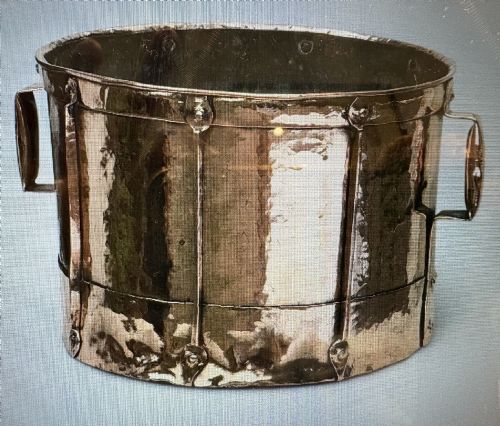
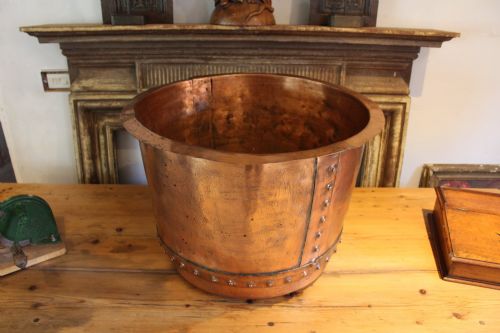
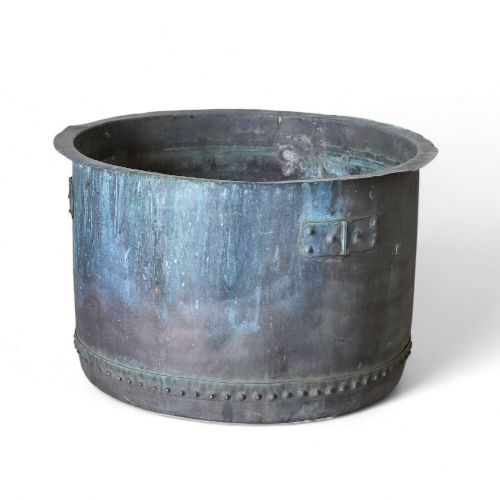
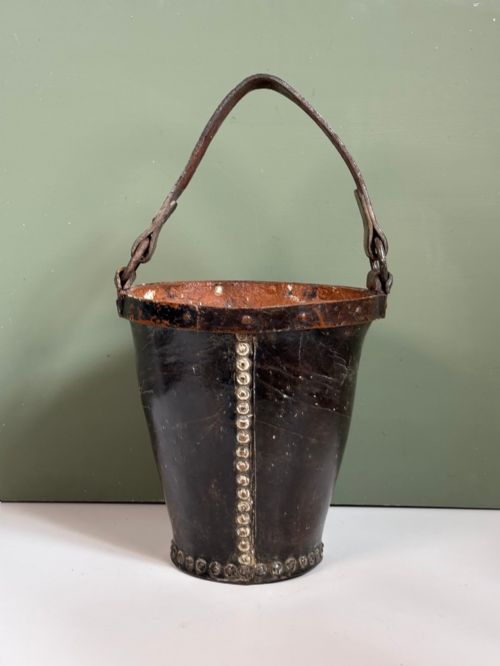
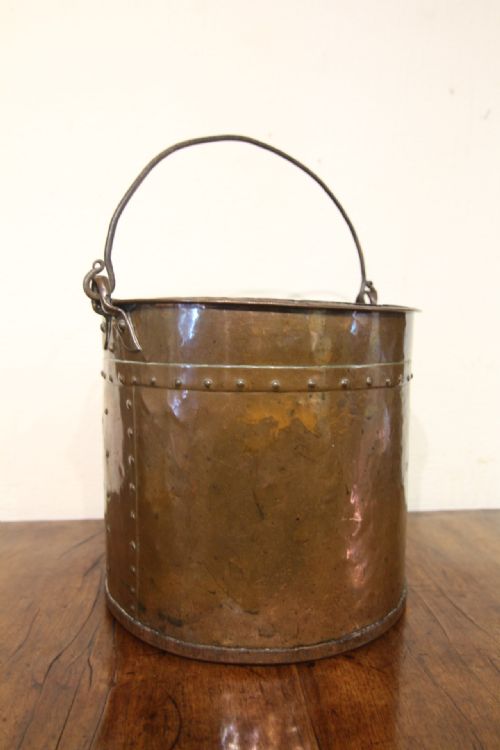
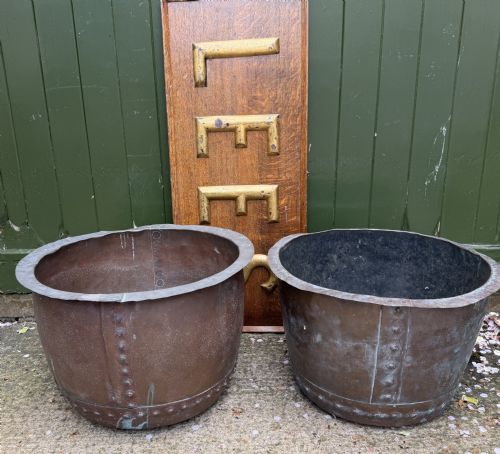
A riveted copper vessel typically takes the form of a utilitarian container originating from the nineteenth century, including large garden display pots, coal buckets, log bins, and grain measures. Buyers searching for a riveted copper vessel encounter functional domestic and agricultural items repurposed over time for fireside storage or plant display.
The domestic selection spans nineteenth century boilers, Arts and Crafts jardiniere planters, and French country ferrats. These utilitarian forms originated for heavy tasks such as boiling water, measuring grain, or holding fuel.
Pieces from the Georgian era alongside Victorian and Arts and Crafts examples dominate the available forms. This hardware bridges working agricultural utility with decorative interior display.
How they were made
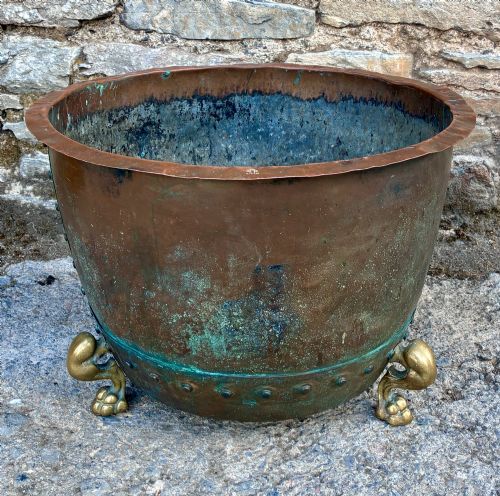
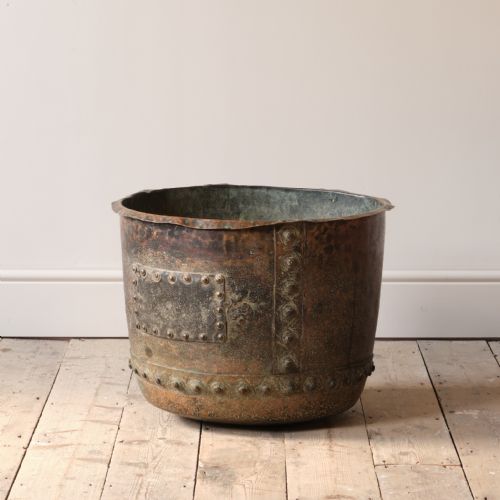
Makers formed these containers by hammering sheet metal into shape and joining seams with visible structural rivets. Wrought iron handles and brass fittings reinforced the heavy copper bodies for daily labour.
Surfaces developed natural patinas and occasional verdigris through years of exposure to moisture, heat, and handling. The combination of beaten copper and iron hardware provided durable construction designed to withstand industrial or domestic strain.
Riveted Copper Vessel Retail Price Guide 2026
Typical asking prices for riveted copper vessel among the pieces listed under this phrase on Sellingantiques today, from the lower quarter to the upper quarter. They describe what is for sale here now, not the wider market.
Materials recorded across the inventory include copper, wrought iron, brass, tin, and boiled leather.
What varies in quality
Quality rests in the weight of the metal and the integrity of the original construction rather than surface perfection. Heavy gauge copper and intact wrought iron attachments indicate robust utility and superior original manufacture.
The character of the aged patina and the regularity of the hand-beaten rivets distinguish finer examples. Vessels retaining authentic handles and uncompromised structural seams command greater appreciation among collectors.
The Riveted Copper Vessel Glossary
- Ferrat
- A traditional French agricultural measure used for grain or dry goods. These wide vessels often feature heavy riveted construction.
- Jardiniere
- An ornamental pot or stand designed to hold growing plants or flowers. Arts and Crafts examples often display raised surface work.
- Patina
- The surface sheen and colour acquired by copper through age and environmental exposure. Natural oxidation creates varied green and brown tones.
- Verdigris
- The green patina formed naturally on copper surfaces over long periods. This chemical layer signifies age and atmospheric weathering.
- Boiler
- A large metal vessel designed for heating water or laundry. These heavy containers typically feature sturdy handles and riveted side seams.
Riveted Copper Vessel: Frequently Asked Questions
What were riveted copper vessels originally used for?
Makers designed these heavy containers for demanding household and agricultural tasks. They served as wash boilers, grain measures, and coal buckets.
Over decades of domestic use, their roles shifted from industrial utility to decorative storage and garden display.
How do I clean a riveted copper vessel?
Most collectors prefer to leave the accumulated patina and natural verdigris intact. Washing with warm soapy water removes dust without disturbing the historic surface.
Avoid harsh chemical polishes that strip away the aged character earned over centuries.
Are these vessels safe for holding plants?
These metal containers accommodate potted plants easily when used with a protective inner liner. Direct planting and continuous moisture may accelerate internal metal wear.
Placing a saucer inside protects the historic base from soil acidity and stagnant water.
How can I tell a Victorian vessel from an Arts and Crafts one?
Victorian examples generally emphasise plain industrial utility with heavy riveted seams and functional iron handles. They were built strictly for labour around the hearth or farm.
Arts and Crafts pieces from the late nineteenth and early twentieth centuries introduce deliberate decorative detailing and refined surface patination.