
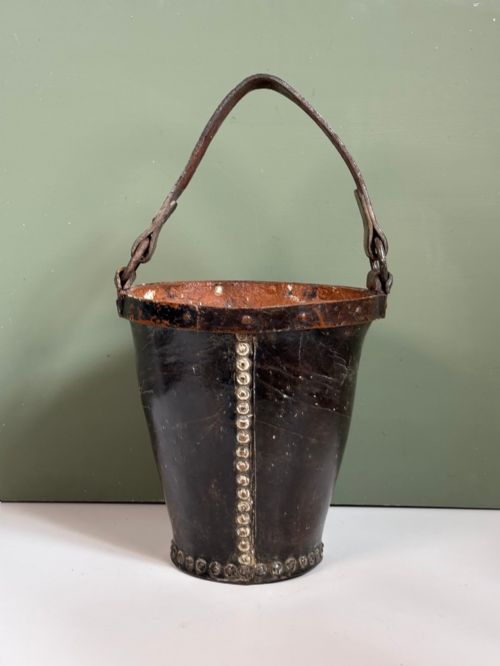
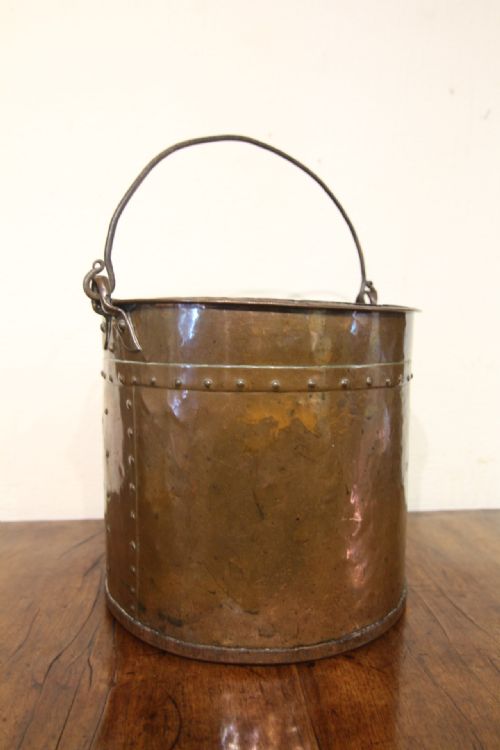


Riveted Copper Bucket
A riveted copper bucket brings warmth and utility to a hearth or hallway, fashioned from hammered metal and joined with visible studs.

What these pieces are
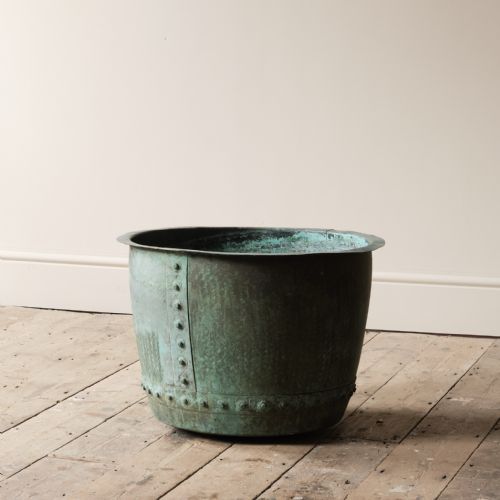
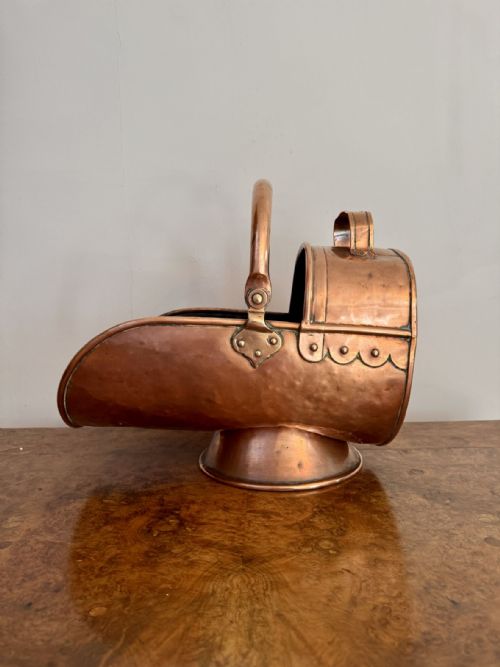
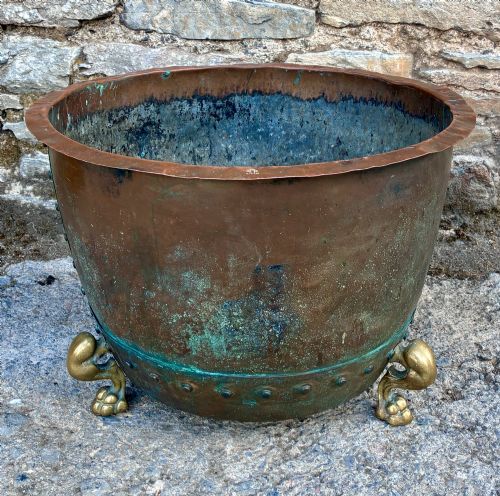
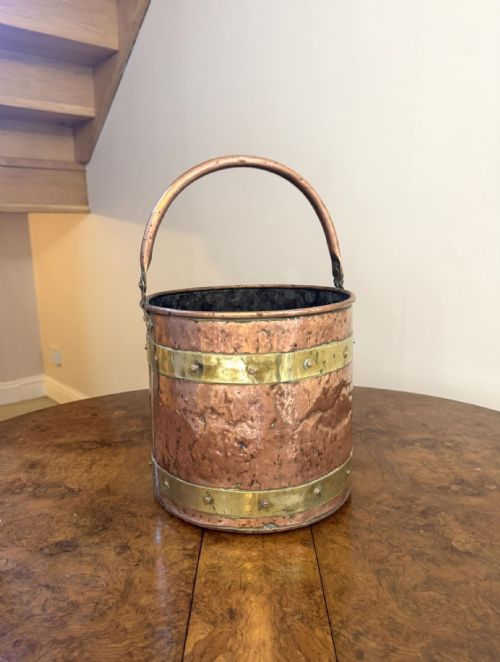
A riveted copper bucket serves domestic and decorative functions, appearing most frequently as a log bin, coal bucket, or planter from the nineteenth century. These vessels range from French provincial grain measures to Victorian hearth accessories fitted with brass handles and claw feet.
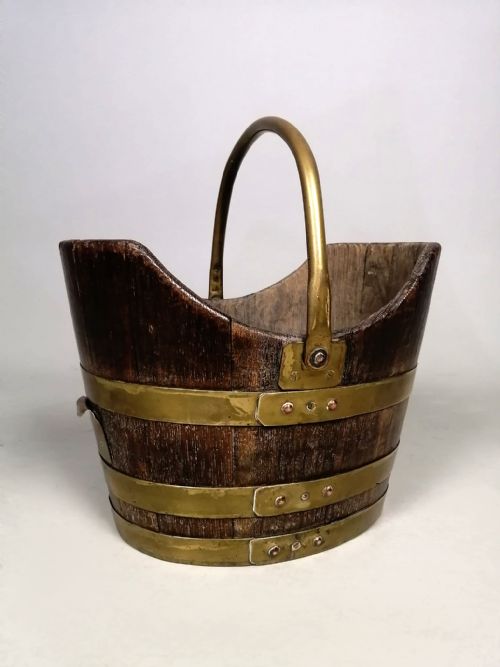
Buyers encounter forms spanning standard household containers to large planters and specialised grain measures. The Victorian examples dominate the selection, often incorporating brass banding and iron swing handles for heavy lifting near the fireplace.
How they were made
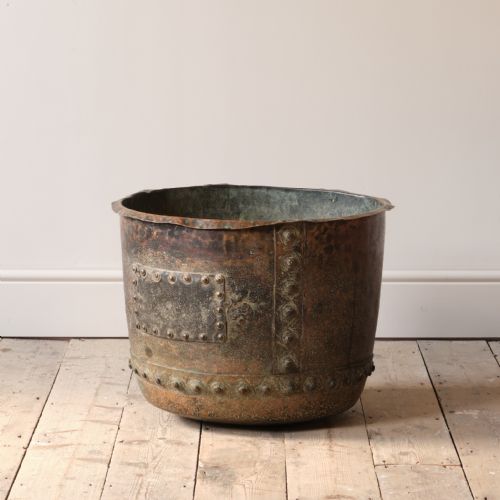
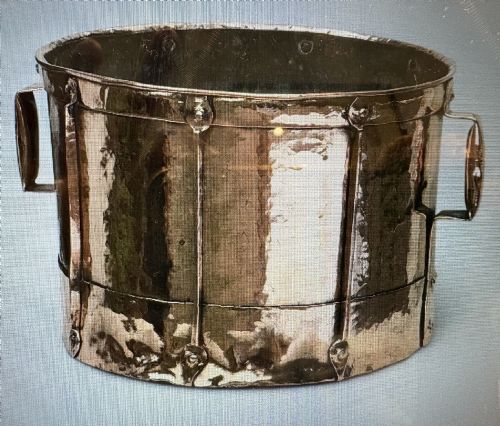
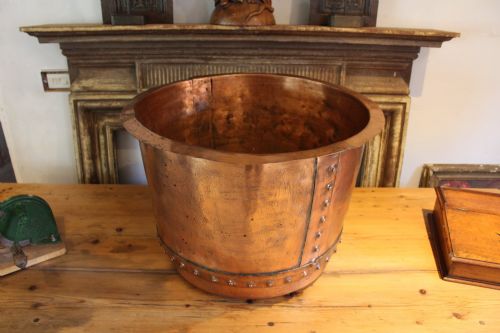
Craftsmen built each riveted copper bucket by shaping sheet metal around a base and overlapping the seams with metal pins driven through the plates. This mechanical fastening provided the structural strength required for carrying heavy loads of coal or logs.
Workers added contrasting details in brass and iron, such as heavy swing handles, rims, and claw feet. The bodies show hand-beating marks that reflect nineteenth-century workshop practices across English and French origins.
Retail Price Guide 2026
Typical UK retail prices for riveted copper bucket, calculated from the Sellingantiques database of over a million retail prices indexed since 2003. This retail price guide relies exclusively on Sellingantiques data; no external sources or auction records are used, so the figures do not describe the wider market.
Listings span the nineteenth century, featuring copper combined with iron and brass across Victorian and French provincial styles.
What varies in quality
The distinction between ordinary utility items and finer pieces lies in the crispness of the hand-beating and the presence of decorative mounts like brass claw feet or cast handles. Heavier gauge metal and neat, even rows of rivets elevate a vessel above standard production.
Makers who integrated brass banding or refined proportions created pieces that functioned as decorative drawing room accessories rather than simple coal containers. The harmony between the copper body and its iron or brass fixings dictates the visual hierarchy.
The Riveted Copper Bucket Glossary
- Riveted
- A method of joining sheet metal where pins are inserted through overlapping plates and hammered flat. This technique creates a secure mechanical bond visible along the side seams of the vessel.
- Ferrat
- A traditional French measure or container typically fashioned from copper. These items often possess simple cylindrical forms used originally in agricultural settings.
- Log Bin
- A large container designed for storing firewood beside a hearth. These pieces require sturdy iron handles and thick walls to withstand heavy logs.
- Coal Bucket
- A domestic receptacle for holding solid fuel near a fireplace. They frequently feature swing handles and reinforced bases to handle abrasive materials.
- Brass Banding
- Metal strips fitted around the rim or body of a vessel for reinforcement and decoration. This contrast highlights the reddish tone of the copper.
Frequently Asked Questions
How were these buckets used originally?
These vessels served practical roles around the nineteenth-century home, carrying coal to fireplaces, storing logs, or measuring grain in French provinces.
Over time, many of these utilitarian objects transitioned into decorative interior pieces used as planters or fireside storage.
What periods do these pieces come from?
The available selection dates predominantly from the nineteenth century, including specific years like eighteen-fifty, eighteen-sixty, and eighteen-seventy.
Victorian and French provincial styles represent the primary design traditions found within this category.
How do I clean copper and brass?
Maintenance typically involves dusting and occasional wiping with a soft cloth to preserve the natural patina developed over the centuries.
Harsh chemical polishes remove the aged surface character that collectors value on nineteenth-century metalwork.
Are these buckets structurally sound for logs?
Most surviving examples retain their heavy iron handles and solid riveted seams, making them suitable for holding firewood.
Inspect the base and joints to ensure the metal remains thick enough to support the weight of logs.