



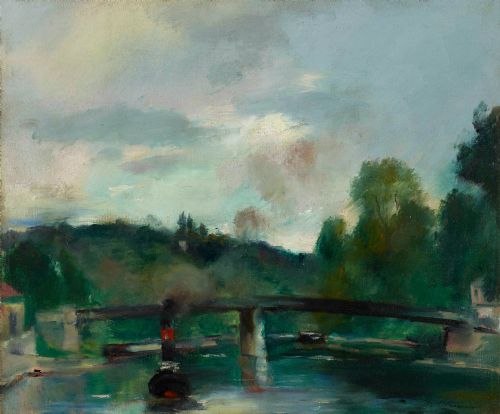
River Landscape Oil Painting
When choosing a river landscape oil painting, collectors acquire historical waterways, rural banks, and bustling bridges captured in pigment across centuries.
River Landscape Oil Painting
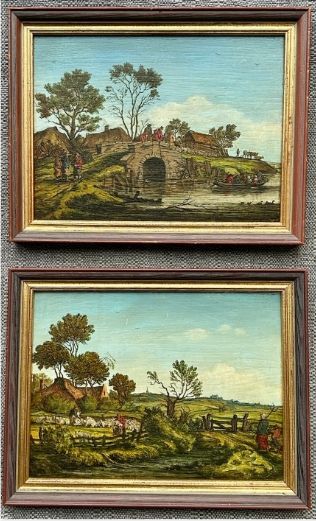
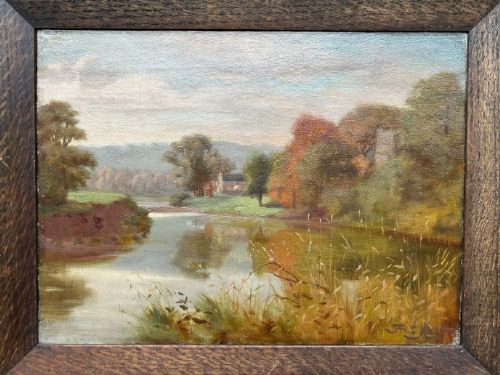
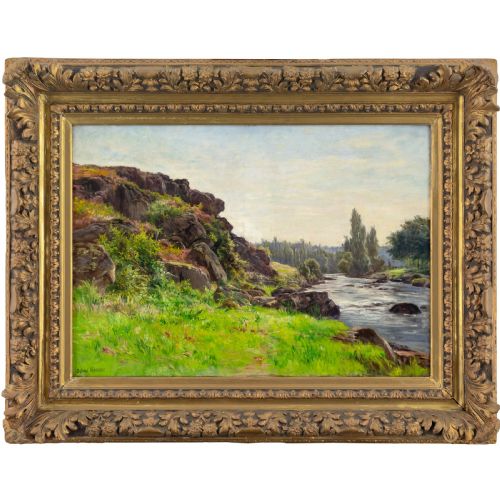
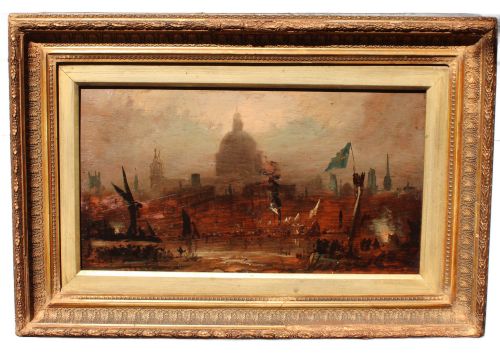
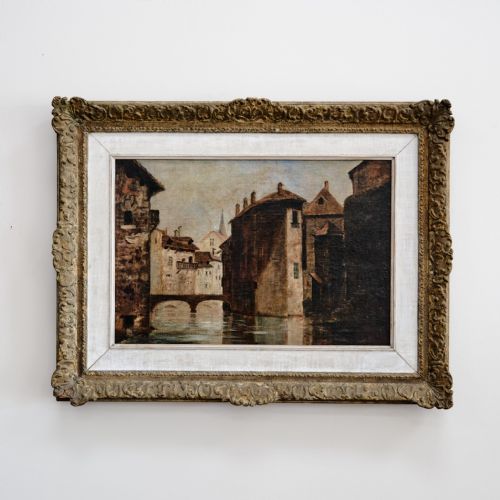
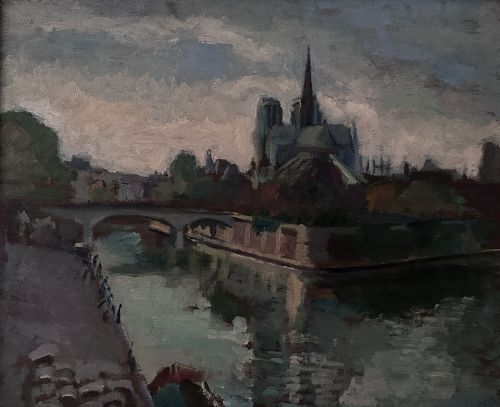
A river landscape oil painting captures flowing waterways, rural banks, and historic bridges rendered in oil on canvas, board, or wood panels. These works span centuries of artistic expression, ranging from British and Dutch scenes to French Impressionist studies.
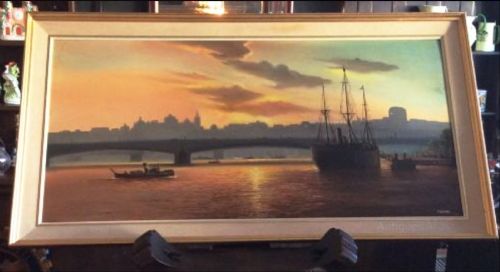
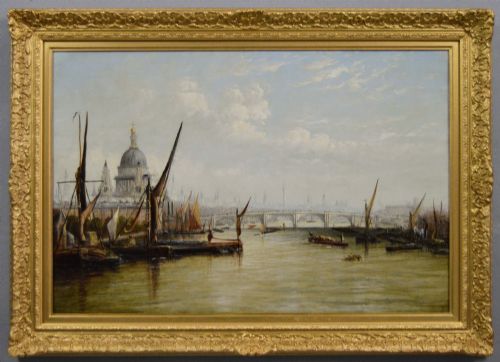
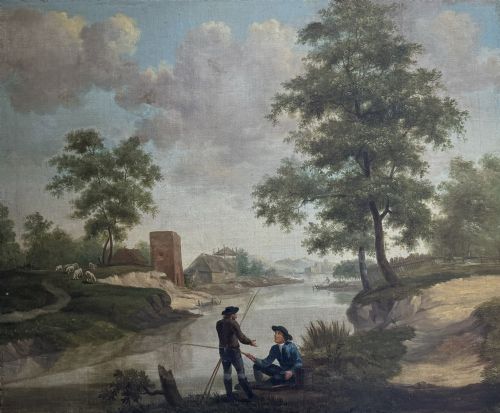
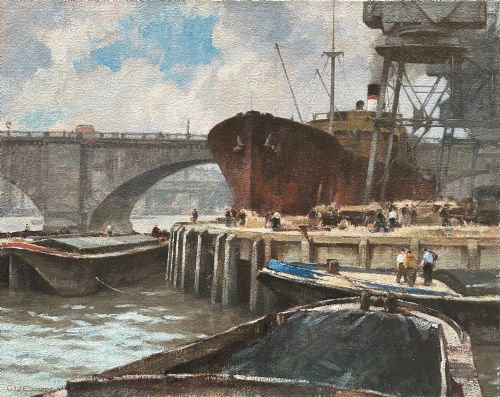
The selections on this page predominantly date from the nineteenth and twentieth centuries, incorporating Victorian, Edwardian, and mid-century modern interpretations. Common compositions depict figures fishing, barges on urban rivers like the Thames, and serene countryside streams.
Buyers encounter regional views from England, Scotland, Wales, France, and the Netherlands, executed by academic painters, local practitioners, and continental schools. These artworks document changing rural and industrial environments alongside shifting artistic movements.
How They Were Made
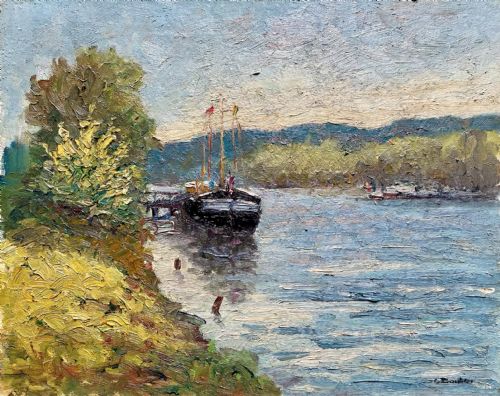
Artists applied oil paint using brushes and palette knives onto stretched canvas, prepared wood panels, card, or milk glass. The medium allowed for layered application, blending light across water surfaces and building thick impasto textures.
Supports were frequently coated with gesso or primed before painting to seal the surface and preserve the pigment. Many surviving nineteenth-century examples retain their original gold leaf or carved frames.
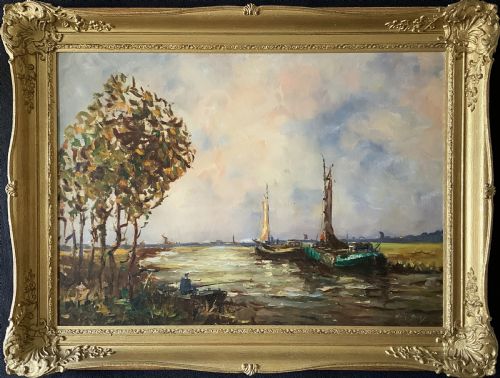
Regional schools developed distinct techniques, from the tight brushwork of 19th-century realism to the looser, broken strokes associated with British and French Impressionism.
Listings feature works executed on canvas, wood panels, card, and milk glass across the nineteenth and twentieth centuries.
What Varies in Quality
The fidelity of perspective, the handling of reflected light on water, and the naturalism of atmospheric depth distinguish accomplished compositions from basic topographical records. Master painters balance the density of foliage with the fluid movement of the current.
Condition of the pigment layer, stability of the ground support, and the presence of original framing contribute significantly to the integrity of a piece. Works retaining undisturbed original surfaces without excessive overpaint hold greater historical value.
Attribution to documented artists or recognised schools elevates certain pieces, particularly when a painting exemplifies the defining traits of the Barbizon School or British Impressionism.
Kenneth Cozens·George Graham·Frederick Marriott·Gabriel Mathieu·Francis Moltino·Willem Bos·Henri Ottmann·Albert Rieger·Herbert Royle·Paul Désiré Trouillebert·Florence Adelina Hess·Henry H Parker·Sydney Yates Johnson·John Horace Hooper·John Ferneley Senior
The River Landscape Oil Painting Glossary
- Canvas
- A heavy woven fabric stretched across a wooden frame to serve as a support for oil paint. It provides a slightly flexible surface that responds well to textured brushwork.
- Gesso
- A plaster mixture applied to wood panels or canvas to create a smooth, absorbent base for oil paint. This preparation prevents the oil from rotting the fabric or wood beneath.
- Impasto
- Paint applied thickly to a canvas, standing out in relief from the surface. This technique captures physical texture and reflects light dynamically.
- Wood Panel
- A rigid wooden support utilised by artists before stretched canvas became dominant. Panels offer a stable surface that resists sagging and puncturing over centuries.
- Gold Leaf
- Hammered sheets of gold applied to frames or decorative elements of an artwork. It provides a reflective border that isolates the painted scene from its surroundings.
River Landscape Oil Painting: Frequently Asked Questions
How do I identify the period of a river landscape oil painting?
Examine the canvas preparation, stretcher frame construction, and pigment characteristics alongside any artist signatures or dates inscribed on the reverse. Costume details of figures or architectural elements within the depicted scene also provide chronological markers.
Stylistic cues such as the loose brushwork of post-impressionism or the romantic lighting of earlier Victorian works help narrow the era of execution.
Where were these paintings typically displayed in historical homes?
Landscapes traditionally hung in formal reception rooms, libraries, and dining parlours of period residences. They served to bring views of nature and notable waterways inside domestic spaces.
Larger canvases often occupied prominent positions above mantelpieces or along stairwells, framed in gilt wood to complement interior decoration.
How should I care for an antique oil painting at home?
Keep paintings away from direct sunlight, high humidity, and rapid temperature fluctuations to prevent cracking in the paint layer. Display them on interior walls where environmental conditions remain stable.
Dust surfaces gently with a soft, dry brush, avoiding water or chemical cleaners that can damage fragile historical varnishes.
What is the difference between an oil on canvas and an oil on panel?
Canvas relies on a woven textile stretched over a wooden frame, offering flexibility and a characteristic woven texture beneath the paint. Panel paintings use a rigid piece of wood, which provides a smooth, unyielding surface for fine detail.
Panels frequently appear in earlier works or smaller cabinet paintings, whereas larger compositions tend to utilise canvas.