






Rich Brown Writing Table
A rich brown writing table brings warmth and utility to a room, offering a solid timber workspace shaped by centuries of cabinet-making.

Rich Brown Writing Table
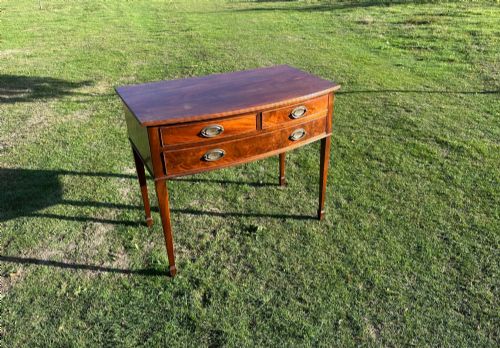
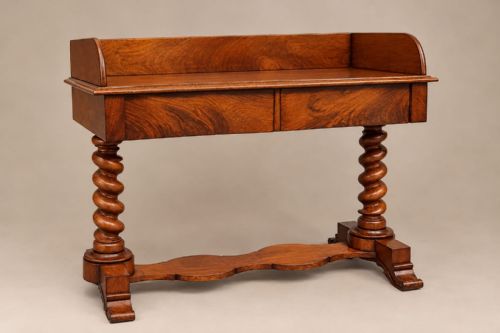
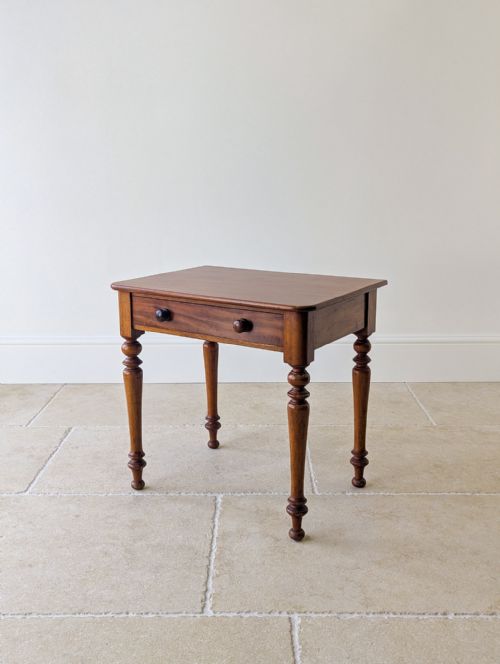
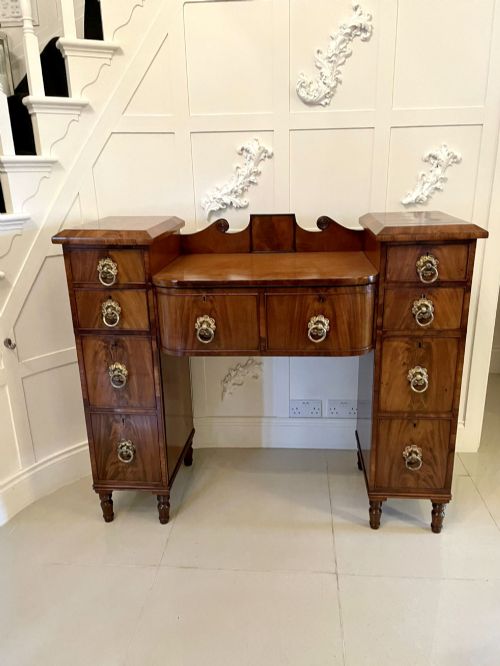
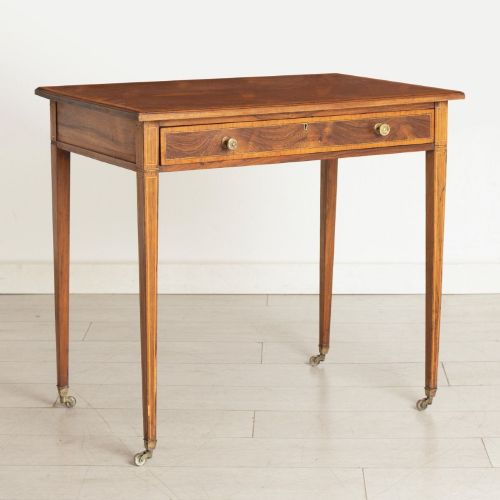
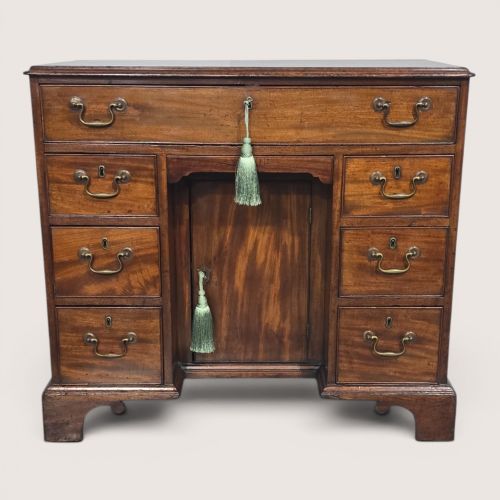
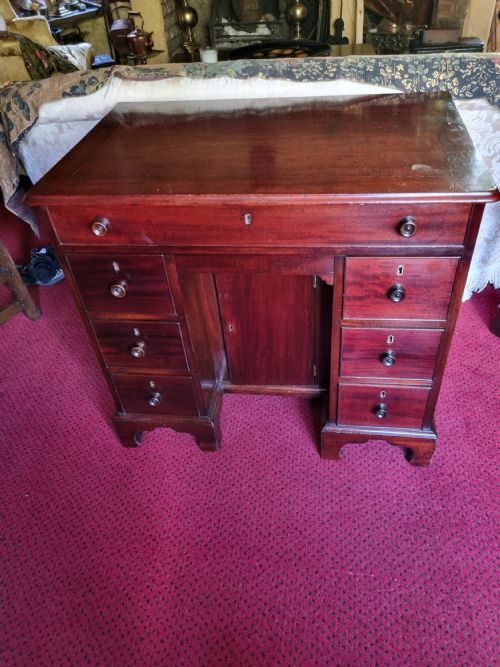
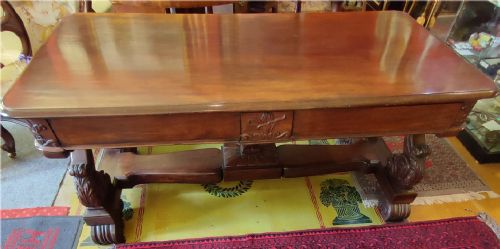
When you search for a rich brown writing table, you encounter diverse forms ranging from compact side tables and dropleaf designs to grand kneehole desks and architectural library tables. These pieces span periods from the mid-eighteenth century through the Georgian, Regency, and Victorian eras into the Edwardian period.
The pieces listed here lean heavily toward mahogany timber, frequently showing deep patination and rich grain. You will encounter functional writing furniture alongside serving tables and console tables adapted for writing use over generations.
How they were made
Cabinet-makers constructed these tables primarily from solid mahogany and rosewood, occasionally incorporating burr walnut for decorative impact. Timber selection prioritized rich figure and deep natural colour.
Secondary elements include brass hardware, wood inlay, satinwood details, and bone accents. Carpenters joined structural members using traditional framing techniques suited to heavy daily use in studies and libraries.
Rich Brown Writing Table Retail Price Guide 2026
Typical asking prices for rich brown writing table among the pieces listed under this phrase on Sellingantiques today, from the lower quarter to the upper quarter. They describe what is for sale here now, not the wider market.
One extraordinary desk even travelled from Calcutta before finding its way to the British antique market.
What varies in quality
The refinement of the timber figure and the depth of the mahogany grain distinguish ordinary examples from exhibition pieces. Superior items display meticulous attention to proportion, particularly in bowfronts, cylinder mechanisms, and kneehole configurations.
Quality also manifests in the execution of secondary details such as brass handles, subtle string inlay, and the integration of functional drawers. Cabinet-making finesse separates standard utility furniture from high-status library pieces.
Maple of London·Gillows·Currie and Co
The Rich Brown Writing Table Glossary
- Kneehole desk
- A writing table featuring a central recess for the user's legs, flanked by pedestals of small drawers. This form became popular during the eighteenth century for private studies.
- Cylinder desk
- A writing desk enclosed by a quarter-cylinder rolling shutter that conceals the writing surface and interior pigeonholes when closed. It represents a sophisticated mechanism of the Regency period.
- Library table
- A large freestanding table designed to sit in the centre of a room rather than against a wall, often finished on all sides with drawers or dummy drawers. These tables served scholars and architects.
- Side table
- A small or medium table placed against a wall, frequently utilised for writing or display depending on its drawer configuration and height. Many Georgian and Victorian examples double as writing surfaces.
- Dropleaf table
- A table with hinged flaps on either side that can be raised to extend the surface area or lowered when space is restricted. Mahogany versions appear frequently in early nineteenth-century contexts.
Rich Brown Writing Table: Frequently Asked Questions
What is a rich brown writing table?
A rich brown writing table is a timber desk or side table, typically fashioned from mahogany or rosewood during the Georgian, Regency, or Victorian periods. These pieces were designed for correspondence, reading, and administrative tasks.
They combine practical drawer storage with warm, figured wood surfaces intended to anchor the décor of a traditional study or library.
How do I date an antique writing table?
Dating relies on observing structural characteristics, timber choice, and hardware styles associated with periods like George III, Regency, or Victorian. Cabinet-making methods evolved from hand-cut dovetails to more mechanised production by the late nineteenth century.
Secondary woods, handle designs, and the presence of specific forms like cylinder fronts or kneehole pedestals provide further chronological clues.
Where should I place a writing table?
Many writing tables, particularly library tables and centre tables, are finished on all sides and look best positioned in the middle of a room. Smaller side tables and kneehole desks fit comfortably against a wall or beneath a window with good natural light.
Ensure the height of the desk aligns with your seating arrangements for comfortable daily use.
Are these tables suitable for daily work?
Antique writing tables accommodate modern laptops and paperwork provided the writing height and drawer clearance suit your needs. Solid timber construction offers robust durability built to withstand regular use.
Protect the polished wood surfaces with appropriate desk pads or blotters to prevent ink stains and surface wear.