


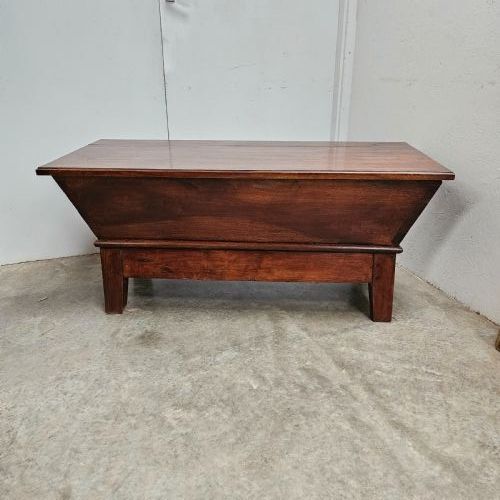


Rich Brown Box
A rich brown box brings warmth and deep timber tones to a room, offering practical storage disguised as fine furniture.
Rich Brown Box
When you search for a rich brown box, you find a variety of dark timber containers spanning several centuries of cabinet making. The pieces here include tea caddies, desks, specimen cabinets, decorative boxes, teapoys, coffers, and wine coolers.
Mahogany, walnut, rosewood, and burr wood dominate these selections, often displaying rich brown patination built up over generations of care and handling. Georgian, Regency, and Victorian periods provide the bulk of the surviving examples.
Form follows function closely across these objects, ranging from small desktop storage to substantial floor-standing cellarettes and fitted work tables. Each piece serves to contain valuables, papers, or provisions while displaying the natural grain of the wood.
How they were made
Cabinet makers utilised solid timbers alongside veneers, selecting flame mahogany, burr wood, and rosewood for their striking grain patterns. Selected pieces incorporate brass banding, bone inlay, boxwood stringing, and satinwood details to accent the rich brown surfaces.
Joinery techniques relied on dovetail construction for carcass strength, ensuring the boxes endured decades of daily use. Interior fittings such as tea canisters, miniature drawers, and sliding trays demonstrate precise woodworking skill.
Listings feature woods including mahogany, walnut, rosewood, burr wood, and yew, spanning the seventeenth to early twentieth centuries.
What varies in quality
The distinction between standard examples and superior pieces rests on the choice of timber and the crispness of the secondary decorative details. Figures in the wood grain, careful book-matching of veneers, and the survival of original interior elements elevate a box significantly.
Hardware quality also separates the tiers, with heavy cast brass handles, escutcheons, and working locks marking out superior workshops. The depth of the hand-finished polish determines how well the rich brown tones catch the light.
The Rich Brown Box Glossary
- Tea Caddy
- A lidded box designed to store loose tea leaves, often featuring internal compartments and fitted mixing bowls. Surviving examples frequently showcase fine mahogany or rosewood construction.
- Teapoy
- A small stand or table topped with a container for holding tea, popular during the Georgian and Victorian eras. These pieces often stand on a central pillar with tripod legs.
- Sarcophagus
- A coffin-like shape with a domed lid and tapered sides, frequently utilised for Regency wine coolers and large storage boxes. This classical silhouette suits heavy mahogany and rosewood.
- Cellarette
- A large freestanding box or cabinet designed to hold bottles of wine, usually lined and fitted for temperature control or security. They appear frequently in Regency dining room contexts.
- Escutcheon
- A protective plate surrounding a keyhole, often cast in brass or inlaid in bone. It prevents the surrounding timber from wearing down with repeated use.
Rich Brown Box: Frequently Asked Questions
What were tea caddies used for?
Tea was an expensive commodity in the eighteenth and nineteenth centuries, requiring secure storage under lock and key. Servants or homeowners kept the leaves locked away in these designated boxes to prevent theft and preserve the aroma.
Inside, the boxes often divided into compartments for different tea varieties and included a glass or crystal mixing bowl. This allowed the host to blend leaves before service in the drawing room.
How do I care for antique mahogany?
Mahogany requires minimal interference to maintain its natural lustre and rich brown colour over time. Regular dusting with a soft, dry cloth prevents particulate accumulation without wearing down the polished finish.
Avoid placing timber boxes near direct heat sources or strong sunlight, which can dry out the wood and fade the grain. Occasional application of a suitable wax feed helps nourish the surface when the timber appears dull.
How can I tell a Regency box from a Victorian one?
Regency pieces often display restrained classical lines, drawing inspiration from ancient Roman and Greek forms with bold brass mounts and sarcophagus shapes. The timbers chosen tend towards dark, heavily grained mahogany and rosewood.
Victorian boxes frequently incorporate more varied ornamentation, including intricate inlay, exotic woods like amboyna, and more diverse functional purposes like microscope slide storage. Their proportions can be heavier or more elaborately carved than their Regency predecessors.
Where should I place a cellarette at home?
Cellarettes and large storage boxes possess strong sculptural qualities that make them effective as standalone statement pieces. They work well in a dining room or living space where their deep timber tones complement surrounding furniture.
Many owners utilise large boxes as low side tables or display surfaces for books and lamps. Their internal capacity also remains useful for storing blankets, games, or contemporary items.