

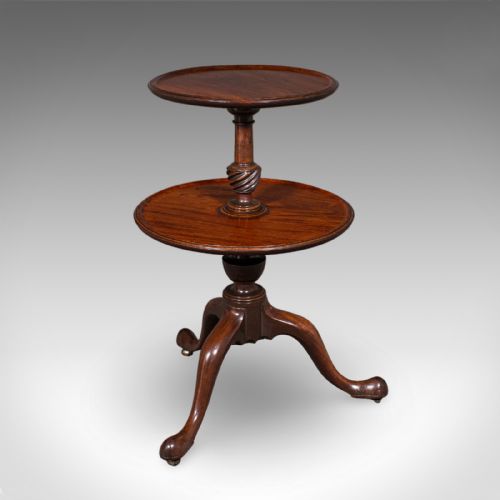


Revolving Dumbwaiter Table
A revolving dumbwaiter table is a tiered serving stand or table designed to rotate, bringing food, wine, or books within reach.
Revolving Dumbwaiter Table
A revolving dumbwaiter table is a tiered serving stand or table designed to rotate, bringing food, wine, or books within reach. When you search for revolving dumbwaiter table, you are looking at multi-tiered mahogany or rosewood serving furniture originating from the Georgian, Regency, and Victorian periods.
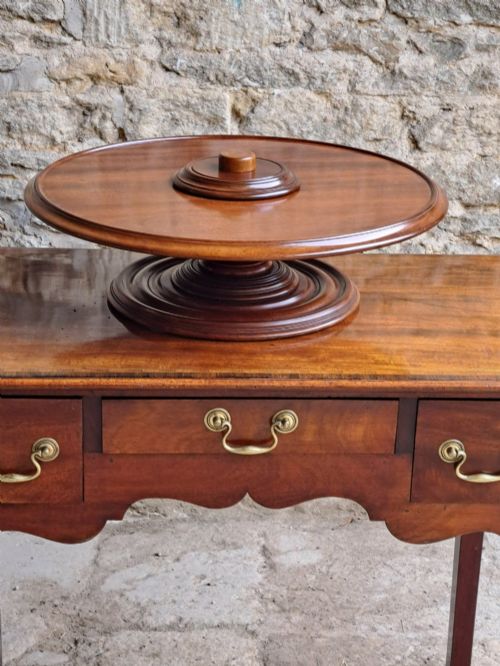
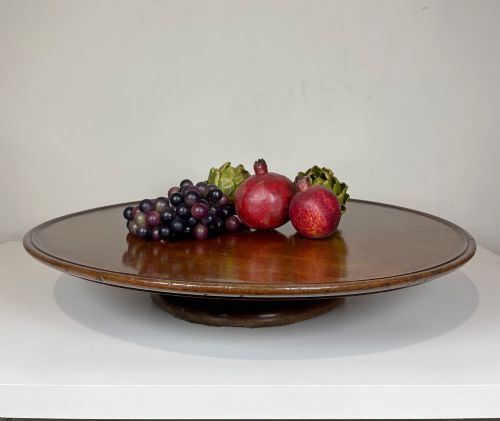
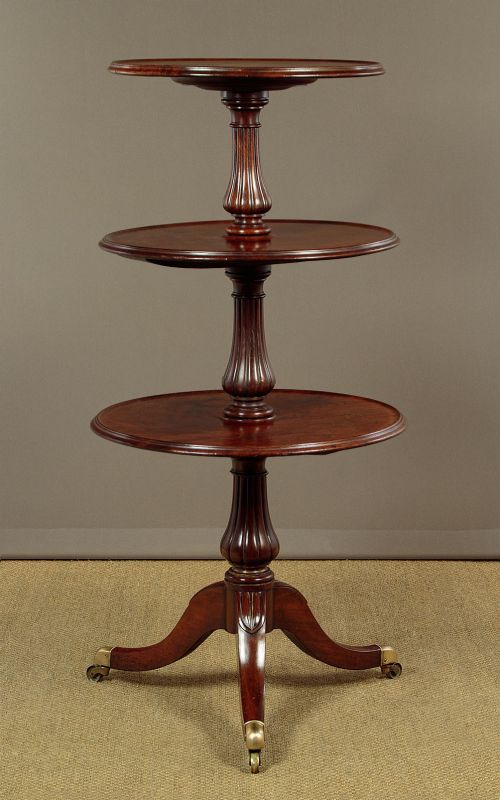
The versions you are most likely to meet on this page include George III three-tier dumb waiters, two-tier afternoon tea serving stands, and table-top lazy susans. These objects served dining rooms and parlours as practical serving accessories.
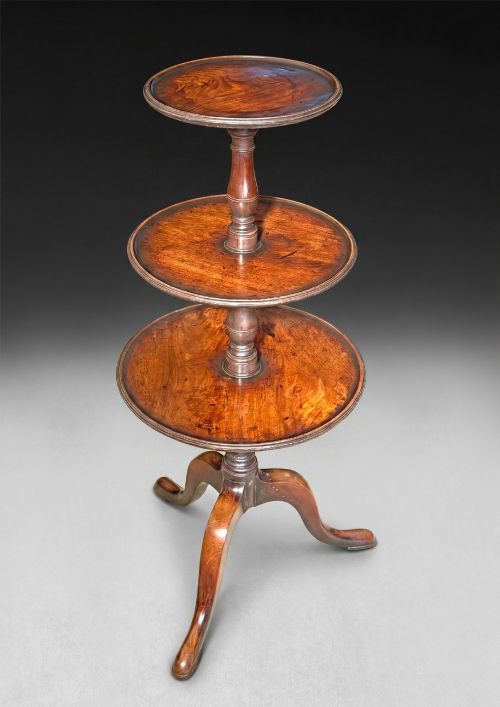
Forms range from tall, graduated circular tiers on central pillars to compact table-top revolving stands and occasional tables. Some incorporate folding mechanisms or metamorphic three-tier designs.
How they were made
These pieces are constructed predominantly from solid mahogany and rosewood, chosen for their dense grain and rich colour. Cabinet makers turned central pillars on lathes and joined them to shaped or tripod base supports.
Tiers are constructed with solid timber tops, often featuring raised edges or turned mouldings to secure items during rotation. Brass fittings and pivot mechanisms enable the smooth revolving action seen in the 18th and 19th-century examples.
Revolving Dumbwaiter Table Retail Price Guide 2026
Typical asking prices for revolving dumbwaiter table among the pieces listed under this phrase on Sellingantiques today, from the lower quarter to the upper quarter. They describe what is for sale here now, not the wider market.
Some nineteenth-century diners relied on a revolving stand to pass the port without awkwardly reaching across the mahogany.
What varies in quality
The standard of timber selection and the precision of the turning on the central column distinguish finer examples. The smoothness and stability of the revolving mechanism on multi-tiered stands also reflect the maker's skill.
Proportion and balance between the tiers dictate the visual elegance of the piece. Well-balanced George III and Regency pieces maintain structural integrity across all tiers without undue wobble during rotation.
The Revolving Dumbwaiter Table Glossary
- Dumb waiter
- A tiered serving stand designed to hold dishes or wine bottles without the need for servants. They often feature multiple circular trays rotating on a single central shaft.
- Lazy Susan
- A revolving tray or stand placed on a table top to assist in sharing food or condiments. The term appears on compact table-top round stands from the 18th and 19th centuries.
- Metamorphic table
- A piece of furniture designed to transform into different configurations or uses. The rosewood three-tier table demonstrates this adaptable form.
- Tiered table
- Furniture built with multiple levels stacked vertically to maximise display or serving space. These comprise two or three circular trays graduated in size.
Revolving Dumbwaiter Table: Frequently Asked Questions
What is a revolving dumbwaiter table?
A revolving dumbwaiter table is a multi-tiered serving stand designed to hold food, wine, or books within easy reach during meals. The circular trays rotate around a central pillar.
These pieces date primarily from the Georgian, Regency, and Victorian eras, serving as practical dining room furniture before modern sideboards became common.
How were dumbwaiters used?
Dumbwaiters held dishes, glassware, and wine bottles so diners could serve themselves without domestic staff present in the room. They kept the table clear of clutter.
Smaller versions functioned as afternoon tea stands or table-top lazy susans for passing condiments and small items.
What woods are used?
Mahogany is the predominant wood found in these listings, valued for its strength and deep reddish-brown colour. Rosewood also appears in nineteenth-century metamorphic examples.
Brass hardware is frequently incorporated into the central pivoting mechanisms that allow the tiers to turn smoothly.
How do I date a dumbwaiter?
Dating relies on stylistic markers from periods like George III, Regency, and Victorian. George III pieces often feature tripod bases with pad or spade feet.
Construction details, such as hand-turned central pillars and the presence of period brass fittings, help distinguish eighteenth-century pieces from later nineteenth-century revivals.
How do I live with one?
These pieces fit well beside seating areas or in dining rooms as functional side tables. Their rotating tiers make them practical for displaying books, plants, or tableware.
Maintenance involves regular polishing of the mahogany or rosewood surfaces and gentle care for the central revolving mechanism.