




Revival Oak Court Cupboard
A revival oak court cupboard brings substantial historic character and practical storage to an interior, drawing on centuries of earlier design traditions.
Revival Oak Court Cupboard
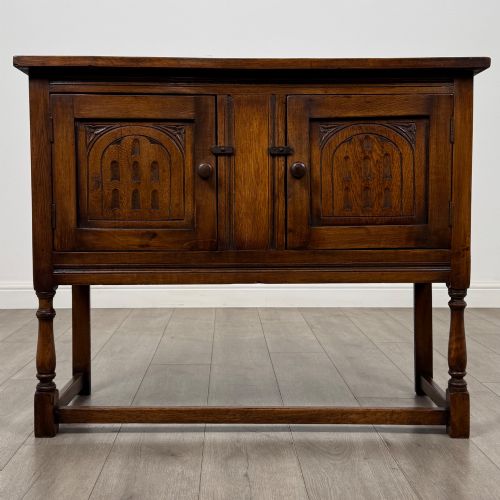
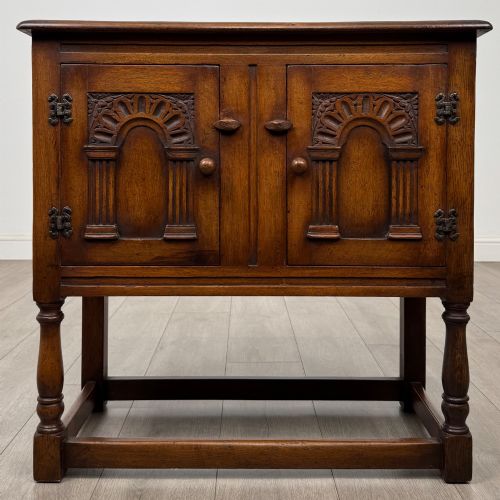
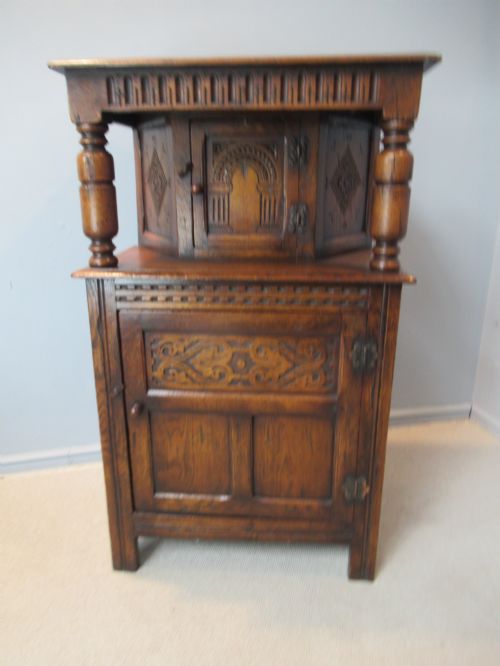
A revival oak court cupboard is a substantial storage piece produced during the Victorian, Edwardian, and subsequent twentieth-century periods, taking inspiration from earlier historic eras. These pieces typically combine enclosed cupboard space with open or closed display tiers, echoing sixteenth and seventeenth-century forms.
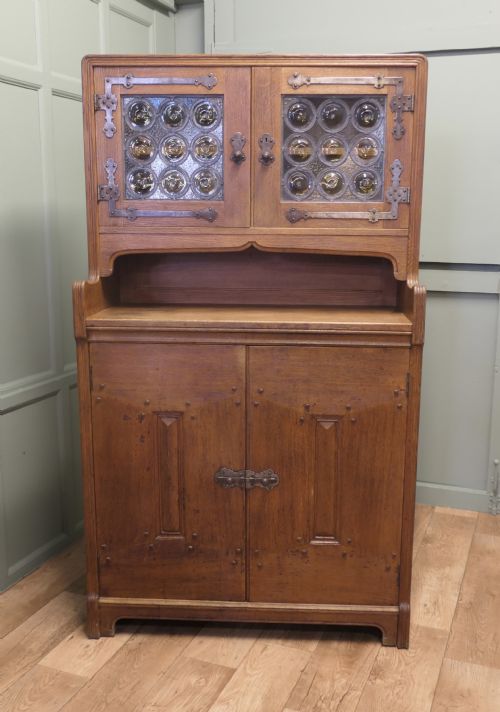
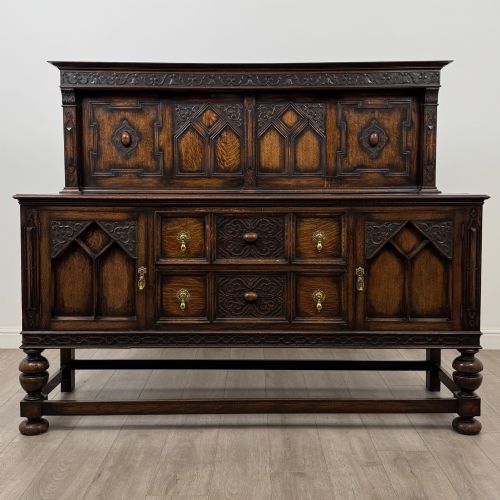
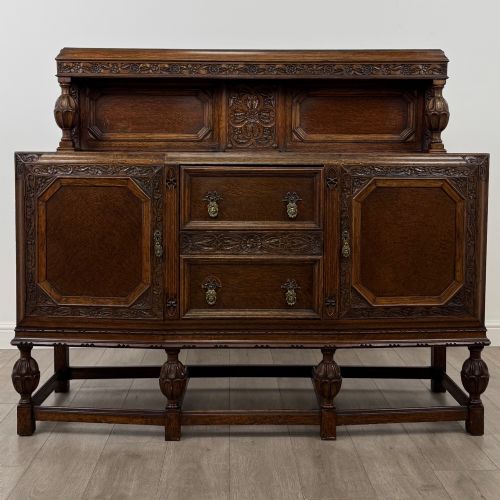
On this page, buyers will frequently encounter examples dating from the nineteenth and early twentieth centuries, labelled under various revival styles such as Jacobean, Gothic, and Renaissance. Forms range from smaller diminutive court cabinets to large sideboards, dressers, and hall cupboards.
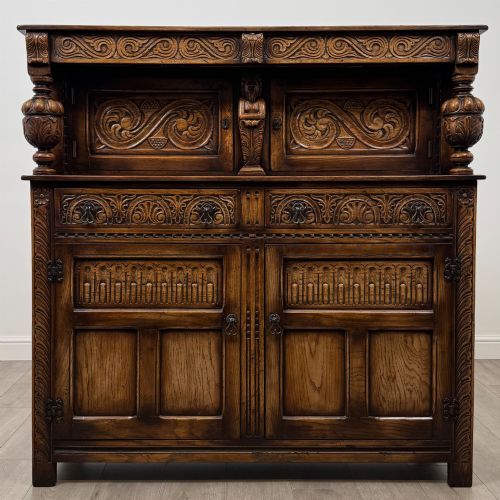
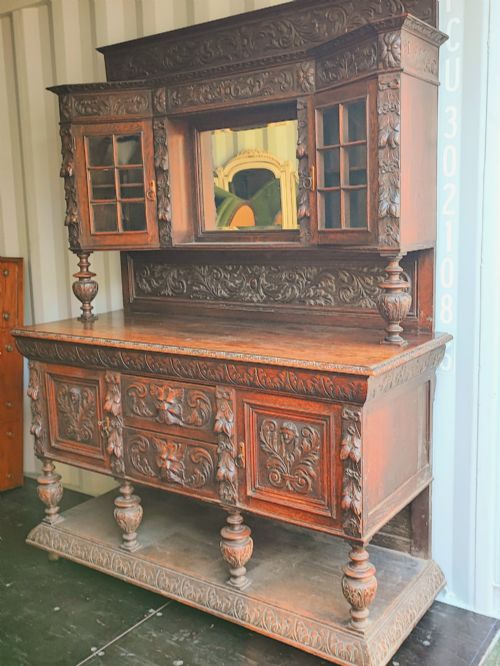
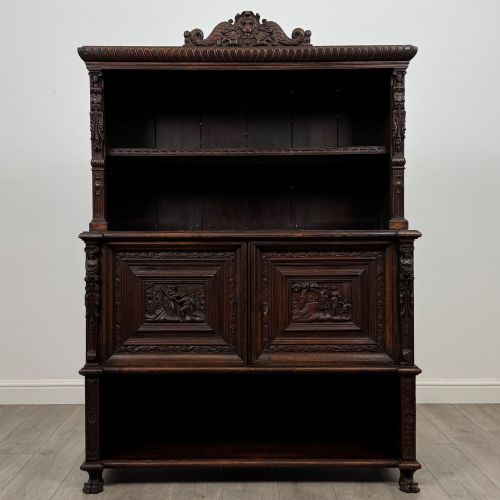
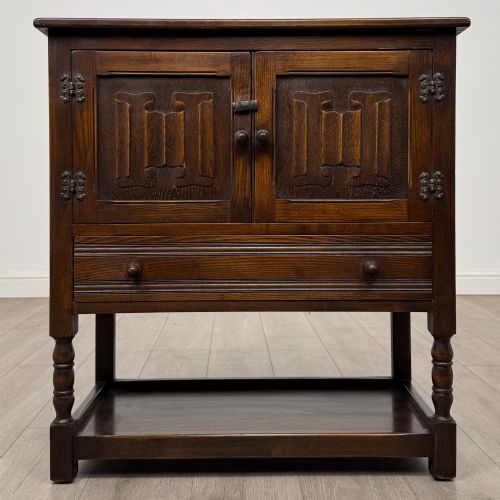
The material palette centres firmly on solid oak, frequently embellished with carved details, linenfold panels, or iron and brass hardware. While many pieces serve primarily as sideboards or cabinets, the underlying typology remains rooted in the traditional court cupboard format.
Assessing quality in revival oak pieces
Quality separates through the depth and crispness of the timber carving, distinguishing sharply between mechanically produced decoration and hand-chiselled work. The weight and selection of the oak timber itself also signal higher grade execution.
Proportion and the integrity of the hardware, such as original brass or iron fittings, dictate the overall standard of a piece. Better examples maintain architectural balance and solid timber construction across internal shelving and backboards.
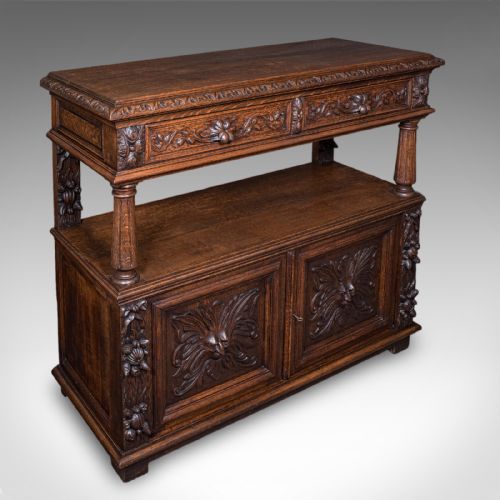
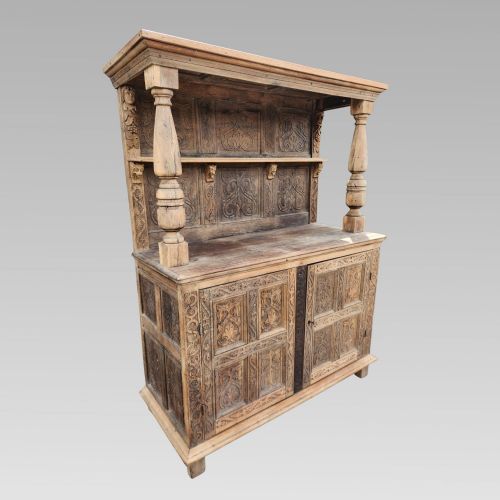
Several cupboards peer out at the room through the carved wooden foliage of traditional Green Man masks.
Liberty
The Revival Oak Court Cupboard Glossary
- Court cupboard
- A traditional tiered storage cabinet, often featuring an enclosed upper section recessed above a wider base, frequently reinterpreted in nineteenth-century revival furniture.
- Jacobean revival
- A nineteenth-century stylistic movement imitating the geometric panels, heavy turnings, and dark oak finishes popular during the early seventeenth century.
- Linenfold
- A style of carved wooden panelling designed to resemble folded fabric, commonly found on the doors and sides of oak cupboards.
- Renaissance revival
- A nineteenth-century design mode drawing on classical antiquity and sixteenth-century continental architecture, characterised by symmetrical layouts and sculptural relief carving.
- Green man
- A sculptural architectural motif representing a human face entwined with or emerging from foliage, frequently appearing on carved nineteenth-century sideboards.
Revival Oak Court Cupboard: Frequently Asked Questions
What is a revival oak court cupboard?
A revival oak court cupboard is a storage piece manufactured during the Victorian or Edwardian eras that mimics sixteenth or seventeenth-century domestic furniture.
These pieces typically feature heavy timber construction, tiered shelving, and ornamental carving inspired by historic styles such as Jacobean and Gothic.
How were court cupboards originally used?
Historically, court cupboards served as status symbols in dining halls for displaying plate, silverware, and food.
In later revival periods, they functioned largely as decorative sideboards, hall cupboards, and practical storage cabinets within large Victorian and Edwardian homes.
How do I date a revival court cupboard?
Dating relies on examining construction marks, timber characteristics, and the specific revival style employed by the maker.
Victorian and Edwardian interpretations often incorporate machine-sawn backing boards or standardised hardware alongside hand-carved decorative elements.
Where does oak feature in these cupboards?
Solid oak forms the primary structural framework, panels, doors, and surfaces of the majority of these cupboards.
Secondary woods or occasional walnut and fruitwood accents may appear in specific decorative components or internal linings.
How do I live with a dark oak cabinet?
These substantial oak pieces anchor a room well when paired with lighter neutral walls and good natural lighting.
Their generous storage capacity makes them suitable for use in dining rooms as sideboards or in hallways as statement cabinets.