




Revival Majolica Pottery
Revival majolica pottery offers heavy tin-glazed earthenware shaped into ornamental vases, pitchers, and wall brackets through nineteenth-century historicism.
Revival Majolica Pottery
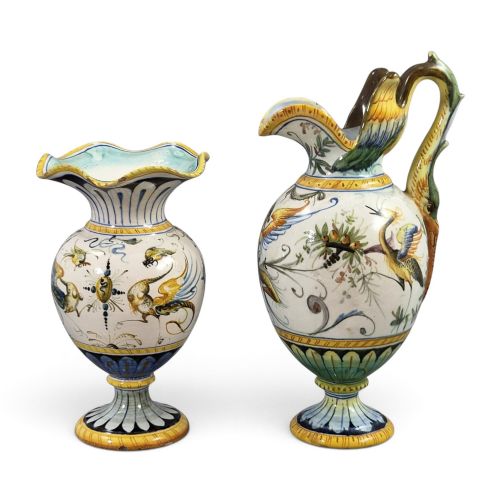
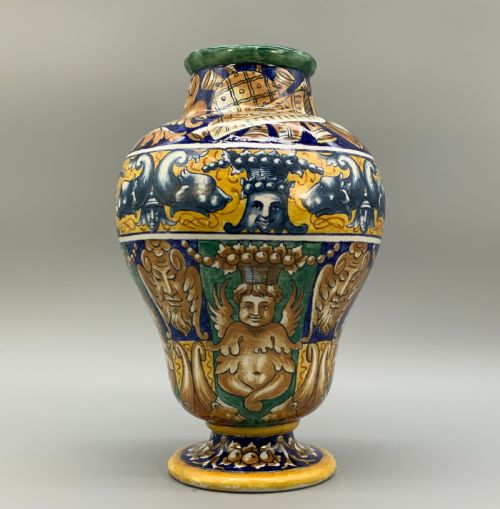
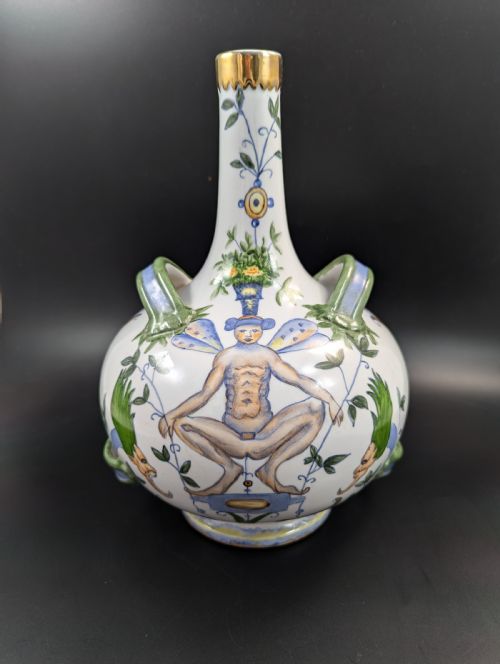
Revival majolica pottery comprises nineteenth-century earthenware objects inspired by earlier Italian, French, and Moorish designs. When buyers search revival majolica pottery, they encounter colourful vessels decorated with Renaissance motifs, mythological figures, and armorial details.
Most items on this page date from the Victorian era and the decades around eighteen-nineteenth-century production. Forms range from large ewers and centrepiece bowls to table lamps and wall brackets.
Italian and French workshops dominate the available selection, often adopting styles from the seventeenth century and earlier. These pieces serve as decorative focal points rather than utilitarian vessels.
How they were made
Potters shaped earthenware bodies before applying tin glazes that provided an opaque, smooth surface for polychrome decoration. Painters then added intricate scenes, cherubs, and armorial details directly onto the absorbent fired glaze.
Firing techniques varied between workshops, with some factories employing complex double-firing processes to fix vibrant mineral pigments. Certain pieces incorporated mounted elements in brass to complete elaborate table lamps and pedestals.
Listings feature earthenware ceramics from the nineteenth century, spanning Victorian, Italian Renaissance Revival, and Moorish styles.
What varies in quality
Quality rests in the precision of the polychrome painting and the clarity of the moulded relief work. Pieces decorated with detailed mythological figures or elaborate armorial designs demand greater technical skill from the painter.
The reputation of specific factories, such as Cantagalli or Gien, distinguishes standard production from exceptional output. Heavier potting and balanced proportions further separate ambitious centrepieces and large vases from smaller vessels.
Cantagalli Florence·Gien Faience·Minton
The Revival Majolica Pottery Glossary
- Majolica
- A type of tin-glazed earthenware decorated with opaque coloured glazes over a white ground. This technique flourished during the Renaissance and inspired nineteenth-century revivals.
- Ewer
- A large jug with a wide spout and a curved handle, primarily designed for decorative display in nineteenth-century interiors.
- Faience
- European tin-glazed pottery, commonly associated with French and Italian production methods. The term encompasses various forms of decorative earthenware from the nineteenth century.
- Polychrome
- Decoration executed in multiple colours. This multicoloured palette defines the visual impact of revival majolica ceramics.
- Tin Glaze
- An opaque white glaze containing tin oxide, which provides a smooth surface for painting. It forms the base characteristic of majolica and faience pottery.
Revival Majolica Pottery: Frequently Asked Questions
What is revival majolica pottery?
Revival majolica pottery consists of nineteenth-century earthenware ceramics decorated with tin glazes and colourful historicist designs. Makers drew inspiration from Italian Renaissance, French, and Moorish styles.
These pieces include vases, wall brackets, and water pitchers created for decorative display. They reflect Victorian enthusiasm for historical aesthetics and traditional pottery techniques.
How do I identify a nineteenth-century piece?
Nineteenth-century pieces often display revival styles such as Italian Renaissance, French faience, or Alhambra patterns. Examining the tin glaze and polychrome painting helps determine the production era.
Pottery from this period frequently bears factory marks or signatures from notable workshops in Italy and France. The weight of the earthenware and the style of the decoration provide further clues.
Where were these ceramics made?
Most revival majolica pieces originated in European workshops, particularly in Italy and France. Prominent centres of production included Florence and Gien.
English manufacturers also produced majolica wares influenced by continental designs. These regional workshops exported decorative vessels across Europe during the Victorian period.
How do I care for tin-glazed pottery?
Tin-glazed earthenware requires gentle handling to protect the ceramic body and surface glaze. Dusting with a soft, dry cloth keeps the surface clean without risking abrasion.
Keep these vessels away from areas with high moisture or fluctuating temperatures. Displaying them on stable surfaces prevents accidental knocks to handles and pedestals.