


Revival Bookcase
These revival bookcase pieces bridge historic cabinetmaking traditions with later tastes, offering disciplined storage scaled for modern living.
Revival Bookcase
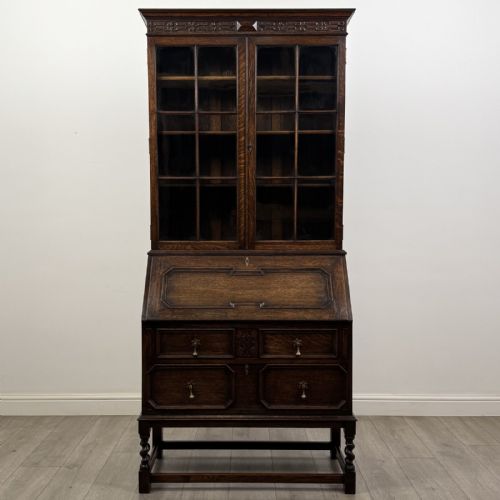
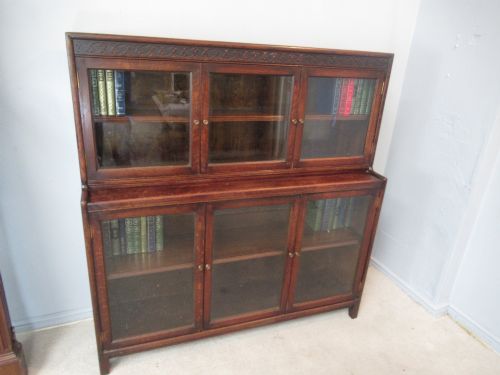
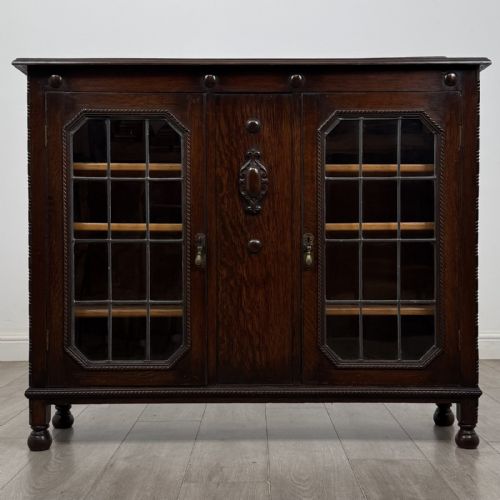
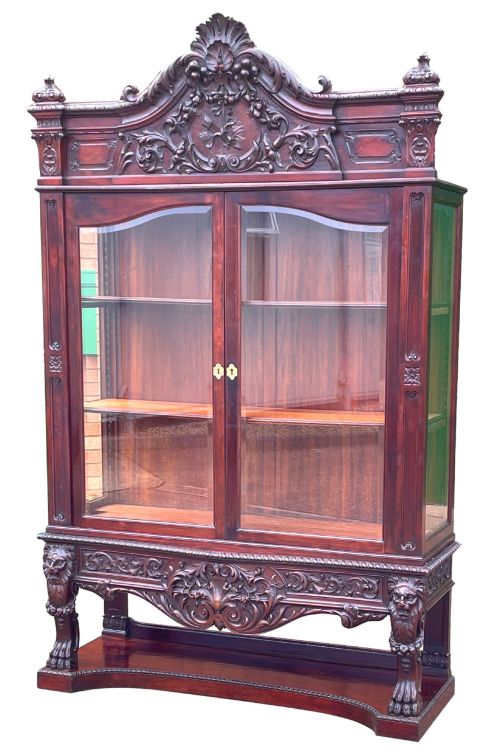
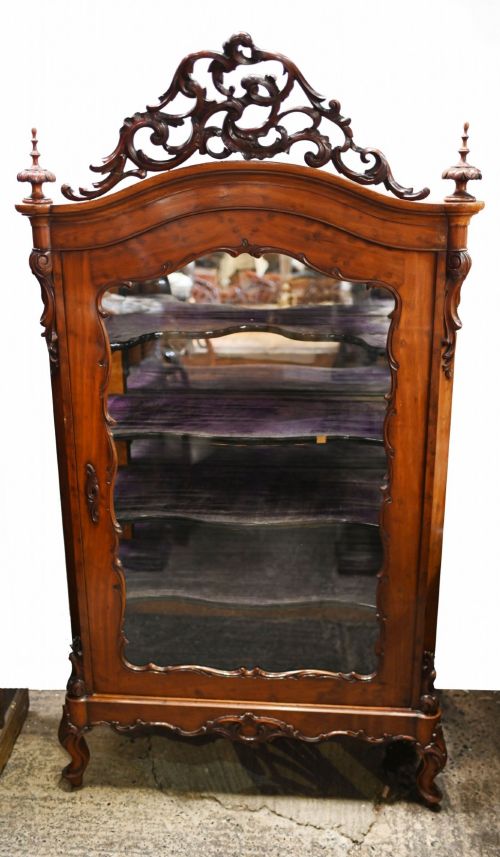
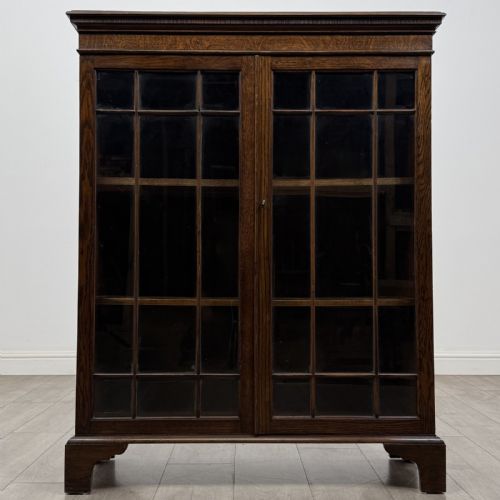
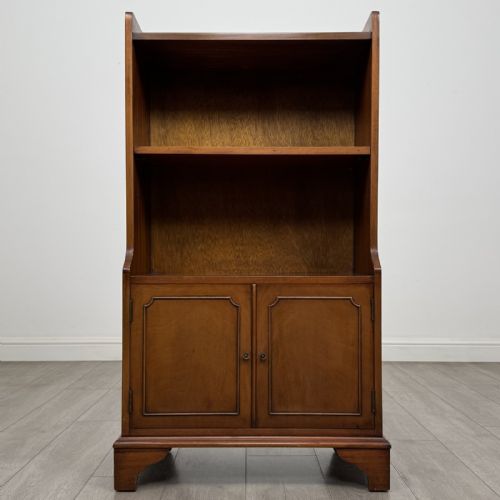
A revival bookcase is a piece of furniture that recreates earlier historic styles such as Gothic, Sheraton, Jacobean, or Regency within a later nineteenth or early twentieth-century framework. When looking for a revival bookcase, buyers will encounter everything from open oak shelving to elaborate glazed display cabinets and bureau bookcases.
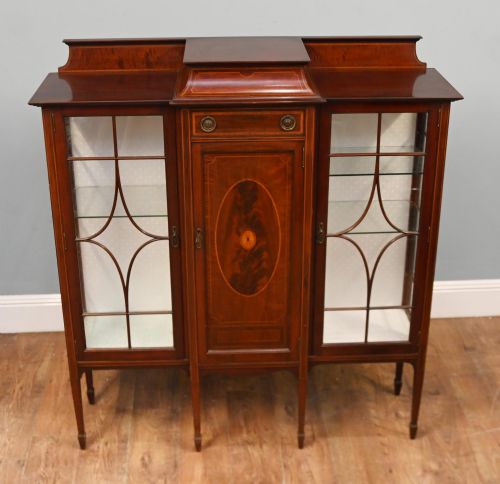
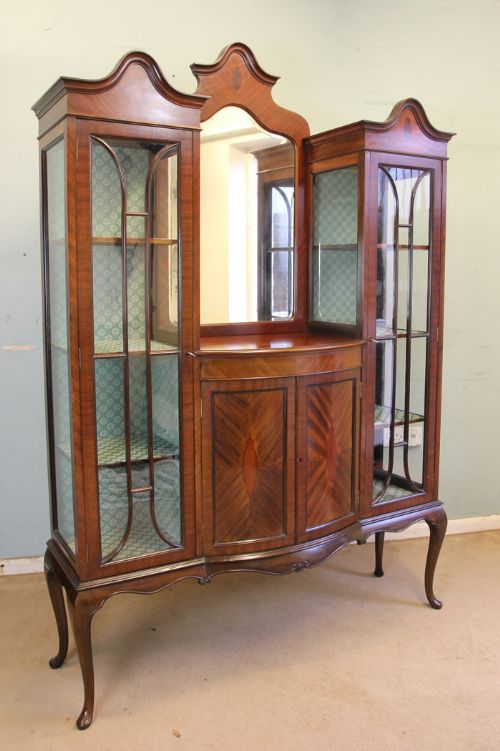
The pieces appearing on this page date primarily from the Victorian and Edwardian eras, stretching through the 1900s and 1910s into the 1920s. Mahogany and satinwood examples dominate, often decorated with intricate stringing and painted details that reflect earlier eighteenth-century aesthetics.
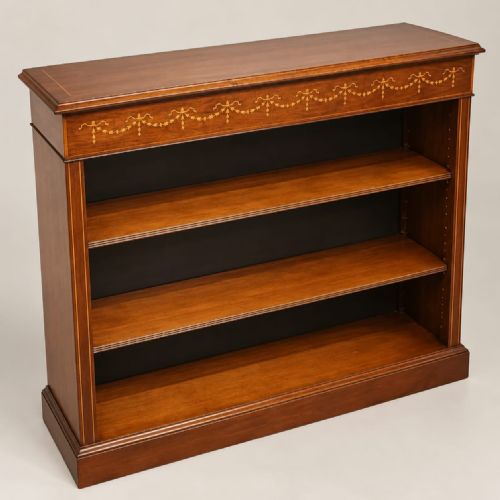
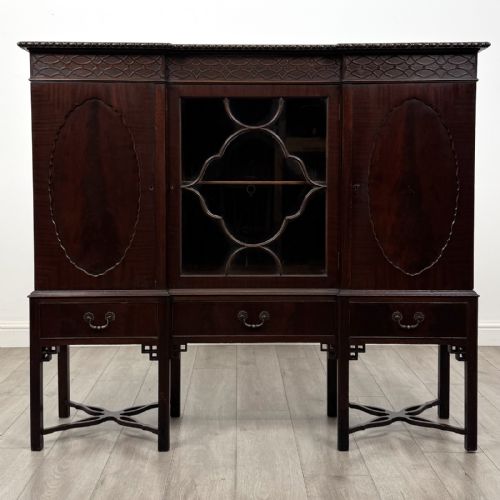
Forms range from compact corner display units and dwarf bookcases to large breakfront storage cupboards. Makers of these periods reinterpreted earlier forms with great care, combining practical shelving with distinct stylistic motifs.
Materials and construction
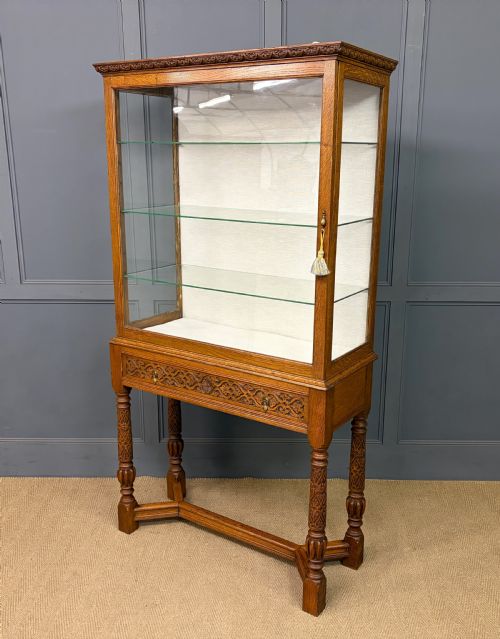
Cabinetmakers constructed these revival pieces using dense timbers like mahogany, walnut, and oak, frequently embellishing surfaces with satinwood veneers and contrasting brass galleries or leaded glass. Structural integrity relied on traditional joinery techniques, paired with delicate marquetry and inlay work.
Glazing takes the form of individual leaded panes or large astral-glazed doors that protect books and display items. Metal hardware, including brass handles and key escutcheons, adds functional detail to doors and fall-front desks.
Revival Bookcase Retail Price Guide 2026
Typical asking prices for revival bookcase among the pieces listed under this phrase on Sellingantiques today, from the lower quarter to the upper quarter. They describe what is for sale here now, not the wider market.
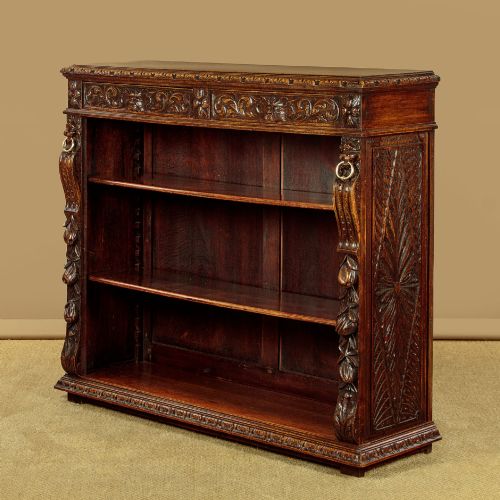
Some dwarf bookcases hide mischievous green man carvings amongst their dark oak foliage, watching quietly over the lower shelves.
Assessing quality and execution
The distinction between standard commercial output and superior craftsmanship rests on the choice of timber and the precision of the inlay. Finer examples display carefully selected grain patterns, such as burr walnut or figured mahogany, alongside hand-painted decoration rather than simple transfer prints.
Waring and Gillow·Maple and Co·John Moyr Smith·Edwards and Roberts·Gillows·Bowman Brothers·Hampton and Sons
The Revival Bookcase Glossary
- Sheraton Revival
- A late nineteenth or early twentieth-century style imitating the light, neoclassical furniture designs of Thomas Sheraton. It relies heavily on satinwood veneers, painted floral motifs, and slender proportions.
- Gothic Revival
- An architectural and furniture style drawing on medieval ecclesiastical forms. Pieces often incorporate pointed arches, linenfold panelling, and heavy carved oak.
- Breakfront
- A cabinet design where the central section projects forward from the flanking wings. This configuration breaks up the flat facade of large bookcases and display units.
- Astral glazed
- Glass doors divided into small panes by narrow wooden bars called glazing bars. This technique allows clear visibility of bookcase interiors while maintaining structural division.
- Bureau bookcase
- A dual-purpose piece combining a sloping fall-front writing desk with a bookshelf or display cabinet above. It provides both concealed desk space and upper storage.
Revival Bookcase: Frequently Asked Questions
What is a revival bookcase?
A revival bookcase is a piece made in the nineteenth or twentieth century that adopts the aesthetic styles of earlier historical periods. These pieces combine historic design motifs with the contemporary manufacturing standards of their own time.
They offer the decorative appeal of earlier centuries while providing functional storage suited to domestic interiors.
How do I identify a Sheraton Revival piece?
Sheraton Revival furniture is characterised by light timbers such as satinwood and mahogany, often enhanced with delicate painted decorations and string inlay. The silhouettes remain slender and elegant, referencing eighteenth-century neoclassical design.
Look for symmetrical arrangements, tapered legs, and classical motifs like urns and swags executed in later nineteenth or Edwardian workshops.
Where should I place a display cabinet?
Display cabinets with glass doors and adjustable shelving suit principal living spaces or libraries where books and decorative objects require protection from dust. Corner cabinets make efficient use of unutilised wall junctions in smaller rooms.
Keep such timber pieces away from direct heat sources and strong sunlight to protect delicate veneers and painted surfaces from fading or drying out.
What is linenfold panelling?
Linenfold is a style of relief carving applied to wooden panels, designed to resemble folded fabric resembling linen cloth. It appears frequently on Gothic Revival oak cupboards and cabinets.
This technique adds texture and historic depth to doors and side panels, echoing medieval architectural woodwork.