

Revival Accent Table
A revival accent table brings historic ornament into a compact footprint, offering a functional surface shaped by past centuries of design.
Revival Accent Table
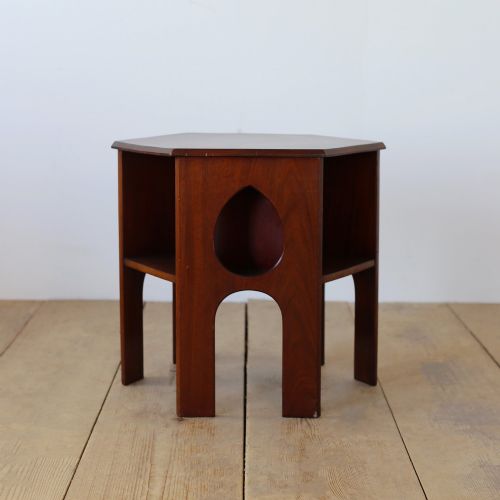
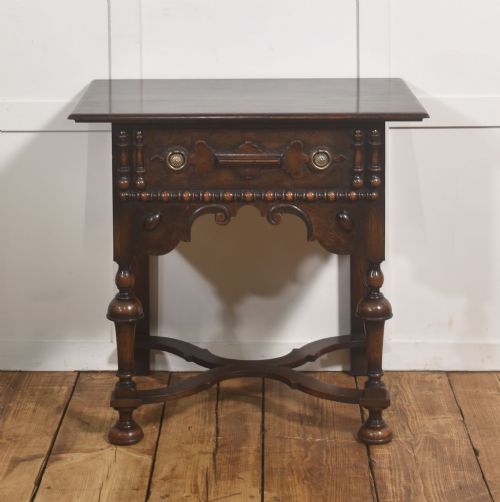
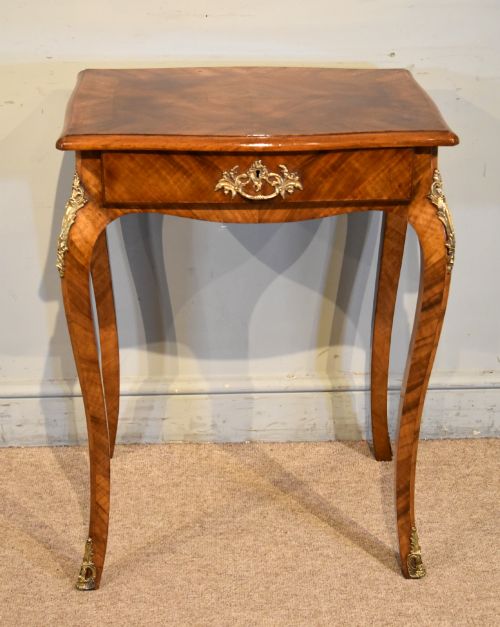
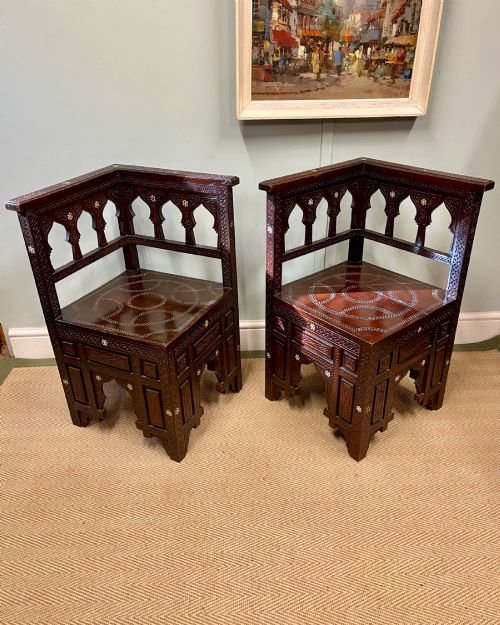
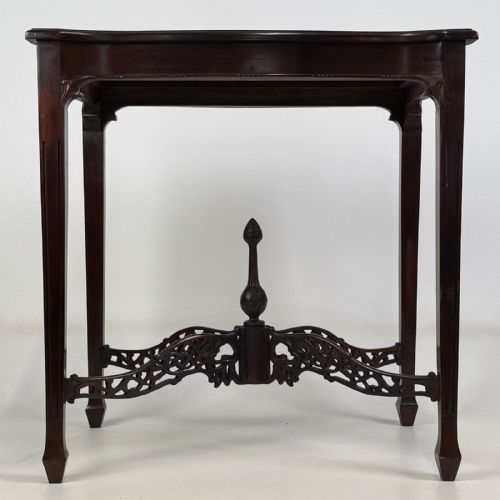
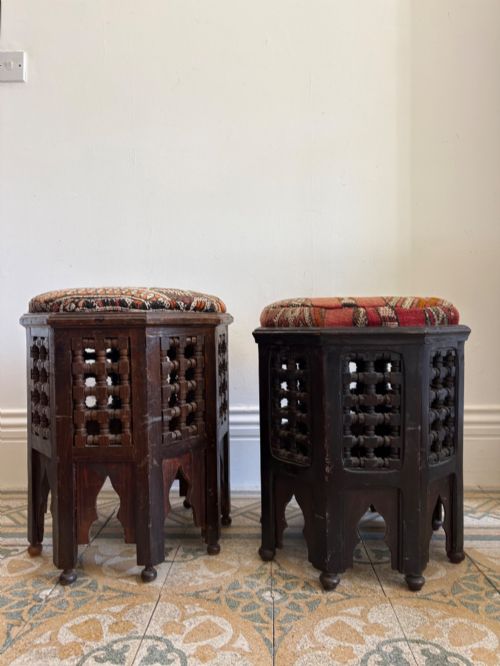
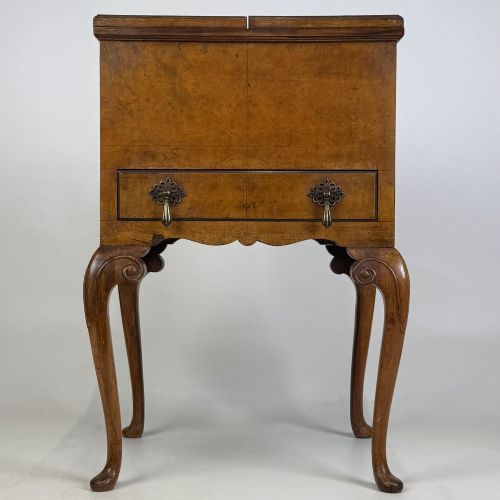
When buyers search for a revival accent table, they find smaller occasional pieces designed to sit beside seating or in corners rather than dominate a room. These items draw heavily on older aesthetics, spanning Jacobean, Gothic, Moorish, Louis XV, Sheraton, and Chippendale vocabularies.
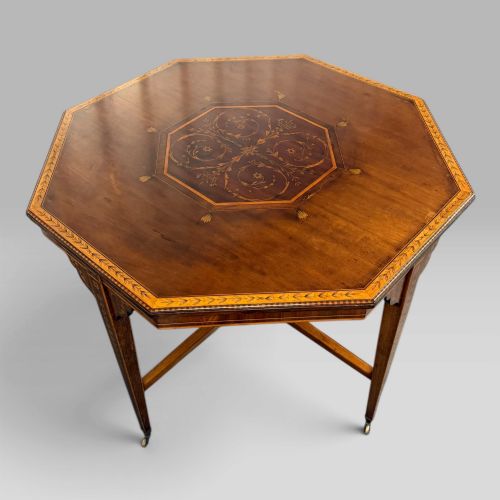
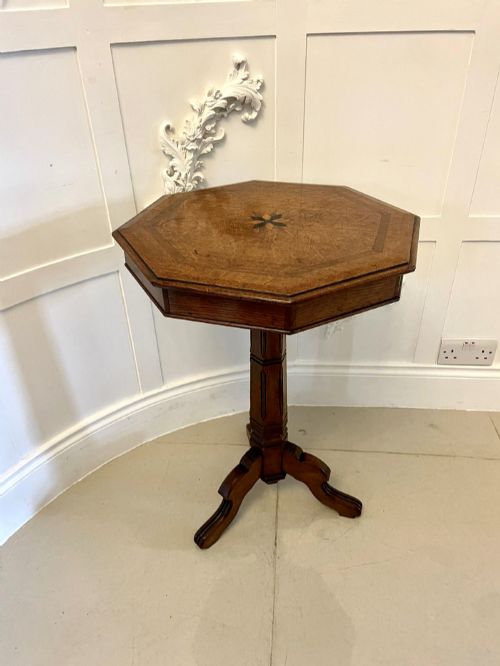
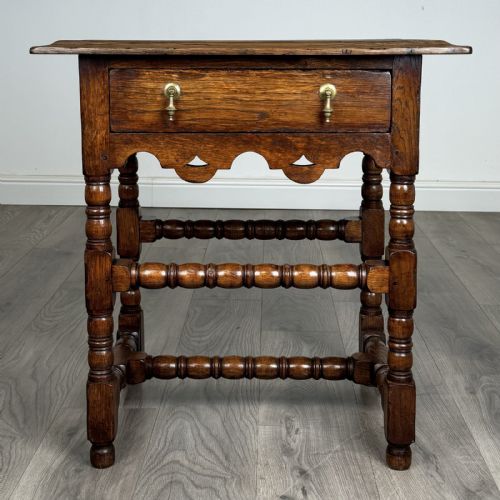
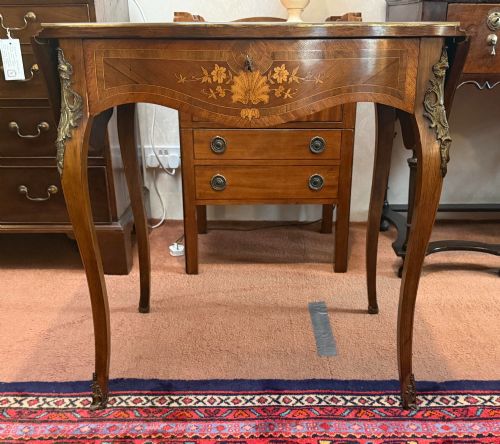
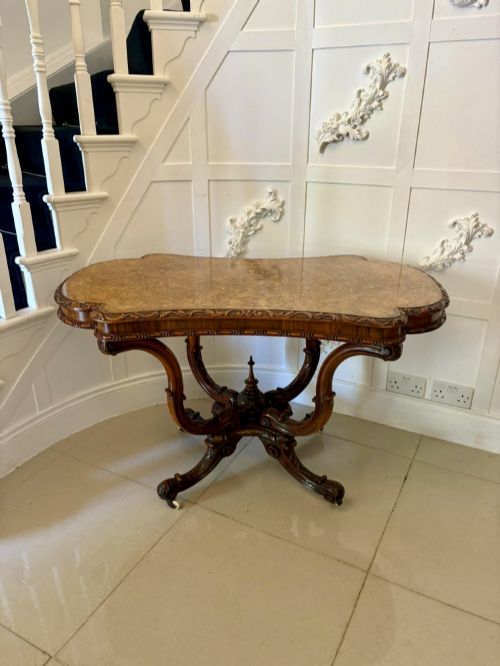
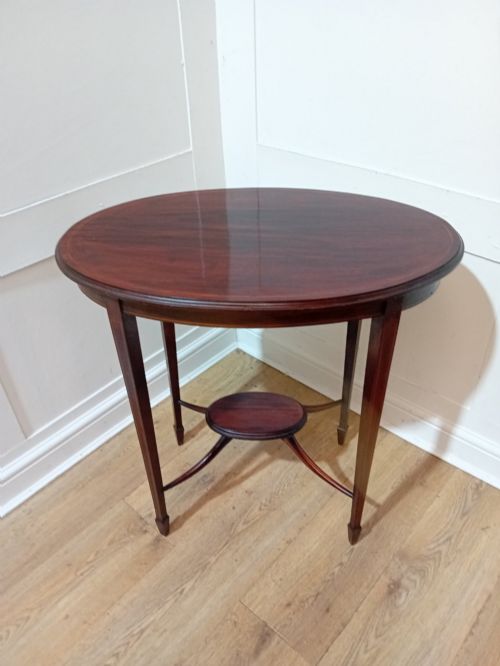
The versions most common on this page date from the nineteenth century through the early twentieth century, encompassing Victorian and Edwardian interpretations of earlier cabinetmaking. Forms range from octagonal centre tables and tripod wine tables to side tables, coffee tables, and stools.
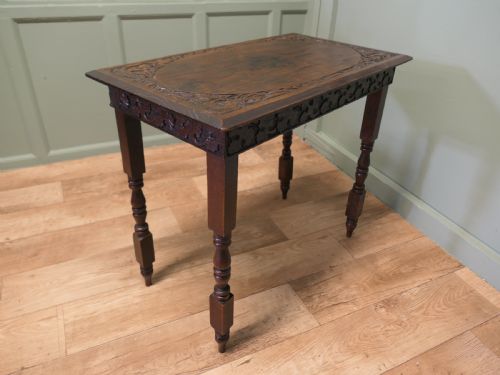
Makers of this period reinterpreted historical proportions using timbers like oak, mahogany, and walnut, often integrating marquetry, inlay, or carved stretchers. The resulting furniture bridges functional daily use with distinct historic revival styles.
How they were made
Cabinetmakers utilised dense domestic and imported hardwoods, primarily oak, mahogany, walnut, and satinwood, frequently selecting figured burr veneers for prominent table tops. Secondary timbers provided structural support beneath these decorative surfaces.
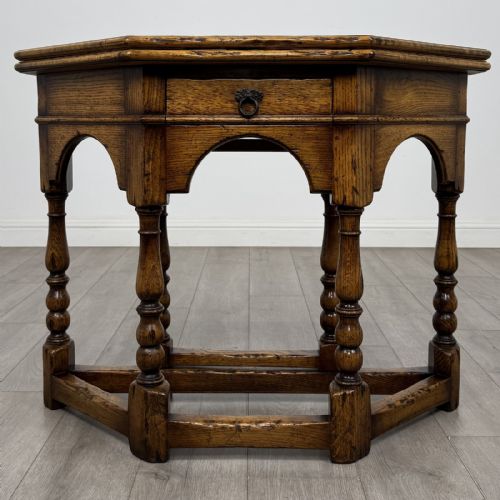
Construction techniques combined traditional joinery with decorative surface work such as hand carving, bobbin turning, barley twisting, and marquetry inlay. Brass fittings, mother of pearl accents, and kilim seat covers appear where secondary materials complement the timber frames.
Revival Accent Table Retail Price Guide 2026
Typical asking prices for revival accent table among the pieces listed under this phrase on Sellingantiques today, from the lower quarter to the upper quarter. They describe what is for sale here now, not the wider market.
Several occasional pieces double as conversation starters by incorporating hidden fold-over tops or unexpected green man carvings beneath the tea.
What varies in quality
Quality rests in the crispness of the carving and the depth of figure within the timber veneers, distinguishing standard production from exceptional examples. Finer pieces display deliberate selection of burr walnut or satinwood and precise execution of inlay.
Structural integrity also separates grades, visible in the weight of the timber, the stability of tripod bases or turned legs, and the retention of original brass hardware or upholstery fabrics without modern compromise.
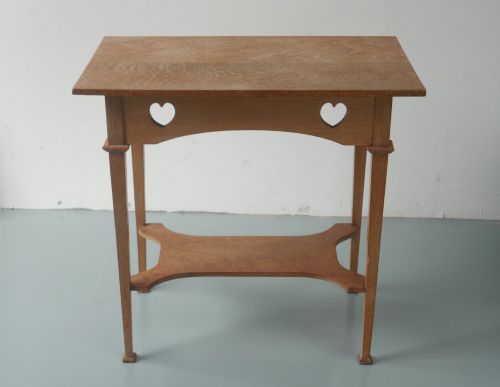
Baillie Scott·Liberty And Co
The Revival Accent Table Glossary
- Marquetry
- The art of applying pieces of veneer to a structure to form decorative patterns. Craftsmen use varied timber colours to create geometric or floral scenes.
- Barley Twist
- A turning style resembling a twisted rope, carved into wooden furniture legs and stretchers. This form gained popularity during the seventeenth century and saw substantial revivals later.
- Guéridon
- A small French table supported by one or more columns, often featuring a marble top. These pieces originated in the seventeenth century as candle stands before evolving into general accent furniture.
- Stretcher
- A horizontal timber connecting table legs to provide structural rigidity. In revival pieces, stretchers often feature decorative turnings or central bosses.
- Tripod Wine Table
- A small occasional table supported by a central pillar above three splayed legs. They were designed for holding drinks or small objects beside a chair.
Revival Accent Table: Frequently Asked Questions
Where should I place an accent table?
These compact tables suit living rooms as lamp or side surfaces, or entryways where space is limited.
Their varied heights and footprints allow them to sit easily beside armchairs or fill narrow corners.
How do I care for antique wood surfaces?
Keep wooden furniture away from direct heat sources and strong sunlight to prevent timber splitting and veneer lifting.
Apply a traditional wax polish occasionally to nourish the grain and maintain the natural lustre of the finish.
Can I use these tables for daily use?
Solid hardwood construction ensures these tables easily withstand everyday handling like holding books or cups.
Use coasters to protect older polished timber surfaces from liquid rings and heat marks.
How do I identify different revival styles?
Look at the leg turning and decorative motifs, as Jacobean revivals feature heavy twist turnings while Sheraton revivals display delicate inlay.
Oak pieces often point towards earlier English motifs, whereas walnut and marquetry frequently indicate French or Edwardian interpretations.