


Reverse Painted Glass Artwork
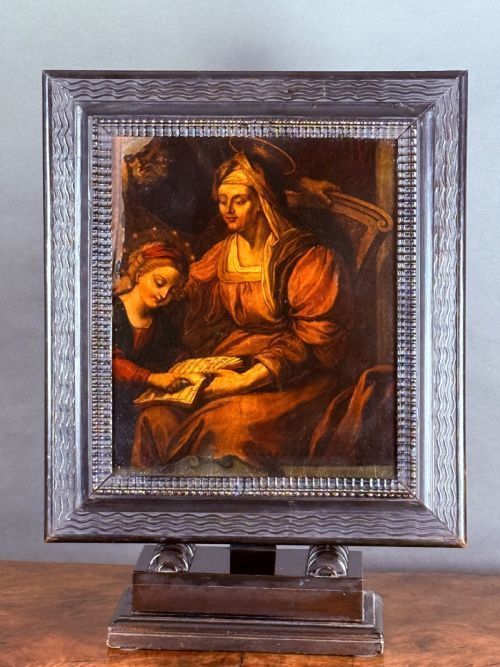
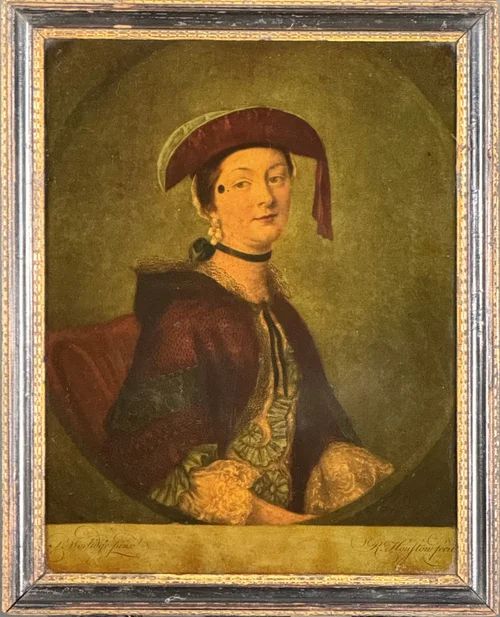
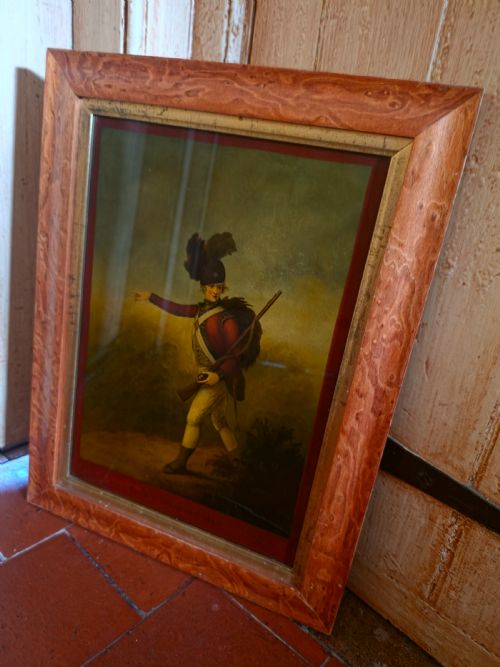
Reverse painted glass artwork encompasses intricate historical pictures and portraits applied directly to the rear of the pane, offering rich colour and delicate detail preserved beneath a protective crystal surface.
Reverse Painted Glass Artwork
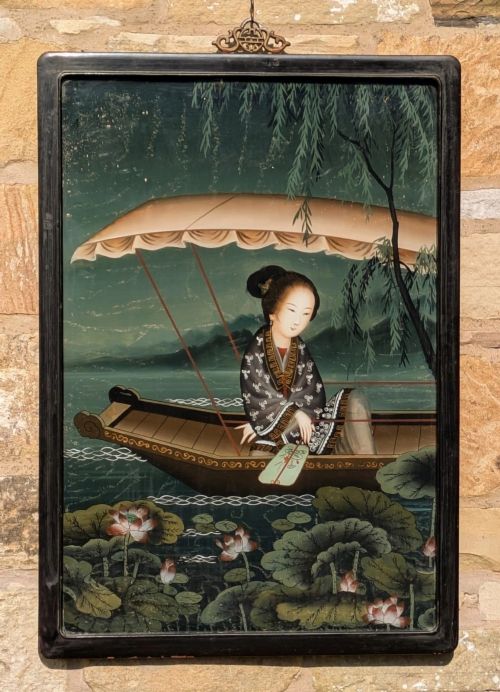
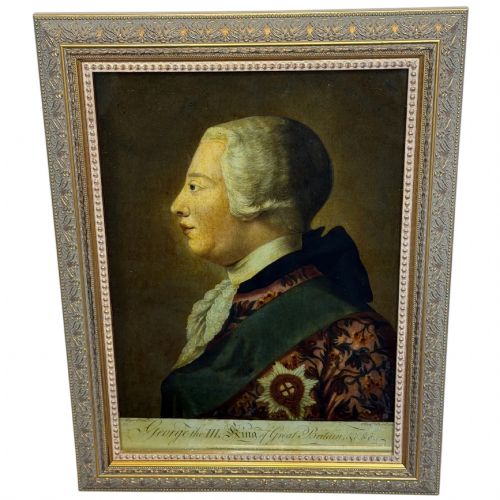
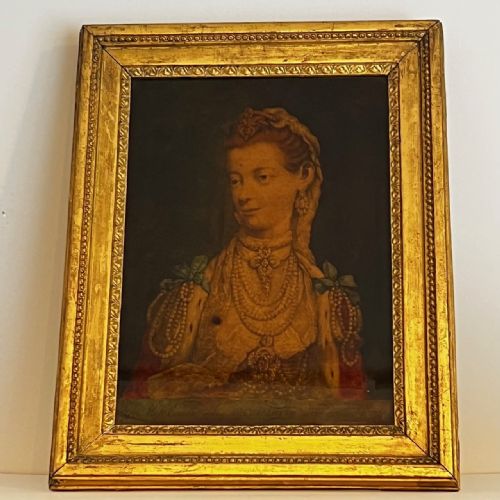
Reverse painted glass artwork brings together diverse historical depictions ranging from Georgian mezzotints and Chinese export trade mirrors to Victorian chrystoleoms and Japanese glass paintings. You will frequently encounter 18th century and Georgian prints alongside 19th century examples housed in wood or gilt wood frames.
The subjects span formal portraits of figures like Queen Charlotte and King George III, narrative domestic scenes, religious subjects such as St Peter, and scenic views. These pieces function primarily as wall art, framed prints, and decorative mirrors.
Originating across British, European, and Asian traditions, these works showcase distinct regional techniques, from Chinese export mirror-glass pictures to Taisho Roman and Qing Dynasty Chinoiserie aesthetics.
Materials and construction
Makers applied oil paint, pigment, and oil pigment directly onto the reverse side of clear glass panels, often incorporating paper elements or etching into the finished design. This meticulous process required artists to paint foreground details first, working backwards toward the background.
Framing materials typically include traditional wood and gilt wood, sometimes paired with specialised formats like maple-framed divided two-section mirror plates where the reverse glass print sits directly above the glass.
Chrystoleoms utilise specific layering and colouring techniques applied to albumen prints mounted onto glass, creating a dimensional painted finish popular during the Victorian era.
A charming Brazilian butterfly tray incorporates natural iridescent wings beneath glass to form a scenic view of Rio de Janeiro.
Distinctions in craftsmanship
Quality rests upon the precision of the initial print transfer and the delicacy of the hand-applied pigment, where fine brushwork achieves lifelike skin tones and sharp costume detail. Superior examples maintain vibrant colour saturation without excessive flaking or pigment loss behind the glass.
The choice of housing influences overall integrity, as original wood or gilt wood frames preserve the piece better than modern replacements while maintaining historical context.
Charles Spooner·Richard Purcell·W Bishop·Schweninger·Takabatake Kasho
The Reverse Painted Glass Artwork Glossary
- Mezzotint
- A printmaking process where the copper plate is roughened to produce dark tones, frequently adapted for transfer onto glass before hand-colouring. This technique allows for subtle tonal gradations.
- Chrystoleum
- A Victorian method of applying oil paints to a photograph mounted face down on glass, after which the paper backing is rubbed away. This leaves only the transparent photographic image ready for detailed colour enhancement.
- Chinese Export
- Objects manufactured in China specifically for Western markets, encompassing trade mirror-glass pictures and reverse paintings tailored to European tastes. These pieces often blend traditional Asian craftsmanship with Western portraiture subjects.
- Gilt Wood
- Timber coated with a thin layer of gold leaf or gesso preparation, commonly used for framing fine 18th and 19th century wall art. It provides a reflective, ornate border that complements the glass panel.
- Reverse Glass Painting
- An artwork executed directly on the rear surface of a glass sheet so that the final image is viewed through the transparent front. This protects the delicate pigments from dust and atmospheric damage.
Reverse Painted Glass Artwork: Frequently Asked Questions
How do I clean reverse painted glass artwork?
Clean only the exterior glass surface using a soft, dry cloth or mild glass cleaner applied to the cloth rather than the frame. Avoid letting moisture seep behind the glass where it can damage the original paint layer.
Keep these pieces out of direct sunlight to prevent fading of the pigments and paper elements trapped against the glass.
Are these pieces original 18th century works?
Many examples date from the Georgian and 18th century periods, often featuring mezzotint engravings transferred to glass and hand-coloured. Examining the framing materials and the ageing of the backing helps determine the exact period.
Later Victorian chrystoleoms and 19th century Chinese export pieces represent distinct subsequent traditions rather than earlier British output.
What is a chrystoleum?
A chrystoleum is a Victorian picture created by sticking a photograph face down onto glass, removing the paper backing, and hand-painting the remaining transparent image with oils. This technique created a rich, multi-layered appearance.
These pieces are typically found in Victorian frames and feature domestic or romantic scenes.
How should I hang a glass painting?
Ensure the wall fixing is secure and capable of supporting the weight of the wood or gilt wood frame, as glass and mirror panels are heavy. Professional picture hooks designed for heavy frames provide the safest support.
Position the artwork away from exterior walls subject to dampness or fluctuating temperatures, which can harm the fragile painted layers.