

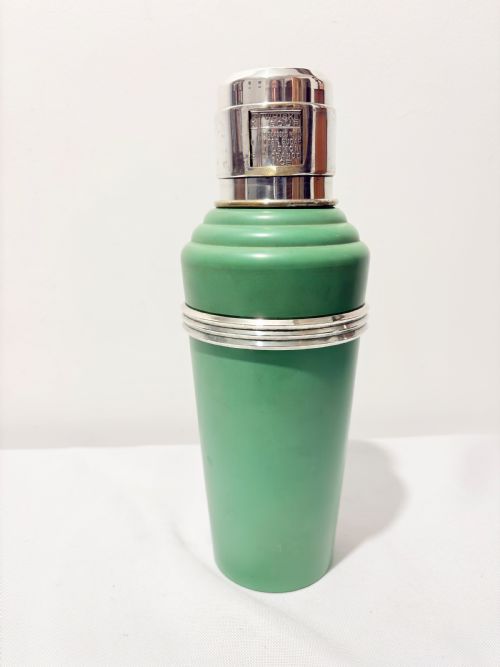


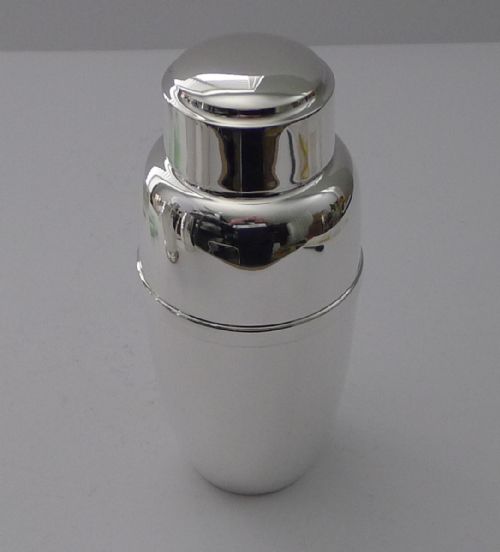


Retro Silver Cocktail Mixer
A retro silver cocktail mixer brings practical elegance and period style to any home bar, offering classic forms for mixing drinks.
Retro Silver Cocktail Mixer
A retro silver cocktail mixer represents the sophisticated barware of the twentieth century, encompassing functional cocktail shakers and complete cocktail sets. These pieces primarily emerge from the 1920s, 1930s, and 1940s, embodying the geometric design sensibilities of Art Deco alongside later Mid-Century Modern and Italian Modernism aesthetics.
Buyers encountering this selection will frequently find silver plated and electroplated nickel silver vessels, often paired with glass bodies or accented with materials like Bakelite and enamel. Many examples incorporate practical innovations such as integral lemon squeezers or rolling mixer recipes directly onto the body.
Origins span English, French, Swiss, German, and Italian workshops, reflecting a wide international demand for stylish home entertaining accessories during the interwar and postwar decades. Whether seeking a simple one-and-a-half pint shaker or a large decorative vessel, collectors find substantial variety in form and function.
Materials and construction methods
Manufacturers utilised silver plating over base metal and electroplated nickel silver to achieve a bright, reflective finish without the prohibitive cost of solid silver. Glass bodies appeared frequently, often combined with metal mounts or fitted with coloured Bakelite handles, stoppers, and lids.
Specialised components such as cork seals ensured liquid containment during vigorous shaking, while enamel decoration added vibrant colour accents to geometric metalwork. Mechanical elements like rolling recipe bands and built-in citrus squeezers required precise metalforming techniques during assembly.
Listings span the 1920s, 1930s, 1940s, and 1960s, featuring silver plate, metal, electroplated nickel silver, cork, glass, Bakelite, base metal, and enamel.
Assessing craftsmanship and condition
Quality in a retro silver cocktail mixer is determined by the weight and gauge of the metal, the crispness of the Art Deco stamping, and the integrity of any applied plating. Maker attribution plays a significant role, with pieces bearing marks from established silversmiths demonstrating superior build quality and finer detail work.
The sophistication of integrated mechanisms, such as smooth-operating rolling recipe cylinders or tightly fitted internal citrus juicers, distinguishes standard production items from finer examples. Preserved original components, including intact cork seals and undamaged coloured glass or Bakelite, contribute significantly to the overall integrity of the piece.
J. B. Chatterley & Sons·James Dixon & Sons·Asprey & Co·William Suckling·Hukin & Heath·C S Green & Co·Gaskell & Chambers·Lutz & Weiss
The Retro Silver Cocktail Mixer Glossary
- Silver Plate
- A thin layer of silver applied to a base metal core, such as copper or nickel brass, providing the appearance of solid silver. This technique allowed manufacturers to produce durable and lustrous barware for the domestic market.
- Electroplated Nickel Silver
- Commonly abbreviated as EPNS, this refers to a base metal alloy of copper, nickel, and zinc coated with a layer of pure silver through an electrolytic process. It provides a robust foundation frequently utilised in twentieth-century tableware.
- Bakelite
- An early form of synthetic thermosetting plastic popular in the 1930s for its durability and rich colour capabilities. It frequently appears on handles, finials, and decorative bands of cocktail shakers.
- Art Deco
- A design style prevalent from the 1920s through the 1930s characterised by sleek geometric shapes, stylised motifs, and streamlined forms. This aesthetic heavily influences the majority of vintage cocktail mixers.
Retro Silver Cocktail Mixer: Frequently Asked Questions
How do I use a vintage cocktail shaker?
Fill the main vessel with ice and your chosen spirits, then secure the lid and cap firmly before shaking briskly. The built-in strainer or perforated top allows you to pour the chilled drink smoothly into a glass while leaving the ice behind.
Ensure you check the seal and any cork components before shaking to prevent leaks. Hand washing is essential to preserve the silver plating and any delicate enamel or glass elements.
What periods do these cocktail mixers come from?
The pieces available predominantly date from the 1920s, 1930s, and 1940s, capturing the height of the Art Deco design movement. Occasional later examples extend into the 1960s, reflecting Mid-Century Modern and Italian Modernism styles.
Each decade brought distinct manufacturing techniques and aesthetic choices, ranging from streamlined metal cylinders to colourful glass combinations. Maker marks and stylistic cues help identify the specific era of manufacture.
How do I clean silver plated barware?
Wash silver plated items gently in warm soapy water using a soft cloth or sponge, avoiding abrasive scourers that can damage the thin silver layer. Dry them thoroughly immediately afterward to prevent water spotting and tarnishing.
For general upkeep, specialised silver polishing cloths can be used lightly on unpainted metal surfaces. Take extra care around Bakelite components, glass bodies, and enamel details to keep cleaning agents away from sensitive joints.
Are these cocktail mixers watertight?
Many vintage shakers retain their original cork seals or tight metal-on-metal fittings designed to contain liquids during use. However, wear over decades can compromise these seals, so testing with cold water before mixing cocktails is recommended.
If a cork seal has dried out or shrunk, replacement corks can often be fitted to restore full functionality. Even if a particular piece is better suited for display, many remain fully operational for home bartending.