
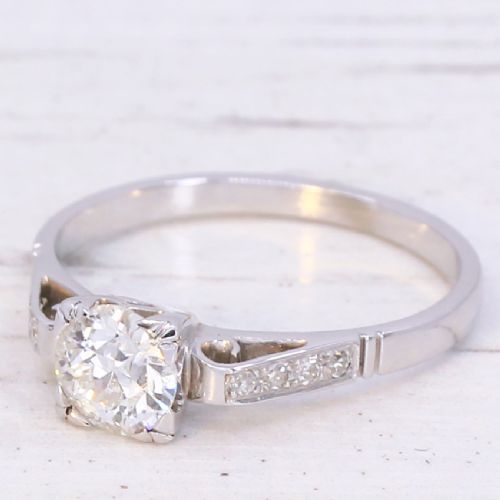
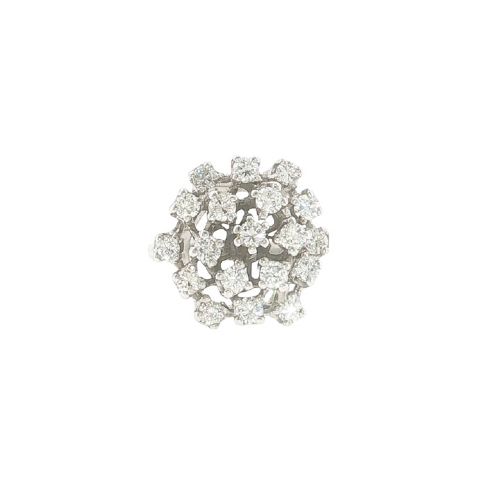
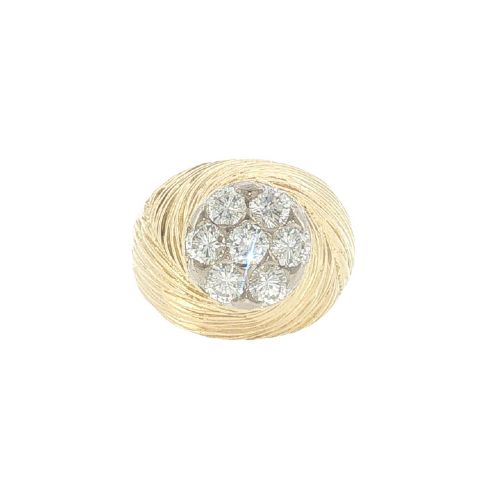
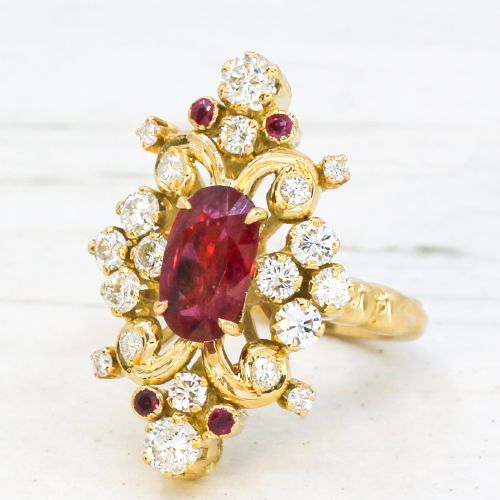
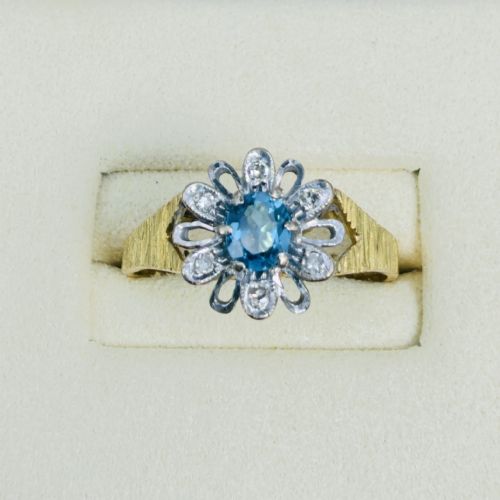
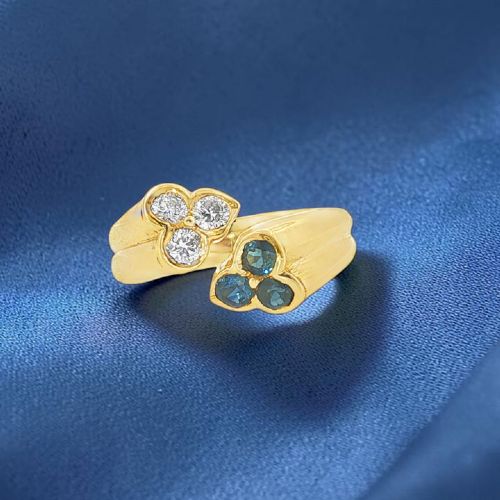
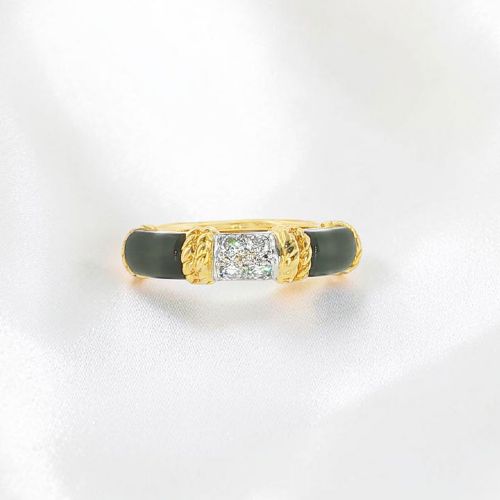
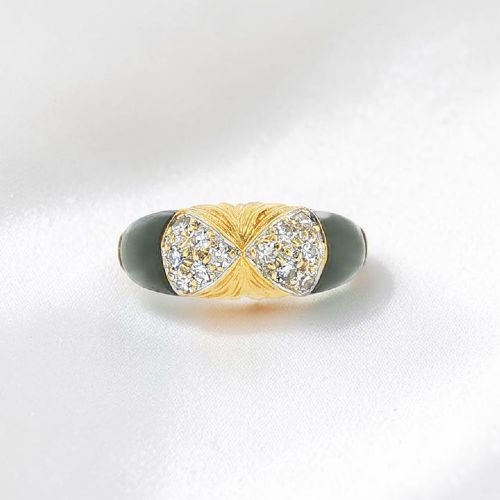




Retro Gold Diamond Ring
A retro gold diamond ring delivers bold architectural weight and brilliant sparkle, combining substantial mid-century character with unmistakable glamour.
Retro Gold Diamond Ring
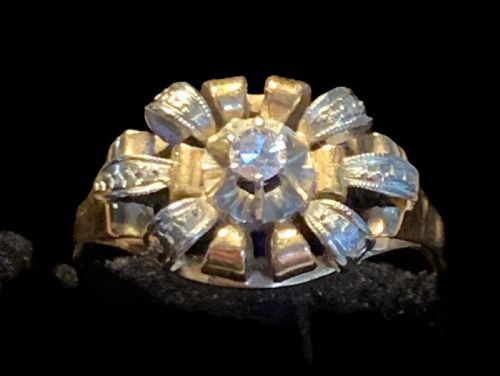
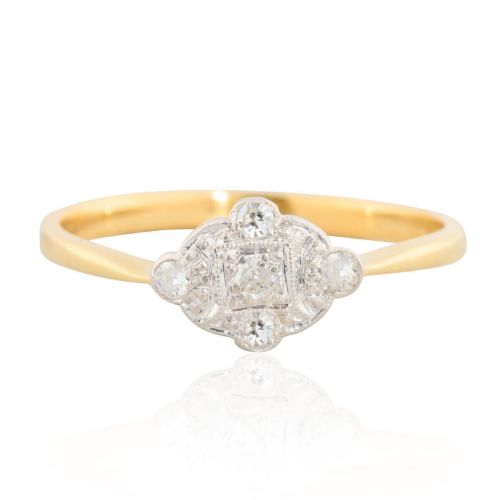
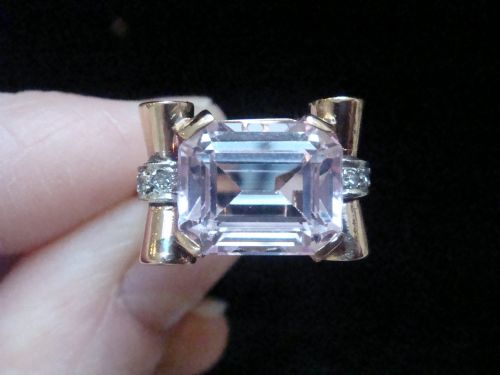
A retro gold diamond ring represents a distinct era of mid-century design, typically originating from the 1940s, 1950s, and 1960s. These pieces often take the form of bold cocktail rings, dress rings, and substantial solitaire designs.
The aesthetic leans heavily into Mid-Century Modern and Retro Modern styles, frequently incorporating geometric panel work and scroll motifs. Buyers will frequently encounter generous proportions in yellow gold, white gold, and platinum.
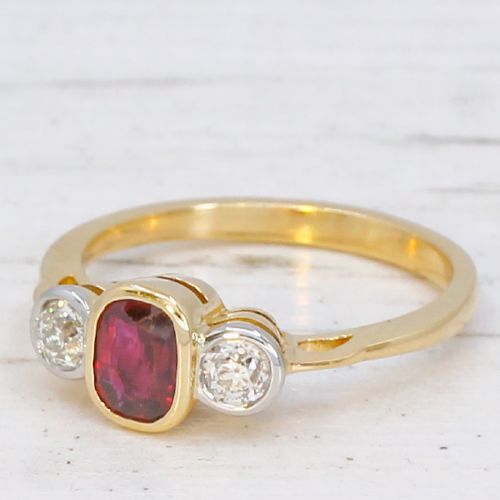
Many examples showcase dramatic cocktail settings paired with coloured stones such as aquamarine, ruby, emerald, sapphire, jade, and black onyx. The focus remains on assertive silhouettes that capture the post-war appetite for expressive jewellery.
How they were made
Goldsmiths constructed these pieces using combinations of 18ct yellow gold, 14ct gold, white gold, and platinum. Settings frequently mixed yellow and white metals to highlight specific diamond clusters and geometric patterns.
Techniques relied on heavy casting, hand-fabrication, and detailed scrollwork characteristic of French and American workshops from the 1940s onward. Stones were secured using robust claw settings, bezel mounts, and flush mountings designed to anchor larger brilliant and old cut diamonds.
Retro Gold Diamond Ring Retail Price Guide 2026
Typical asking prices for retro gold diamond ring among the pieces listed under this phrase on Sellingantiques today, from the lower quarter to the upper quarter. They describe what is for sale here now, not the wider market.
Current listings and archive records feature pieces dated across the 1940s, 1950s, 1960s, and into the 1970s.
What varies in quality
Quality rests upon the architectural integrity of the metalwork and the presence of substantial stone weight. Heavy tank rings with seamless integration of platinum and gold sit at the upper end of the scale.
The calibre of the central stones, whether old cut diamonds, brilliant cuts, or large accompanying gemstones, dictates the distinction of individual pieces. Masterful goldsmithing in panel construction and intricate ribbon motifs separates standard production from exceptional examples.
Kutchinsky·Giboulet
The Retro Gold Diamond Ring Glossary
- Tank Ring
- A style of jewellery named after military tank treads, characterised by heavy, volumetric gold and platinum geometric shapes popular during the 1940s. These designs emphasise bold, stepped contours and oversized proportions.
- Old Cut
- A precursor to the modern brilliant cut diamond, featuring a smaller table, higher crown, and open culet. These stones display a distinctive soft candlelight shimmer.
- Cocktail Ring
- A large, statement ring designed to catch the eye during evening wear. They frequently feature central diamonds flanked by calibre-cut rubies, sapphires, or aquamarines.
- Platinum
- A dense, durable white metal frequently utilised in mid-century jewellery to secure diamonds safely. Its strength allowed makers to create fine, intricate claw settings without risking structural failure.
Retro Gold Diamond Ring: Frequently Asked Questions
What defines a retro gold diamond ring?
These pieces originate primarily from the 1940s through to the 1960s, embodying bold geometric forms and heavy gold construction.
They frequently blend yellow gold with platinum and feature brilliant or old cut diamonds alongside coloured stones.
How do I style a cocktail ring?
Due to their substantial size and architectural presence, these rings suit being worn alone as a focal point.
Their robust construction makes them well suited for evening wear and special occasions.
Are these rings made of solid gold?
The listings consist of solid 18ct yellow gold, 18ct white gold, and 14ct gold components.
Many examples also incorporate platinum sections to mount and secure the diamonds.
How can I tell the period?
Mid-century pieces from the 1940s often feature tank-style volumetric gold work and ribbon motifs.
Later 1950s and 1960s examples transition towards cleaner modernist lines and distinct dress ring silhouettes.