


Emerald Cut Aquamarine Ring
An emerald cut aquamarine ring delivers a calm, pale blue presence on the hand that draws the eye across the room.
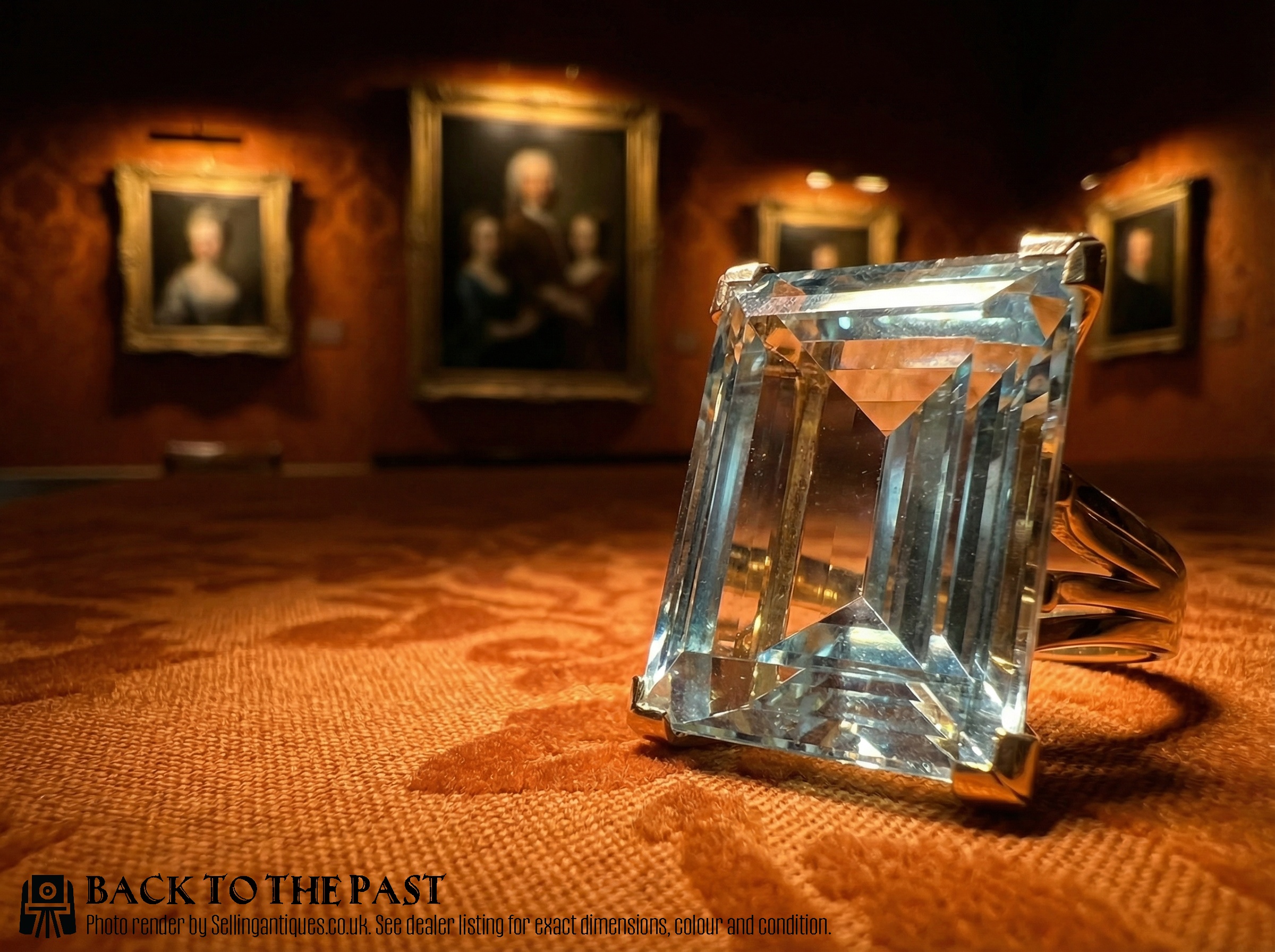
Emerald Cut Aquamarine Ring
An emerald cut aquamarine ring centres on a pale blue beryl crystal shaped with stepped facets that emphasise clarity and depth over fiery brilliance. When you search for an emerald cut aquamarine ring, you encounter pieces that range from substantial mid-century cocktail wear to precise geometric designs from the nineteen-twenties and nineteen-thirties.
The selection on this page demonstrates how jewellers of the mid-century and earlier periods favoured this particular stone cut for its architectural geometry. You find large statement pieces alongside restrained geometric mountings that let the cool, translucent blue material dominate the visual weight of the jewellery.
How these rings were made
Master jewellers combined platinum and white gold to support sizeable central beryl stones, often flanked by smaller diamonds that enhance the cool colour palette. The metalwork relies on secure settings like heavy claw mounts and channel work to anchor stones that frequently exceed ten carats in weight.
Retro and mid-century workshops utilised heavy casting and fabrication techniques in yellow and white gold to build robust frames suited to daily wear. Art Deco makers favoured platinum for its strength, allowing for delicate millegrain edges and openwork galleries beneath the main stone.
Emerald Cut Aquamarine Ring Retail Price Guide 2026
Typical asking prices for emerald cut aquamarine ring among the pieces listed under this phrase on Sellingantiques today, from the lower quarter to the upper quarter. They describe what is for sale here now, not the wider market.
Listings feature periods from the nineteen-twenties up to nineteen-sixty, using platinum, eighteen-carat white gold, and fourteen-carat yellow gold.
What varies in quality
Quality rests primarily on the depth of the beryl's colour saturation and the precision of the step-cut facets, which reveal internal clarity immediately. Superior examples combine a clean, icy blue hue with crisp corner facets that create distinct halls of mirrors within the stone.
The architectural integrity of the metal setting dictates longevity, particularly in large cocktail pieces where substantial stone weights require robust prongs and solid shanks. Finer mountings display careful hand-finishing, such as precise millegrain beading and flush diamond settings that complement the central emerald cut.
The Emerald Cut Aquamarine Ring Glossary
- Emerald cut
- A rectangular or square stone cut with stepped facets and cropped corners. This geometry highlights the clarity and translucent depth of the material.
- Aquamarine
- A pale blue to light greenish-blue variety of beryl. Its name derives from the Latin for seawater.
- Millegrain
- A decorative jewellery technique featuring a line of tiny raised metal beads along the edges of a setting. It adds a refined texture typical of antique and art deco pieces.
- Trilogy ring
- A ring set with three stones symbolising the past, present, and future. In these listings, they pair a central emerald cut beryl with flanking diamonds.
- Cocktail ring
- A large, showy ring designed to catch attention during evening social events. These pieces often feature oversized centre stones and diamond cluster surrounds.
Emerald Cut Aquamarine Ring: Frequently Asked Questions
How do I care for my ring?
Clean your beryl jewellery gently using warm soapy water and a soft brush to remove everyday oils from the pavilion facets. Avoid harsh ultrasonic cleaners, as sudden temperature changes or strong chemicals can damage included stones.
Store your ring in an individual fabric pouch to prevent the harder diamond accents from scratching the softer beryl surface. Have a professional jeweller inspect the claw settings periodically to ensure the heavy centre stone remains secure.
Are these rings suitable for daily wear?
Beryl rates around seven point five to eight on the Mohs hardness scale, making it durable enough for regular use with sensible precautions. You should remove the ring during heavy manual work or gardening to protect the large emerald cut facets from sharp impacts.
Mid-century and art deco mountings with robust platinum or gold shanks hold up well to everyday life. Ensuring the prongs stay thick and tight protects your investment against accidental stone loss.
How do I tell Art Deco from mid-century pieces?
Art Deco pieces from the nineteen-twenties and thirties typically feature platinum settings, geometric symmetry, and fine millegrain details. The overall aesthetic leans toward linear precision and architectural restraint.
Mid-century and retro pieces from the nineteen-fifties often utilise heavier gold settings, larger stone carat weights, and bolder cocktail forms. The designs shift towards voluminous curves and prominent yellow gold structures.
What metal is best for aquamarine?
Platinum and white gold provide a neutral, icy backdrop that complements the cool blue tones of the beryl crystal. These white metals reflect light through the emerald cut without introducing competing warmth.
Yellow gold creates a warmer, vintage contrast that was particularly popular during the retro and mid-century eras. The choice depends entirely on whether you prefer a crisp, monochromatic look or a classic golden frame.