
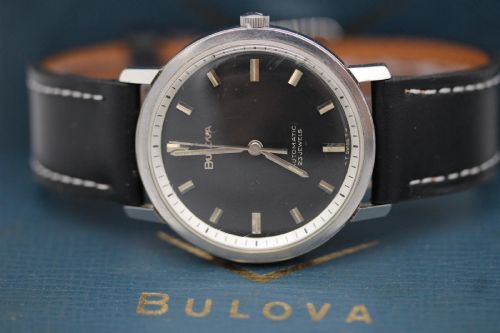
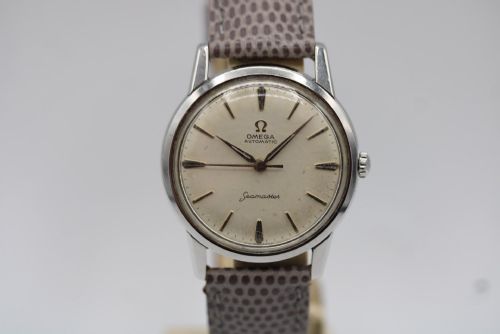
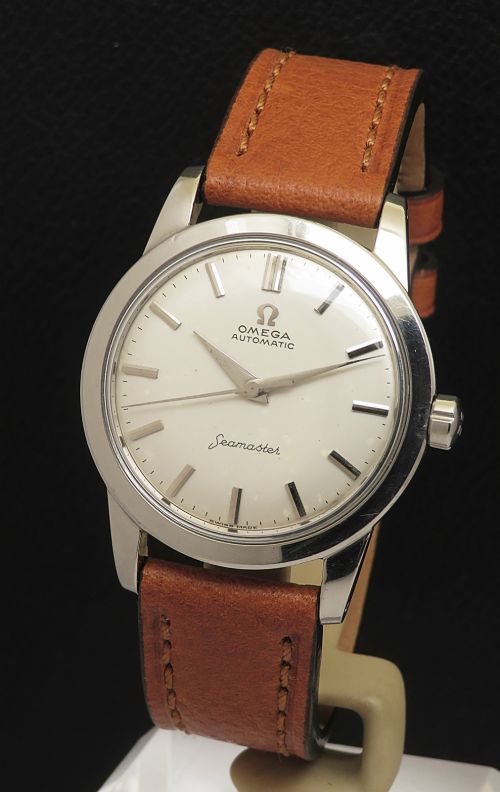
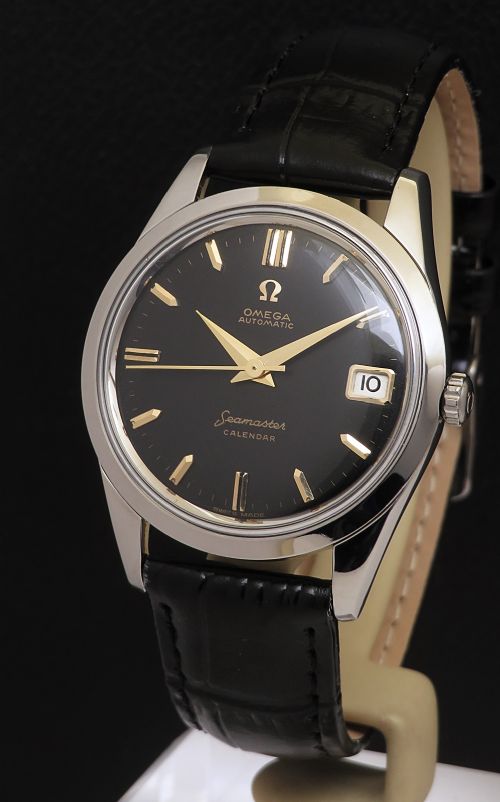
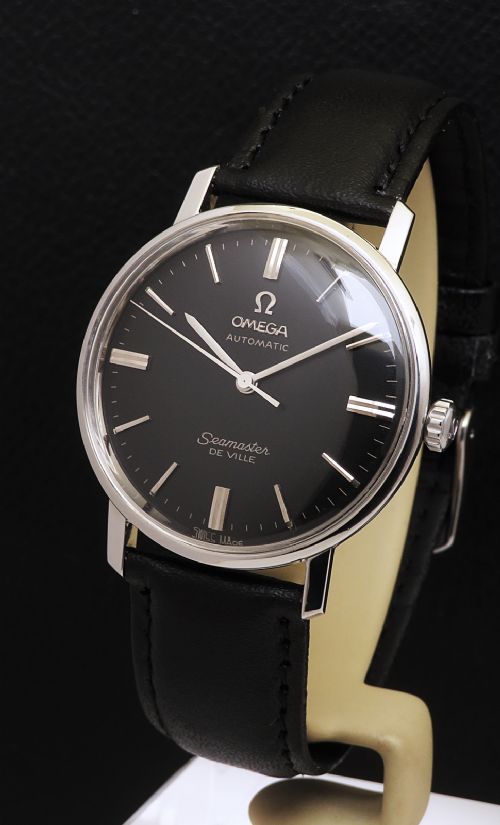
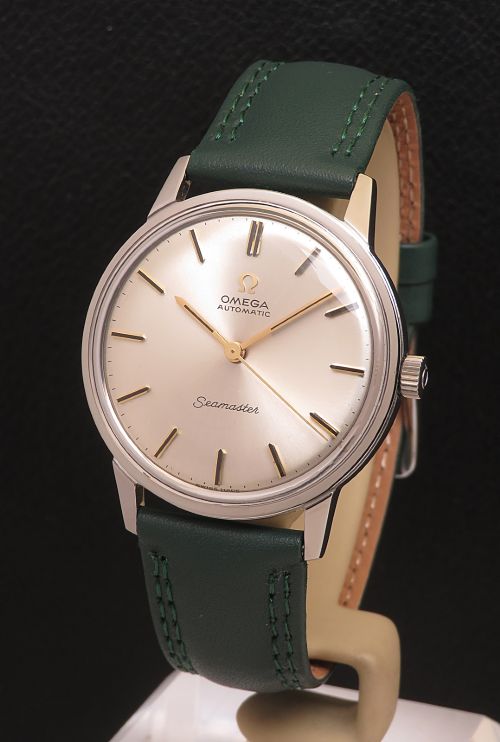
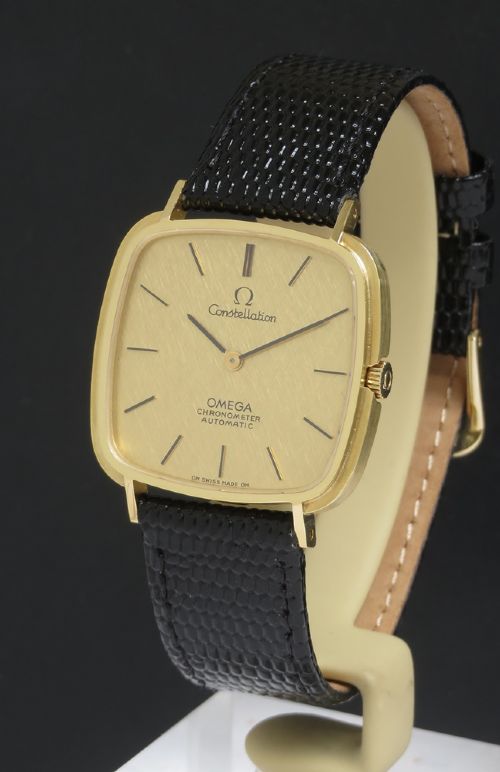
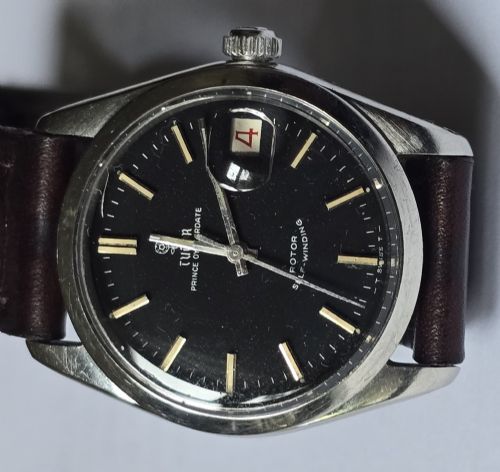
Retro Automatic Wristwatch
A retro automatic wristwatch brings mid-century mechanical engineering to the wrist, offering self-winding movements housed in distinctive period cases.
Retro Automatic Wristwatch
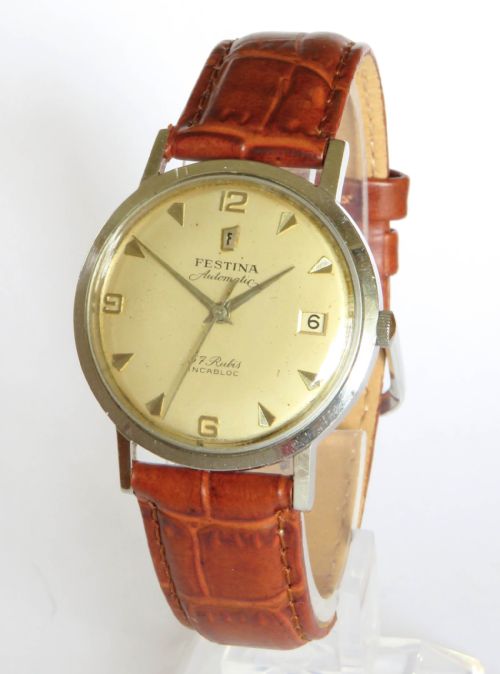
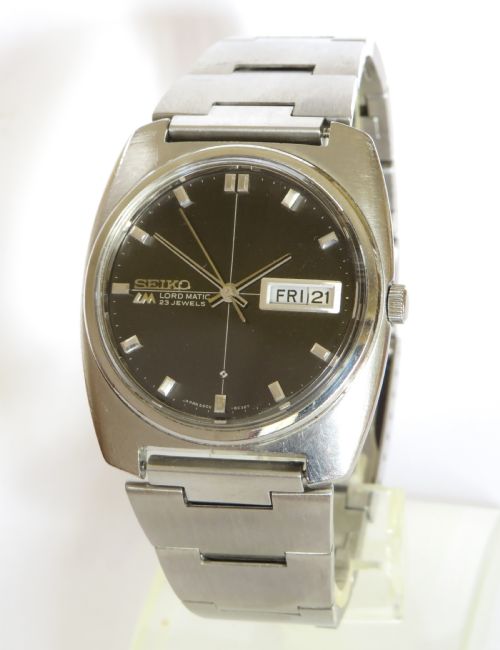
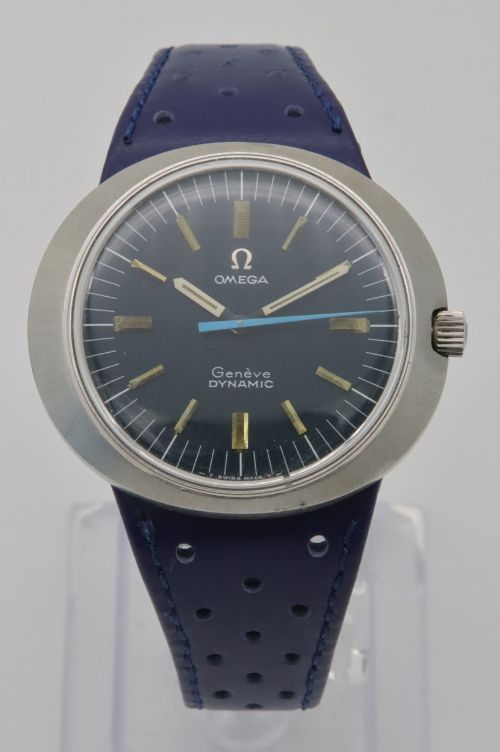
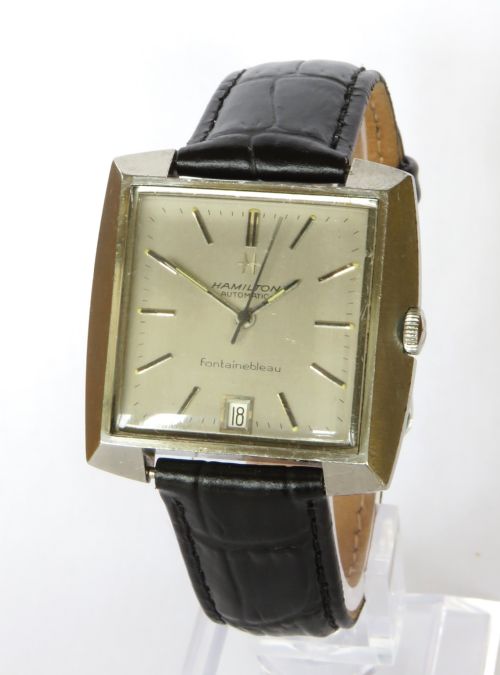
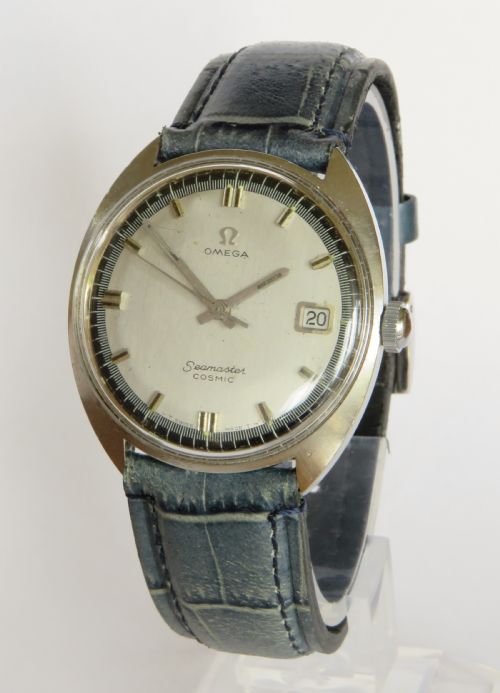
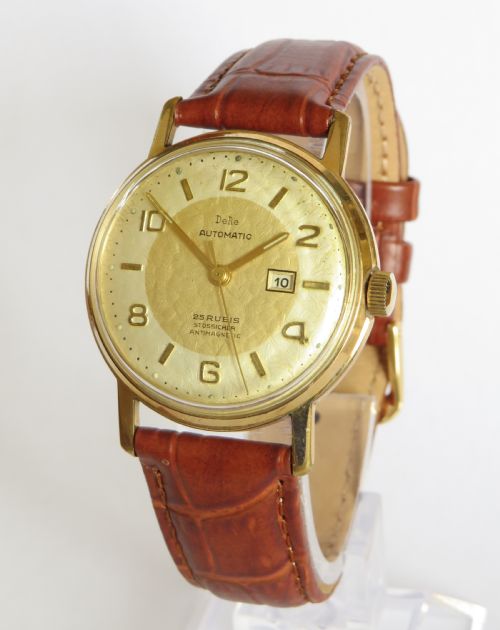
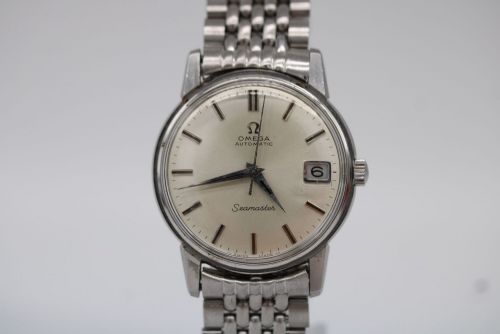
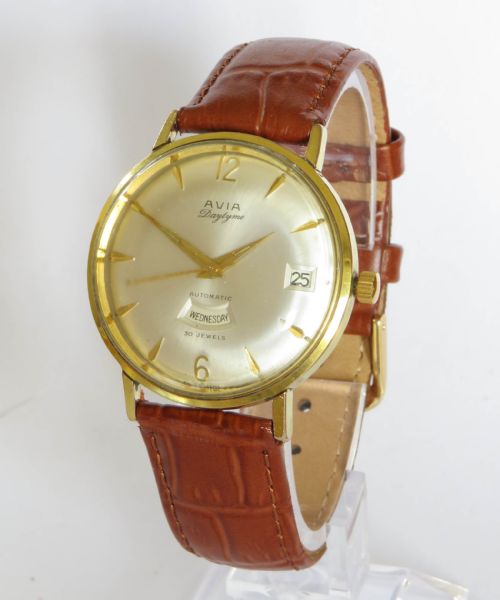
A retro automatic wristwatch represents mechanical timepieces produced predominantly during the 1950s and 1960s, drawing upon mid-century design principles. These pieces utilise internal weighted rotors that move with the wearer's wrist to wind the mainspring automatically, removing the need for manual daily winding.
The versions most commonly met on this page span the 1940s through to the 1970s, encompassing prominent Swiss houses and international makers. Forms range from robust steel waterproof models to refined gold dress pieces bearing calendar complications and distinctive dial layouts.
What varies in quality
The grade of materials and the complexity of the internal calibre separate standard production models from top-tier chronometer-certified pieces. Solid gold cases and specialised waterproof case designs indicate higher original manufacturing investment than basic plated alternatives.
The degree of preservation of original factory components, such as signed crowns, unpolished case edges, and untouched dials, heavily influences the standing of an individual watch. Mechanical sophistication also varies, from standard automatic winders to early bumper movements and complex chronograph mechanisms.
Early bumper automatics let you feel a gentle tap on your wrist as the internal weight bounces against its springs.
Omega·Tudor·Hamilton·Seiko·Festina·Bucherer·Avia·Tissot·Wittnauer·Longines·Baume·Eterna·Prisma·Consul·Heuer
The Retro Automatic Wristwatch Glossary
- Automatic
- A self-winding mechanical movement that uses a weighted rotor to wind the mainspring through natural wrist motion during wear.
- Calibre
- The specific internal movement designation used by a watch manufacturer to identify a particular mechanical design.
- Chronometer
- A precision timepiece that has been tested and certified to meet strict accuracy standards over various temperatures and positions.
- Bumper
- An early form of automatic movement where the rotor swings back and forth against springs rather than rotating in a full circle.
- Complication
- Any feature on a watch beyond the basic display of hours, minutes, and seconds, such as a date, day display, or chronograph function.
Retro Automatic Wristwatch: Frequently Asked Questions
How do I wind an automatic watch?
An automatic watch winds itself through the natural movement of your arm during daily wear, utilising an internal weighted rotor.
If the watch has stopped completely, give the crown a few manual turns to jumpstart the movement before putting it on.
Can I wear my vintage watch swimming?
Most vintage pieces, even those originally marketed as water-resistant, should be kept away from water unless recently pressure-tested by a watchmaker.
Perishing rubber gaskets and aged seals mean vintage watchcases cannot reliably keep moisture out during swimming.
How often should a vintage automatic be serviced?
A mechanical watch requires periodic cleaning and lubrication of its internal gears every few years to prevent wear on the metal components.
Routine servicing ensures the oils do not dry out and keeps the timekeeping accurate across the decades.
What is the difference between steel and gold plate?
Stainless steel watches offer durable, corrosion-resistant housings designed for daily wear and utility.
Gold-plated models feature a thin layer of gold bonded to a base metal core, offering the appearance of solid gold at a different tier.