
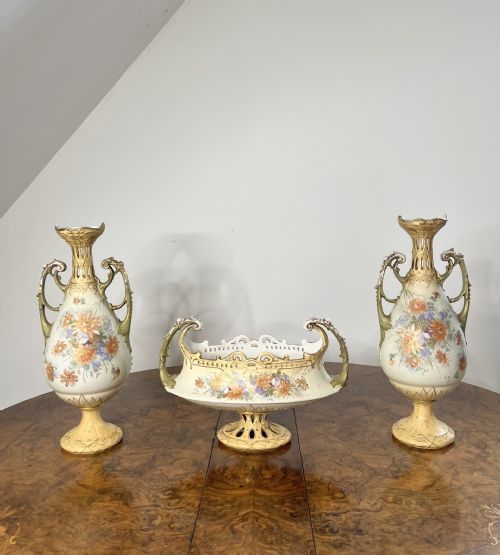


Reticulated Porcelain Urns
These reticulated porcelain urns and decorative vases bring pierced bodywork and hand-painted detail from nineteenth and twentieth-century makers into your room.
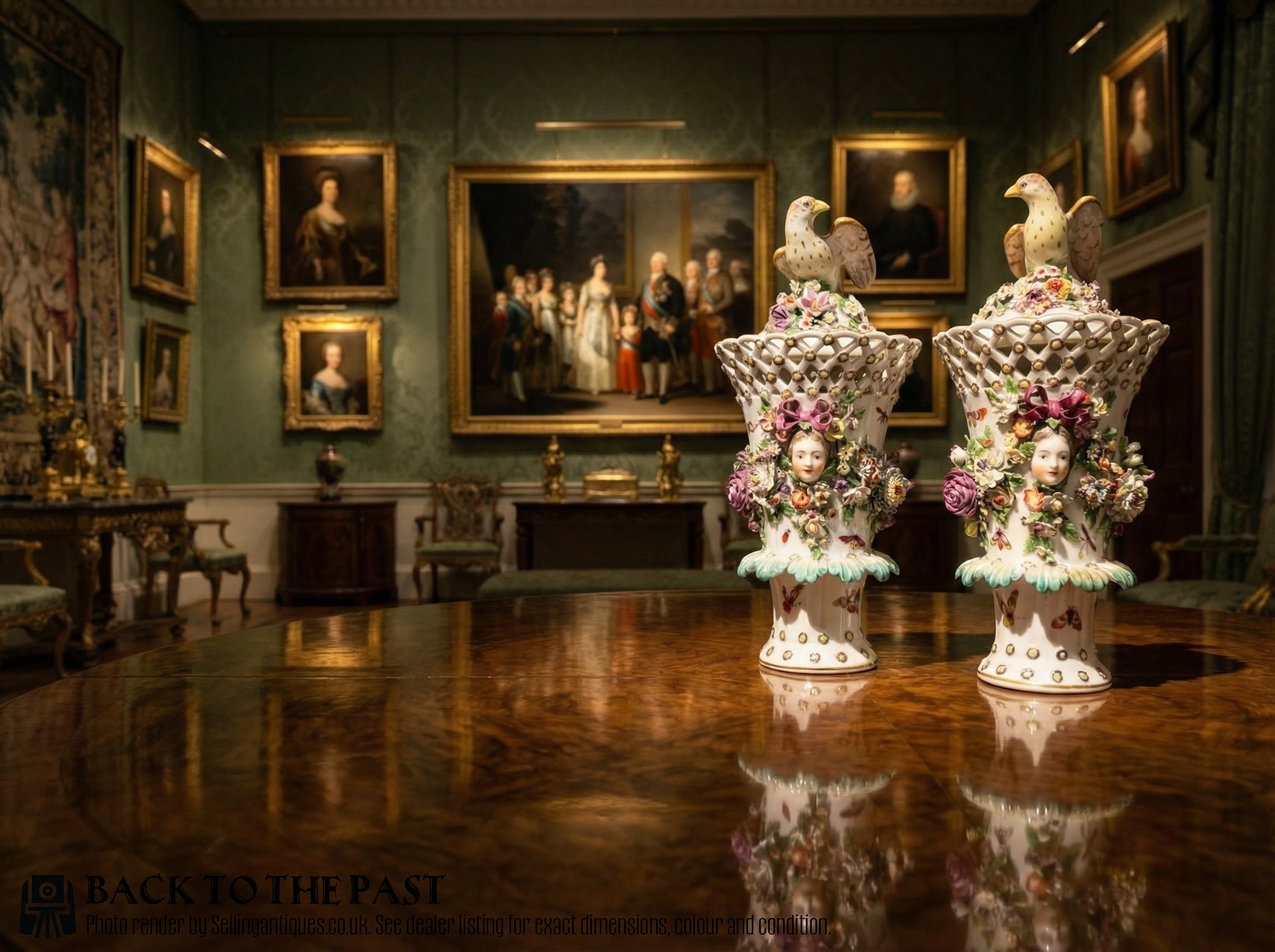
Reticulated Porcelain Urns
Reticulated porcelain urns encompass pierced vessels, pot pourri jars, and garniture sets originating from English and European factories during the eighteenth, nineteenth, and twentieth centuries. Buyers search for these pieces to acquire decorative focal points that showcase intricate openwork and hand-painted scenes.
The selections available here span from nineteenth-century Vienna and Old Paris productions to extensive Royal Worcester outputs from the Victorian, Edwardian, and later periods. English factory pieces, particularly those featuring pierced bodies and painted fruit, dominate the forms seen on this page.
Vessels take various shapes including lidded urns, centerpieces, pot pourri vases, and spill vases. Forms range from classical Revival styles to delicate Meiji period Japanese Satsuma wares.
How they were made
Makers utilised porcelain, earthenware, and bisque porcelain bodies, applying enamel pigments and gold leaf, gilt, or gilding to finish the surfaces. Skilled artisans pierced the wet or leather-hard clay by hand to create intricate reticulated patterns.
Painters decorated the surfaces with botanical studies, fruit, chrysanthemums, and pheasants before firing the pieces in kilns. Guilds and factories combined these painted panels with moulded handles and pierced shoulders.
Listings feature pieces spanning the 18th Century through the 1960s, employing porcelain, bisque porcelain, earthenware, bronze, and gold leaf.
What varies in quality
Quality rests upon the precision of the piercing and the fineness of the hand-painted decoration executed by named artists. Pieces showing crisp reticulation work and detailed brushwork represent the upper tier of production.
The depth of gilding and the harmony of the enamel colours distinguish standard factory output from exceptional studio work. Maker attribution and signed panels elevate individual examples.
Royal Vienna·Royal Worcester·Vion et Baury·Ernst Wahliss·George Owen·James Stinton·Kitty Blake
The Reticulated Porcelain Urns Glossary
- Reticulated
- Pierced or net-like openwork cut into the ceramic body before firing. This technique requires considerable skill to prevent warping in the kiln.
- Garniture
- A set of three or more matching vases or urns designed to be displayed together on a mantelpiece or sideboard. These matching groups often comprise a central urn and two flanking side vases.
- Pot Pourri
- A lidded jar or vase pierced to release the scent of dried flowers and spices held within. These vessels combine decorative painted exteriors with functional ventilation.
- Bisque
- Unglazed fired porcelain presenting a matte, white texture similar to marble. This material highlights sculptural detail over glossy finishes.
- Koro
- A traditional Japanese incense burner supported on legs and fitted with a pierced cover. These pieces often feature intricate Satsuma earthenware and crests.
Reticulated Porcelain Urns: Frequently Asked Questions
What are reticulated porcelain urns?
These decorative vessels feature openwork pierced designs cut directly into the porcelain body alongside hand-painted botanical or avian scenes. Makers produced them primarily as ornamental garnitures and pot pourri containers.
English and continental factories shaped these urns during the nineteenth and early twentieth centuries. They serve as sculptural elements for interior display.
How do I identify Royal Worcester pieces?
Look for factory backstamps beneath the glaze alongside hand-painted signatures from known artists like James Stinton or George Owen. Pierced gilt handles and painted fruit motifs frequently mark these works.
Many pieces date from the Victorian and Edwardian eras, displaying distinct registration numbers or date ciphers. The quality of the gilding and openwork aids identification.
Where should I place these urns?
Display these vessels on stable surfaces such as sideboards, mantelpieces, or dedicated display cabinets where their pierced work is visible. Keep them away from heavy foot traffic to protect delicate handles and reticulated rims.
Pairing garniture sets together creates a balanced arrangement across larger surfaces. Single centrepieces anchor smaller display areas effectively.
How do I clean reticulated porcelain?
Dust these pieces gently with a soft, dry brush to clear debris from the intricate pierced openings. Avoid submerging antique porcelain in water, particularly pieces with delicate gilding or enamel.
Professional restoration is necessary if structural damage occurs to the openwork. Regular dry maintenance preserves the painted surfaces.