
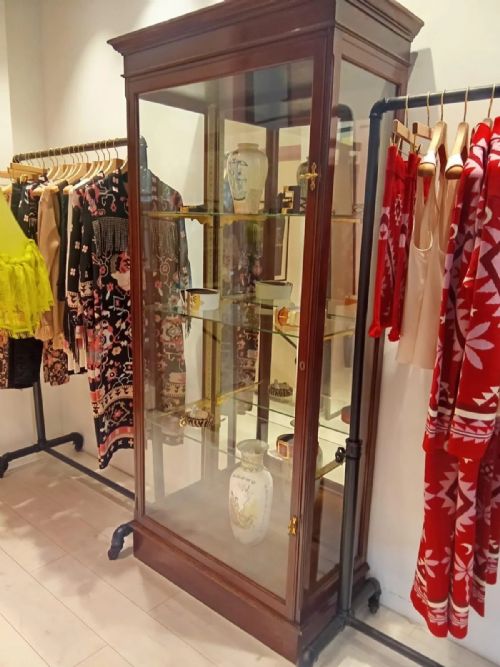
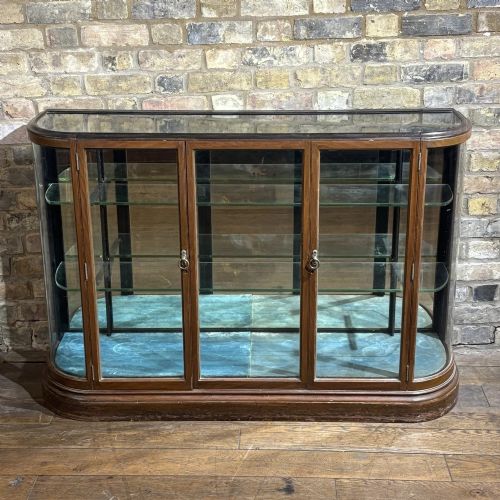


Retail Haberdashery Cabinet
A retail haberdashery cabinet is a functional commercial fixture designed to present small goods clearly, and collectors prize them for their glass panels and organised compartments.
Retail Haberdashery Cabinet
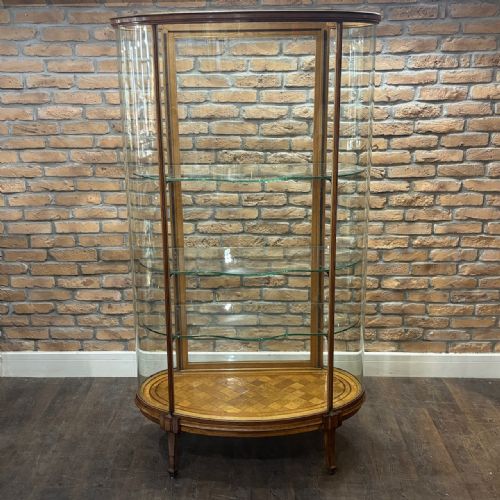
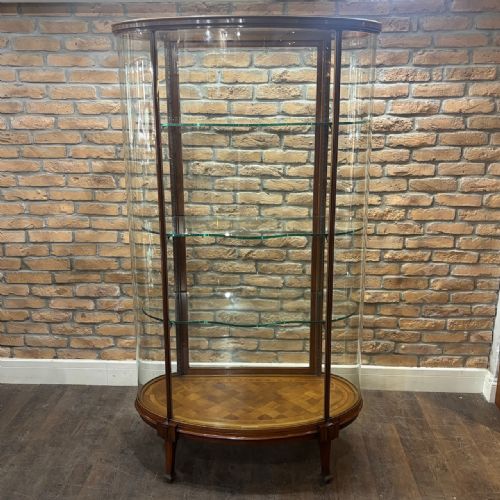
When you search for a retail haberdashery cabinet, you are looking at commercial shop fittings built to showcase and store merchandise for customers. These pieces originate from various historical periods spanning the Victorian era through to the 1930s, reflecting the shift in retail display methods over time.
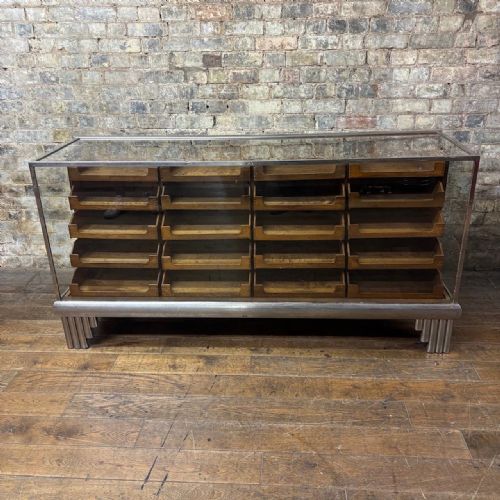
The versions you are most likely to meet on this page include mahogany and oak countertop display cases, multi-drawer banks, and large shop counters fitted with extensive glass panels. Many examples derive from commercial settings, combining utility with structured presentation.
Origins vary from English workshops to French and Hungarian makers, incorporating styles such as Edwardian, Adam Style, and Art Deco. Forms range from compact tabletop display cases to broad pentagonal and bow end counters.
Materials and Construction
Makers utilised sturdy hardwoods such as mahogany and oak alongside pine and ebonised timbers to form the primary carcasses of these display cases. Metal components including brass, iron, chrome, and aluminium provided structural support and framing for glazed sections.
Glass is integral to the construction, allowing light to reach stored items while protecting contents from handling. Secondary elements like velvet, fabric, and mirrors enhanced the interior presentation of goods within the counters and cabinets.
Listings feature items spanning the 19th century, Victorian period, Edwardian era, and the 1920s to 1930s, constructed from mahogany, oak, brass, and glass.
Factors of Quality
The distinction between tiers of quality rests upon the sophistication of the timber work and the integrity of the original hardware. Superior pieces exhibit refined joinery, such as bow ends or pentagonal geometry, combined with robust brass or chrome framing.
Provenance and maker attribution elevate certain examples, particularly those bearing the marks of established commercial outfitters. The preservation of original glazing, mirrored interiors, and operational drawer mechanisms further separates standard utilitarian items from exceptional commissions.
F. Sage & Co·Dudley & Co·John Stow Ltd·Saml. Elliott & Sons
The Retail Haberdashery Cabinet Glossary
- Haberdashery cabinet
- A specialised storage unit featuring multiple shallow drawers, historically utilised for selling small sewing items, ribbons, and fastenings. They are prized today for desktop organisation and display.
- Vitrine
- A glass-sided display cabinet designed to protect and exhibit delicate objects or merchandise. The term often applies to refined retail and domestic glass cases.
- Bow end
- A structural curve at the extremity of a cabinet or counter, providing a rounded viewing pane. This technique softens the profile and widens the viewing angle for customers.
- Ebonised
- Wood finished with a dark stain or coating to imitate ebony. This treatment was common in Victorian and early twentieth-century commercial furniture.
- Bank of drawers
- An assembly of numerous small drawers arranged within a single housing. They provide extensive compartmentalised storage for retail or workshop use.
Retail Haberdashery Cabinet: Frequently Asked Questions
What is a retail haberdashery cabinet?
A retail haberdashery cabinet is a commercial storage and display unit built for shops to organise small dry goods. They typically combine glazed panels with numerous shallow drawers or open shelving.
These pieces were essential fixtures in late nineteenth and early twentieth-century retail environments. They allowed customers to view items clearly while keeping stock secure behind glass or within fitted compartments.
How were these cabinets used originally?
Merchants utilised these furnishings in public shops and mercantile premises to present goods attractively on counters or floor spaces. Countertop versions placed small items at eye level near the point of sale.
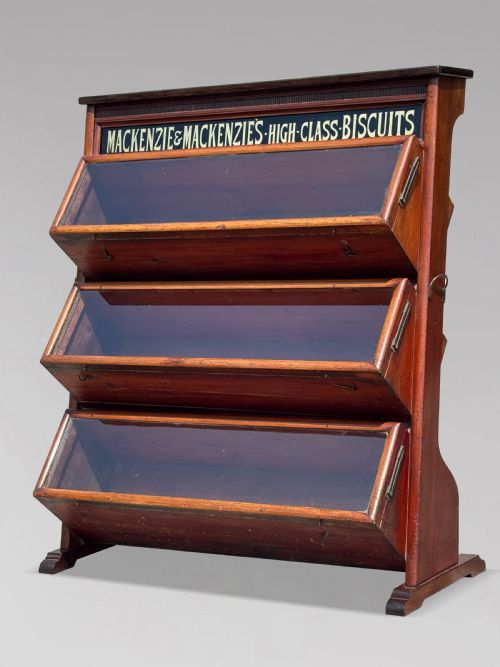
Larger variations served as primary serving counters where shop assistants could retrieve merchandise from banks of drawers behind the facade. Sign-written branding for confectionery or household goods was often added to promote specific products.
How do I live with one at home?
Living with a retail display cabinet involves incorporating its glass-fronted storage into modern domestic interiors as a focal point for collections. Their structured drawers and shelving suit the display of ceramics, books, or smaller personal artefacts.
Placing them in living spaces, kitchens, or studies allows the timber and glass to function as practical furniture. The natural light passing through the glazed panels highlights the items stored inside.
How do I date an antique shop counter?
Dating an antique shop counter requires examining the primary timber, framing materials, and construction techniques used by the maker. Victorian and Edwardian examples often feature heavy mahogany or oak frames with traditional joinery.
Later pieces from the 1920s and 1930s frequently incorporate modern elements like chrome, aluminium, and distinct Art Deco styling. Maker plaques, brass plates, and historical sign-writing can also help narrow down the period of manufacture.