





Restoration Style Carved Chair
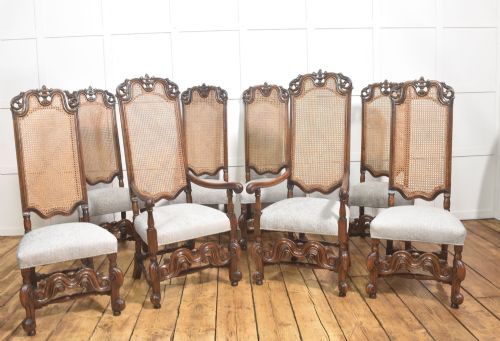
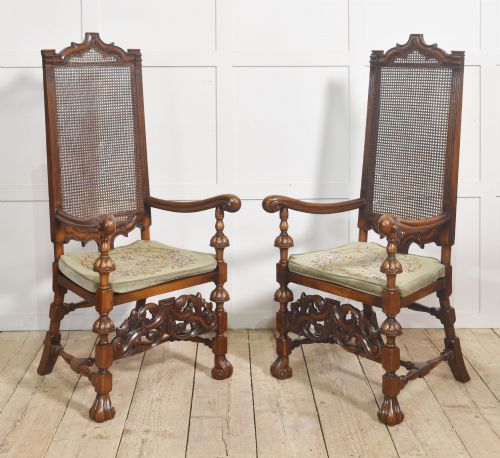
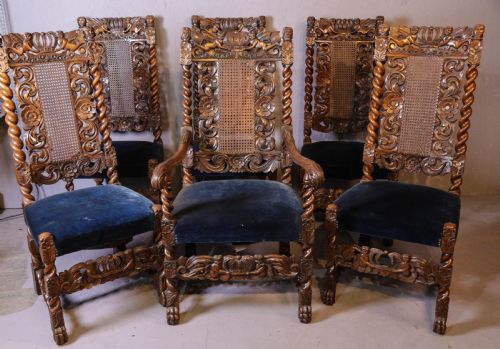
A restoration style carved chair brings heavy scrollwork, pierced splats and turned frames into a room, drawing directly on late seventeenth-century models.
Restoration Style Carved Chair
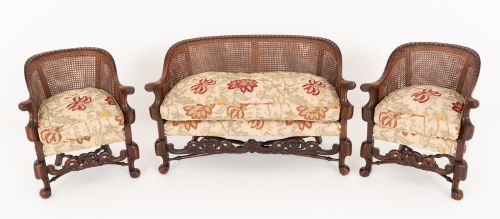
A restoration style carved chair echoes the dramatic seating of the seventeenth century, using dense timber and elaborate ornamentation. You will find high-back dining chairs, low side chairs, armchairs, and matching settees on this page.
Most examples date from later revivals in the nineteenth and early twentieth centuries, copying earlier forms rather than originating from the seventeen hundreds. Oak and walnut form the backbone of these pieces, often paired with cane panels or upholstery.
How they were made
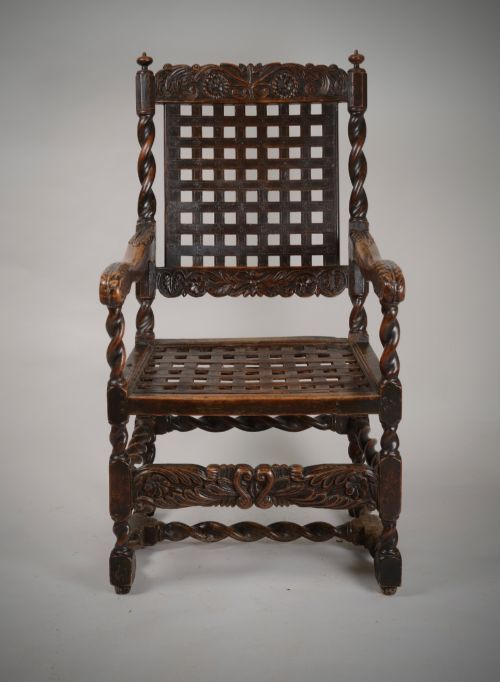
Carpenters shaped these chairs from solid oak or walnut, relying on hand-carving to create deep relief scrollwork, acanthus leaves, and putti motifs along the crest rails and stretchers. Turned legs and uprights joined by H-stretchers provided structural stability to the heavy frames.
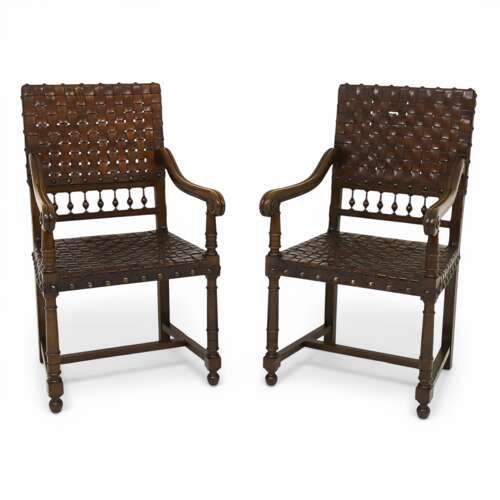
Cane weaving supplied resilient backrests and seats in many versions, while others accepted velvet, leather, or woven fabric held in place with brass tacks.
The inventory spans multiple eras, including seventeenth-century originals, eighteenth-century interpretations, and nineteenth-century revival suites.
What varies in quality
Depth and sharpness of the hand-carved detail separate a standard revival chair from a finer piece, as crisp undercutting takes significantly more skill than shallow stamping or machine routing. The choice of primary timber also matters, with richly figured walnut commanding more attention than plain oak.
Original elements such as period canework or untouched surface patination elevate a piece above later replacements or heavy modern refinishing.
Jacob-Desmalter·Waring & Gillow
The Restoration Style Carved Chair Glossary
- Carolean
- Pertaining to the reign of Charles II, characterised by lavishly carved woodwork, cane panels, and scrolling motifs. This aesthetic forms the direct inspiration for the restoration style carved chair.
- Cane
- Split rattan woven into tight mesh patterns for chair backs and seats. It offers flexible support and a light visual contrast against dark timber frames.
- Fauteuil
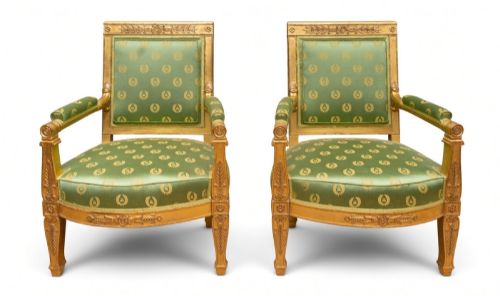
- An open-armed French armchair with upholstered back and seat, often featuring exposed carved wood framing. Examples appear in giltwood and specialised revival forms.
- Scrollwork
- Ornamental carving shaped like spirals or scrolls, heavily used on the arms, legs, and crest rails of seventeenth-century seating. It provides rhythmic movement to otherwise blocky furniture structures.
Restoration Style Carved Chair: Frequently Asked Questions
Are these chairs comfortable to sit on?
Most high-back versions offer an upright posture suited to formal dining or reading rather than lounging. Deep armchairs and upholstered variants provide a more relaxed seat.
Cane panels yield slightly under weight, while padded upholstery offers firmer support depending on the interior stuffing.
How do I tell an original from a revival?
Examine the tool marks, timber shrinkage, and construction joints beneath the frame. Seventeenth-century originals show hand-pegged joinery and irregular hand-cut detailing.
Revival pieces from the nineteenth and twentieth centuries often feature machine-cut elements and standardised hardware.
Can I use these chairs at a modern dining table?
Dining chairs from these groups fit standard table heights, though their high backs demand careful measuring against clearance limits. Their carved crest rails make a strong visual statement in contemporary or traditional rooms.
Ensure armchairs have enough clearance to slide beneath the table rim.
How should I care for the cane panels?
Wipe cane periodically with a damp cloth to maintain moisture and prevent the natural fibres from becoming brittle. Avoid placing them near direct heat sources that dry out the material.
Applying a light coat of boiled linseed oil occasionally helps preserve older rattan.