





Highback Oak Chair
A highback oak chair brings architectural presence and upright posture to a room, drawing on centuries of revivalist design and sturdy timber construction.
Highback Oak Chair
When searching for a highback oak chair, buyers encounter seating designed to make a formal visual statement through elevated vertical proportions. The selection spans robust dining chairs and carvers alongside revival armchairs rooted in earlier centuries of British cabinet making.
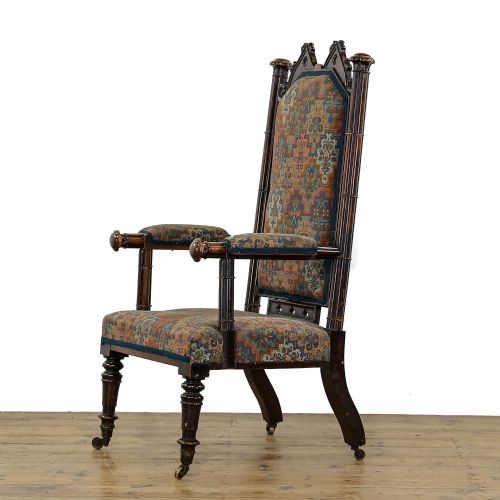
The versions most frequently met on this page are dining sets and individual carvers originating from the Victorian era and the early twentieth century. These later examples often adopt Jacobean or Carolean styles, employing turned members and carved crest rails to mimic antique predecessors.
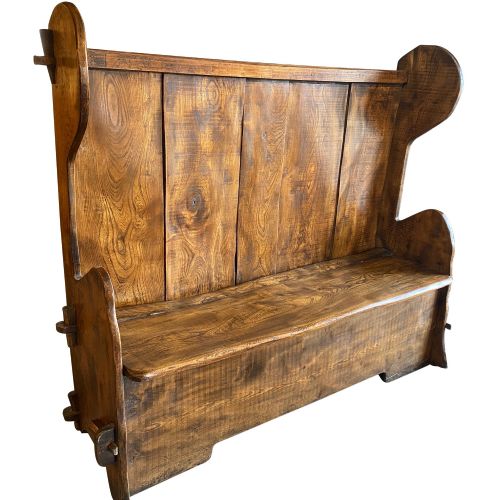
Alongside matching dining sets, the inventory captures vernacular forms such as rush seated armchairs, settles, and regional crofter chairs. These pieces demonstrate how oak served both grand formal interiors and simpler domestic settings across different periods.
What varies in quality
Quality in these chairs rests upon the crispness of the timber carving and the architectural proportion of the high back. Superior examples display deep, hand-chiseled relief work on crest rails and stiles rather than shallow mechanical stamping.
The integrity of the frame construction and the matching of timber grain across a dining set dictate the overall standard of the piece. Well-balanced proportions ensure that the towering height of the backrest feels purposeful rather than ungainly.
Some chairs feature exceptionally tall backs designed entirely to block cold room draughts before central heating existed.
Liberty Morris And Co·Brights Of Nettlebed
The Highback Oak Chair Glossary
- Carver
- An armchair designed to match a set of dining chairs, usually featuring open arms. These were traditionally reserved for the head of the table.
- Barley twist
- A decorative turning technique resembling a twisted rope, commonly found on the legs and vertical supports of revival seating. This woodwork style gained immense popularity during the seventeenth century and subsequent revival periods.
- Crest rail
- The horizontal top member of a chair back, frequently shaped, carved, or branded with maker details. It forms the visual capstone of highback seating.
- Rush
- A wetland plant material woven tightly to create resilient, traditional seating pads. It provides a durable and flexible surface for daily use.
- Settle
- A wooden bench featuring a high back designed to block drafts, often incorporating hidden storage beneath the seat. These form part of the broader seating traditions alongside individual chairs.
Highback Oak Chair: Frequently Asked Questions
How do I spot a true antique highback oak chair?
Examine the construction joints, timber patina, and tool marks on the frame to determine age. Hand-cut joinery and genuine wear patterns separate older craft traditions from later revival pieces.
Revival pieces from the Victorian and Edwardian periods often replicate seventeenth-century styles closely. Comparing the timber density and carving depth helps clarify the manufacturing era.
Are highback dining chairs comfortable to sit in?
The upright proportions encourage formal posture, making them well-suited for dining tables rather than lounging. Many examples feature padded upholstered inserts or supportive rush seats for daily use.
Chairs with inclined backrests or carved contours offer better lumbar support than flat panel versions. Pairing them with matching carvers provides additional arm support during long meals.
How should I care for vintage oak furniture?
Maintain the timber by applying natural beeswax periodically to nourish the grain and prevent drying. Avoid placing antique oak near direct heat sources or strong sunlight.
Keep upholstered or cane elements clean using gentle brushing and minimal moisture. Regular dusting preserves the surface finish without stripping the historical patina.
Can I mix these chairs with modern tables?
The strong vertical lines of a highback oak chair create a striking contrast against contemporary dining tables. Their architectural presence anchors a modern room by adding historical texture and warmth.
Matching a complete set creates a unified look, while a single accent chair works well in a hallway or study. The neutral tones of aged oak blend easily with various interior palettes.