


Ornate High Back Chair
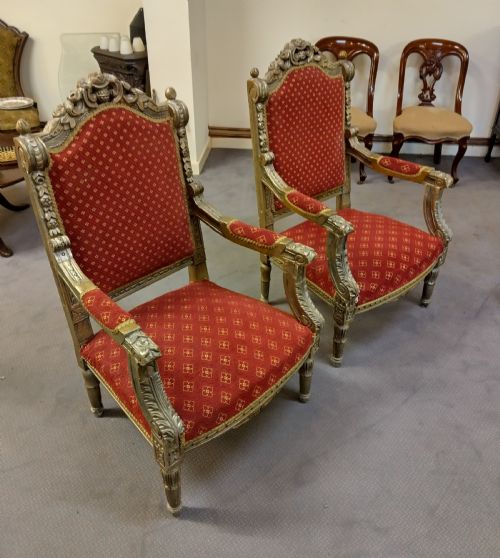
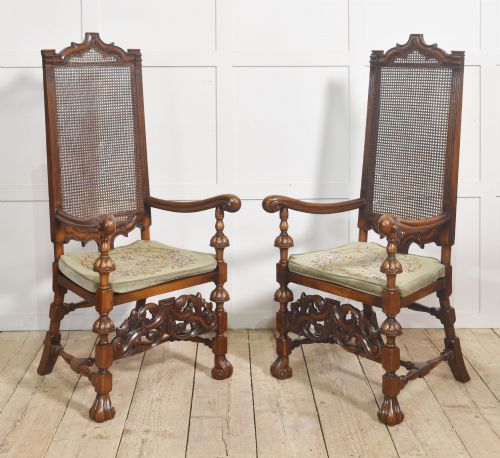
An ornate high back chair brings commanding height and dramatic historic carved detail to a room, drawing the eye instantly.
Ornate High Back Chair
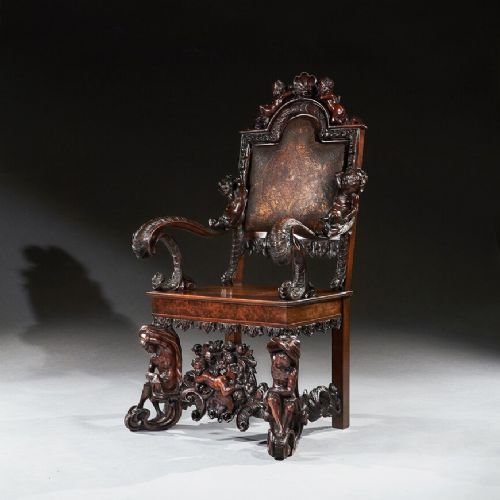
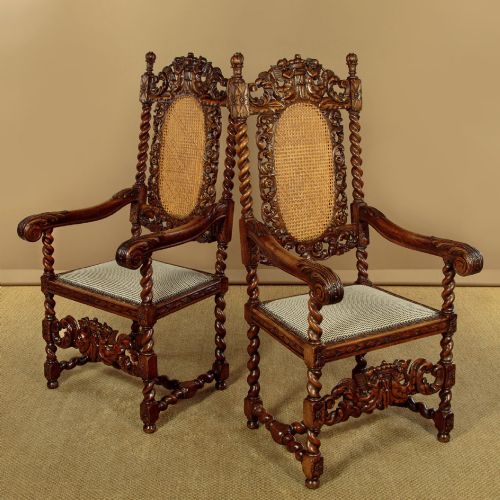
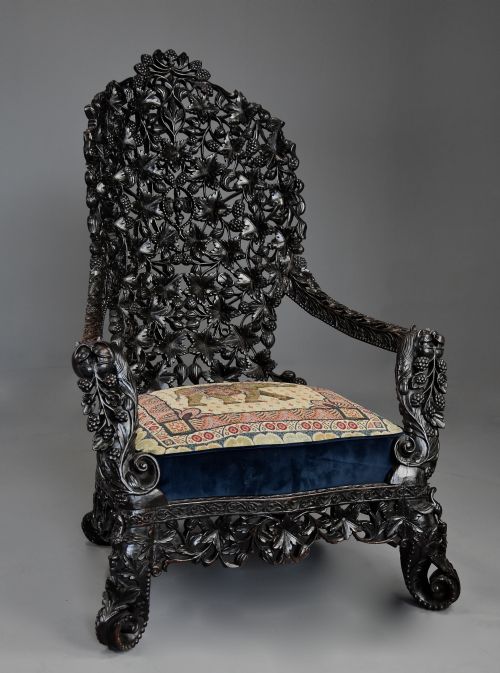
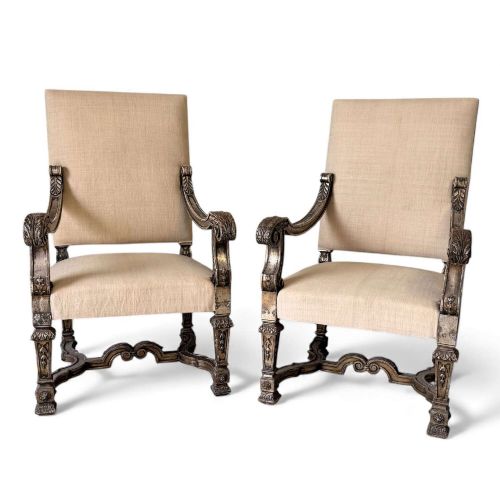
An ornate high back chair spans periods from the late seventeenth century through the nineteenth century, taking the form of armchairs, side chairs, and throne chairs. You will frequently encounter nineteenth-century walnut and oak examples displaying deep relief carving.
Revival styles dominate this selection, ranging from Baroque and Carolean to Renaissance and Rococo influences. Makers drew inspiration from earlier historic forms, resulting in imposing silhouettes designed for formal reception rooms and halls.
How they were made
Timbers such as walnut, oak, mahogany, teak, and blackwood provide the dense structural foundation necessary for intricate hand carving. Craftsmen utilised these woods to support elaborate crest rails, pierced splats, and substantial upright posts.
Upholstery elements include velvet, leather, silk, fabric, and cane panels, secured with brass detailing where appropriate. Gilt finishes and applied gilding further highlight the sculptural woodwork.
Listings feature walnut, oak, mahogany, teak, and blackwood, demonstrating global sourcing from British, continental European, Indian, and Burmese workshops.
What varies in quality
The depth and crispness of the hand carving separate standard pieces from exhibition quality examples. Superior carving displays sharp undercut details, expressive figural work, and balanced proportions across the entire frame.
The choice of primary timber and the integrity of the joinery dictate the longevity of the structure. Dense hardwoods like walnut and seasoned oak support more elaborate structural forms without compromising stability.
Andrea Brustolon
The Ornate High Back Chair Glossary
- Carolean Revival
- A nineteenth-century style imitating late seventeenth-century English furniture. It is characterised by scrolling woodwork, crown and cherub motifs, and high cane or upholstered backs.
- Baroque Revival
- A nineteenth-century design movement drawing on seventeenth-century European theatricality. Pieces feature massive proportions, heavy scrollwork, and dynamic, sculptural forms.
- Giltwood
- Timber coated with a thin layer of gold leaf or gesso finish. This treatment accentuates intricate carved details on ceremonial and throne seating.
- Splat
- The vertical central strip of wood in the back of a chair. In high back chairs, this member often bears the most intensive carving or cane work.
Ornate High Back Chair: Frequently Asked Questions
Where should I place an ornate high back chair?
These imposing seats suit spaces with high ceilings where their vertical proportions command attention. Position them in a hallway, a spacious study, or as an accent piece in a drawing room.
Avoid tucking them beneath standard desks or crowding them among low modern furniture. They function best with breathing room around their carved silhouettes.
How do I care for antique carved wooden chairs?
Dust the deep recesses of the carving regularly using a soft, dry brush to prevent dirt accumulation. Keep the timber away from direct heat sources and strong sunlight to protect the finish.
Condition leather or fabric upholstery according to its specific textile requirements. Avoid excessive moisture on gilded or polished wooden surfaces.
What is the difference between a side chair and a throne chair?
Side chairs are lighter, armless seats designed to stand against a wall or surround a dining table. They offer a tall back profile without the substantial width of arm supports.
Throne chairs feature broad armrests and heavier proportions meant to denote status and authority. They provide a commanding presence suited to principal rooms.
How do I identify a revival style chair?
Look closely at the construction methods, tool marks, and timber ageing beneath the surface decoration. Nineteenth-century revival pieces combine earlier stylistic motifs with nineteenth-century framing techniques.
Compare the carving depth and wood patination against documented examples from the period. This helps distinguish nineteenth-century interpretations from seventeenth-century originals.