

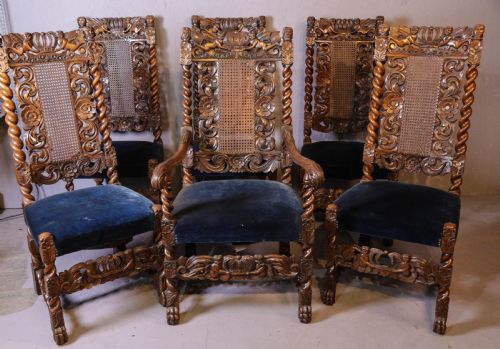


Restoration Style Cane Chairs
Restoration style cane chairs bring seventeenth-century grandeur to a room through pierced carving and woven seats.
Restoration Style Cane Chairs
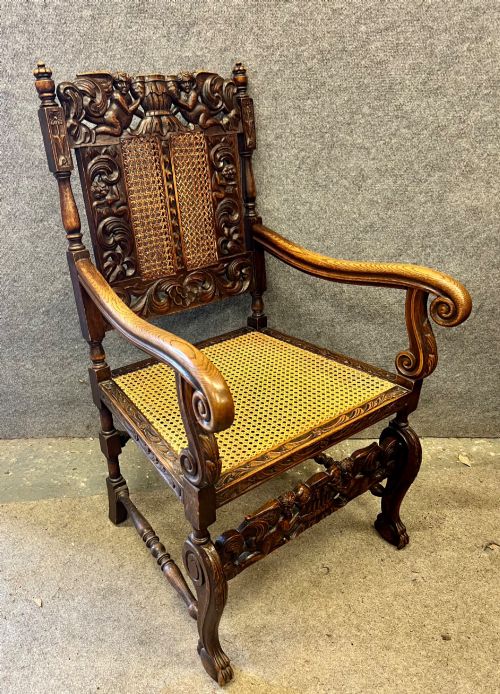
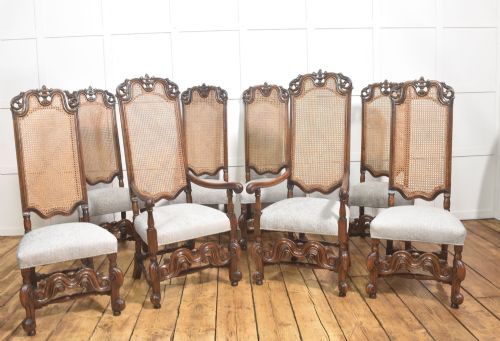
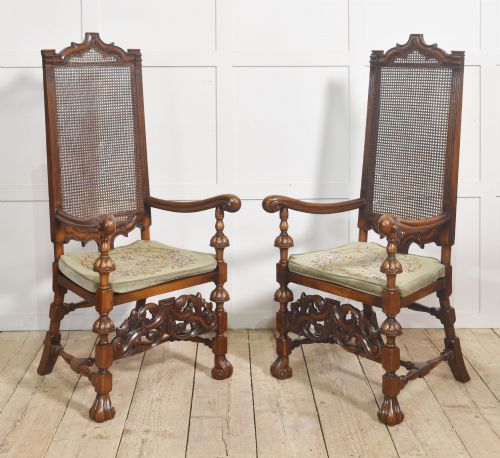
Restoration style cane chairs revive the high-backed, heavily carved seating forms of the seventeenth century, utilising woven cane for seats and backs. When searching for restoration style cane chairs, buyers encounter pieces ranging from authentic late seventeenth-century examples to later nineteenth- and early twentieth-century revivals.
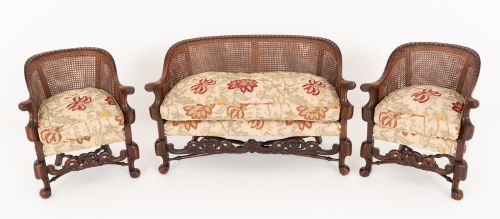
The form appears as armchairs, dining chairs, side chairs, settees, and benches, often constructed in walnut or oak. Makers often styled these after Carolean, Jacobean, and William and Mary designs, incorporating rich scrollwork and pierced cresting rails.
Most examples found on this page date from the nineteenth and early twentieth centuries, capturing the historic taste for ornate woodwork. These revival pieces offer the visual impact of seventeenth-century seating while serving modern interior needs.
How they were made
Makers shaped these chairs primarily from walnut and oak, selecting hardwoods capable of supporting intricate, deep relief carving. Artisans carved scrolls, foliage, and crests into the timber framing before assembling the structural joints.
Woven cane forms the characteristic panels of the seat and back, providing a resilient yet supportive surface. Skilled hands threaded the cane through drilled holes in the wooden frames, creating tight geometric patterns.
Listings feature periods spanning from the seventeenth century through to nineteen-ten, predominantly utilising walnut and oak.
What varies in quality
The depth and crispness of the carving distinguish finer examples from simpler workshop productions. Skilled carvers achieved sharp undercut foliage and detailed scrollwork that catch the light, whereas lesser pieces display shallow, rounded contours.
The choice of timber and the tightness of the cane weaving dictate the structural integrity of the seating. Solid walnut framing and evenly tensioned cane indicate superior craftsmanship compared to coarser oak assemblies with loose web patterns.
Waring & Gillow
The Restoration Style Cane Chairs Glossary
- Carolean
- Pertaining to the reign of King Charles II, characterised by lavishly carved woodwork and scrolling motifs. This style heavily influences later revival furniture.
- Cane
- Strips of rattan or similar plant material woven into open patterns for seats and backs. It offers flexibility and airflow.
- Crest
- The ornamented top rail of a chair back, frequently pierced and carved with crowns or putti. It forms the visual focal point of high-backed seating.
- Bergere
- An enclosed upholstered armchair with wooden framing, sometimes incorporating cane panels. These suites provide deeper lounge seating.
Restoration Style Cane Chairs: Frequently Asked Questions
Are these chairs comfortable for daily use?
The woven cane provides a surprisingly springy and supportive surface for sitting during meals or conversation. High backs also offer substantial support for the upper body.
Adding cushions can soften the seat if used for extended periods of reading or relaxing in a living space.
How do I identify a true seventeenth-century piece?
Authentic period pieces display hand-cut joinery, oxidized timber patination, and subtle irregularities characteristic of early hand tools. Construction methods and wood species align strictly with seventeenth-century carpentry.
Revival pieces from the nineteenth century often feature machine-cut elements or wood finishes typical of later historicism.
Where should I place a settee or armchair?
These seating forms suit dining rooms, grand hallways, or studies where their architectural carving commands attention. Armchairs function well as standalone reading seats.
Matching dining chairs elevate a formal table setting, reflecting historical dining traditions.
What is the difference between oak and walnut models?
Oak models tend to appear heavier and more rustic, reflecting earlier seventeenth-century vernacular traditions. Walnut allows for crisper, more intricate carving and generally denotes a finer, more formal aesthetic.
Both timbers provide durability, but walnut was favoured for high-status commissions.