
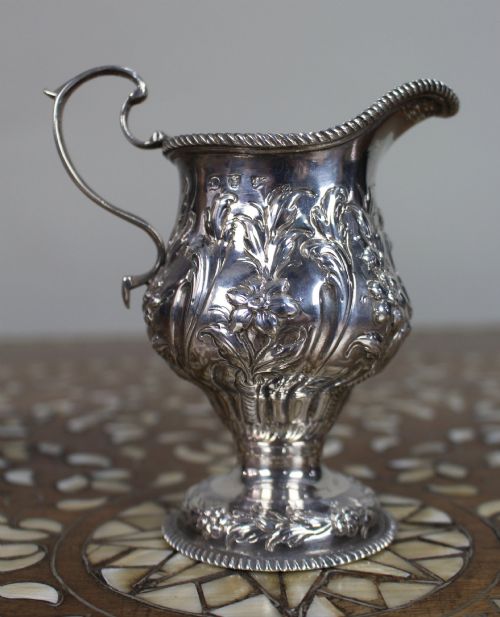
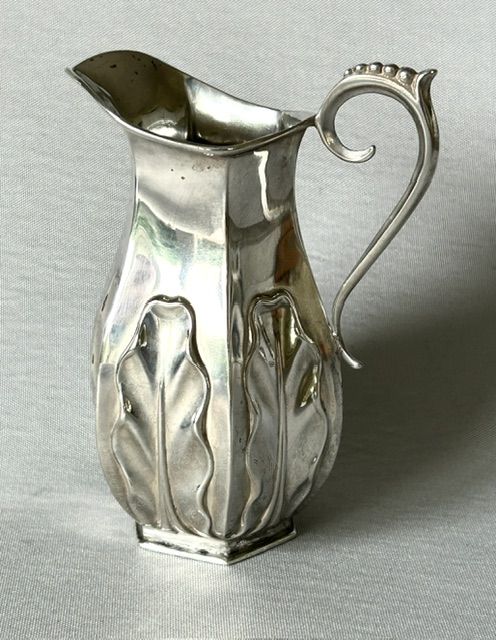



Repousse Silver Milk Jug
A repousse silver milk jug brings tactile hand-hammered relief work straight to the tea table, offering timeless functional elegance.
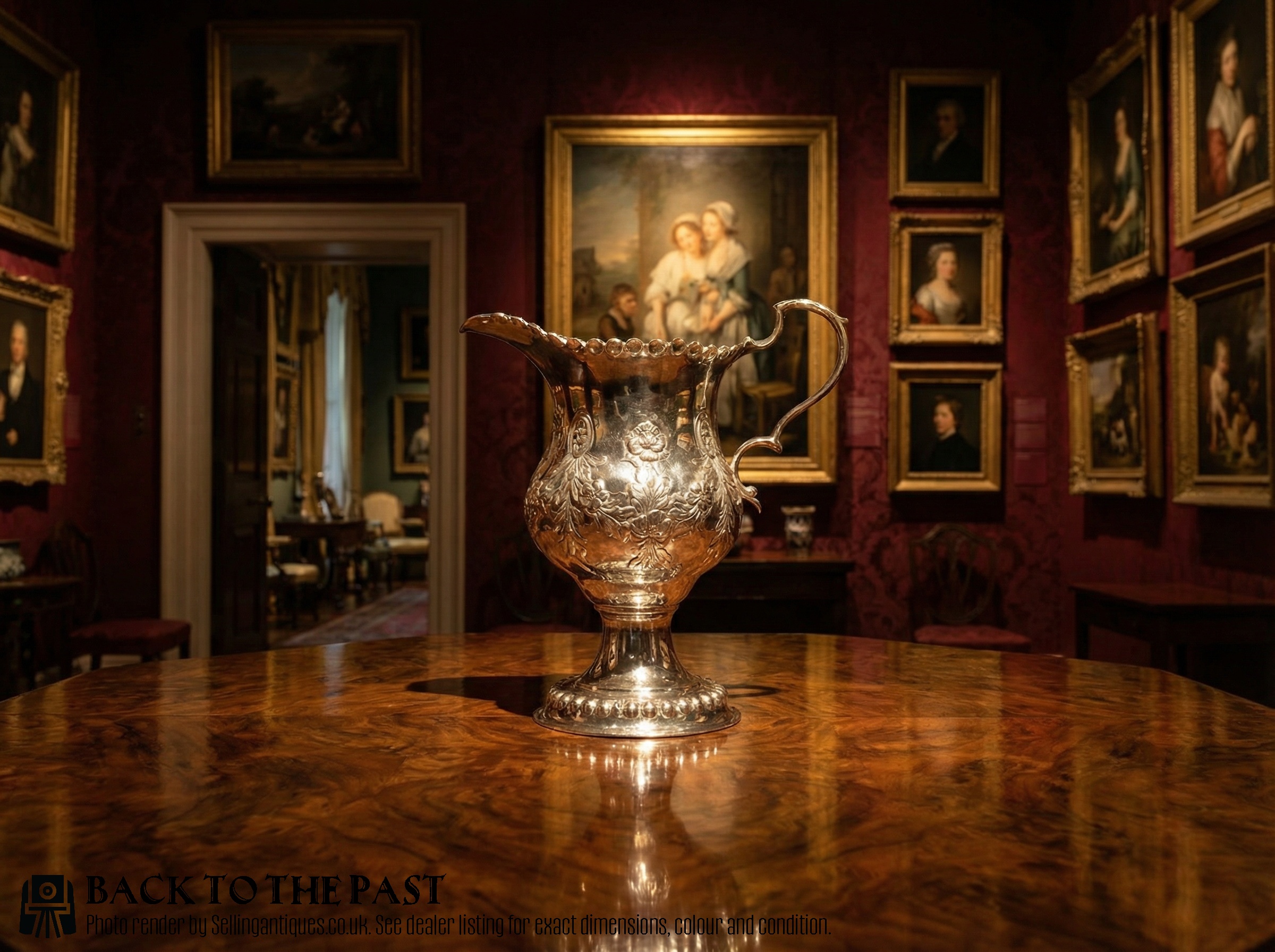
Repousse Silver Milk Jug
A repousse silver milk jug is a small vessel designed for serving cream or milk, shaped and decorated through metalwork hammered from the reverse side to form raised ornamentation. When searching for a repousse silver milk jug, buyers encounter various historical expressions ranging from Georgian and Victorian periods up to later twentieth-century creations.
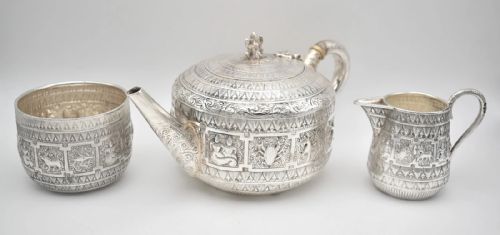
The selections span distinct stylistic revivals and regional interpretations, including Victorian naturalist, rococo revival, and Chinese export designs. Most examples appearing here date from the nineteenth century, featuring domestic British hallmarked pieces alongside imported or colonial silver forms.
How they were made
These vessels are primarily constructed from sterling silver or silver plate, utilising techniques where artisans hammer the metal from the inside to push decorative motifs into relief on the exterior. Details are then refined on the front using chasing tools to sharpen contours and add surface texture.
Handles and spouts are frequently cast separately and soldered securely to the main body, while select pieces incorporate interior gilding or organic elements like bamboo for handles. The combination of hollowware forming and detailed surface manipulation requires considerable manual skill.
Current listings feature sterling silver and silver plate materials across Victorian, Georgian, and Edwardian periods.
What varies in quality
Quality in these vessels is determined by the depth, crispness, and artistic control of the hammered relief work, where finer pieces display sharp undercuts and deliberate modulation rather than shallow, uniform stamping. The weight of the metal and the structural integrity of soldered joints also separate superior items from standard production.
Design coherence further dictates value, distinguishing bespoke stylistic expressions such as naturalist or zodiac motifs from repetitive factory patterns. The clarity of assay office hallmarks and maker's marks provides definitive evidence of origin and material standard.
Luen Hing·George Fox
The Repousse Silver Milk Jug Glossary
- Repousse
- A metalworking technique where the artisan hammers a design from the reverse side of the sheet to create a raised relief on the front. This method creates tactile, three-dimensional decorative surfaces.
- Sterling silver
- An alloy consisting of pure silver and other metals, usually copper, meeting a specific fineness standard. It provides the durable yet malleable base for high-grade tableware.
- Hallmark
- An official stamp applied to precious metals indicating the standard of purity, the maker, and the year of assay. These marks authenticate the origin and age of British silver.
- Gilt
- A thin layer of gold applied to the interior surface of a silver vessel. This process protects the silver from tarnishing when exposed to acidic dairy products.
- Chasing
- A companion technique to repousse where tools push metal from the front to refine details and sharpen lines. It is executed after the initial relief work is established.
Repousse Silver Milk Jug: Frequently Asked Questions
What is a repousse silver milk jug?
A repousse silver milk jug is a small pouring vessel adorned with raised designs hammered directly into the metal body. These pieces combine utility with intricate ornamental relief.
They served a practical role in formal tea service settings throughout the Georgian and Victorian eras. Today, collectors value them for their display qualities and historical craftsmanship.
How do I date a silver jug?
Dating relies primarily on official hallmarks stamped into the metal, which record the assay office and specific year of testing. Stylistic clues such as rococo scrolls or naturalist motifs also help narrow down the period.
Comparing the handle construction and form against known historical types further clarifies the era of manufacture. British pieces generally bear clear alphabetical date codes alongside maker marks.
Were these jugs used daily?
These vessels were created for domestic dining and formal tea service, functioning as functional tableware within wealthy households. Their presence on the table indicated social standing and adherence to dining etiquette.
Over time, many transitioned into decorative display items or specialised collections. Their durable silver construction ensured they survived generations of regular handling.
What styles are common?
Common aesthetics include Victorian rococo revival, featuring organic asymmetry and scrolls, alongside structured Georgian forms. Naturalist designs incorporating floral or bamboo elements also appear frequently.
Regional variations such as Chinese export silver introduce unique cultural motifs like dragons. Each style reflects the prevailing decorative tastes of its specific period.