



Repousse Crest Wall Mirror
A repousse crest wall mirror brings tactile depth and reflective light to a room through richly worked metalwork and traditional framing.
Repousse Crest Wall Mirror
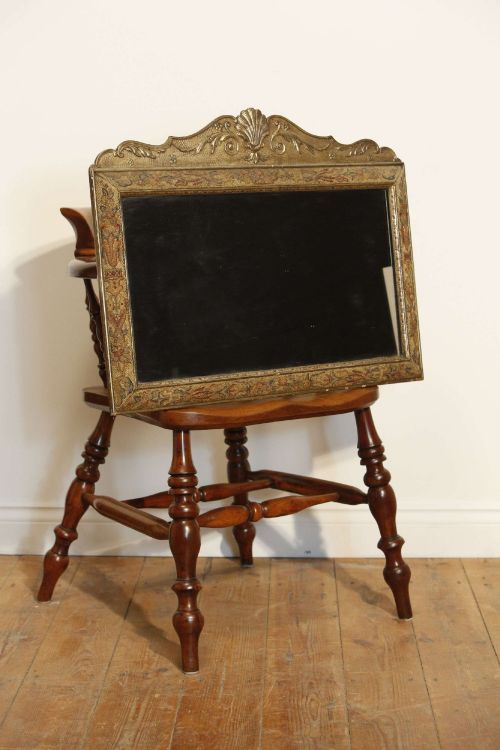
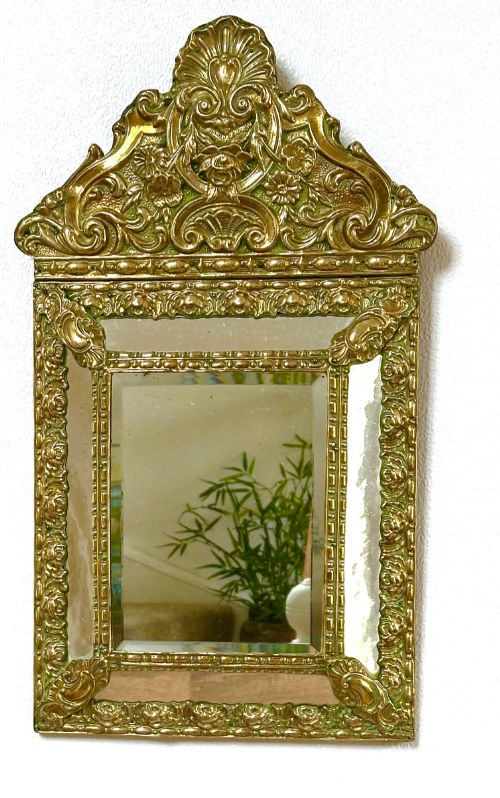
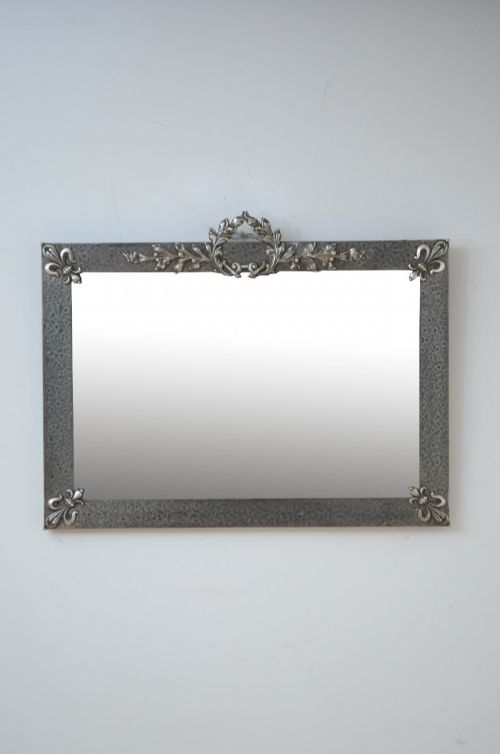
When you search for a repousse crest wall mirror, you are looking at wall-hanging mirrors defined by prominent metal ornamentation worked in relief. The examples seen on this page span the nineteenth century, including Victorian, Edwardian, and Regency periods, alongside specific revivals like Flemish and Dutch Baroque.
Most pieces you meet here utilise brass, pressed brass, or embossed brass mounts and frames, often taking the form of cushion mirrors. These designs combine wooden or upholstered structures, such as tapestry, with metallic decorative crests and mounts.
Origins stretch across French, Dutch, and Flemish traditions, showcasing styles from French Chateau and Napoleon III to Arts and Crafts. A buyer finds everything from heavy patinated brass frames to lighter pressed metal designs.
Materials and construction
Makers shaped the prominent crests and frames using brass, pressed brass, and embossed or hammered metal techniques. This metalwork is paired with structural materials like wood, giltwood, and occasionally tapestry.
Cushion frames give these pieces their characteristic rounded profile, housing the glass securely within decorative metal mounts. Patinated finishes and hammered textures provide the distinct surface character seen across the nineteenth-century examples.
Repousse Crest Wall Mirror Retail Price Guide 2026
Typical asking prices for repousse crest wall mirror among the pieces listed under this phrase on Sellingantiques today, from the lower quarter to the upper quarter. They describe what is for sale here now, not the wider market.
Listings feature brass prominently alongside giltwood and tapestry, spanning the Victorian, Edwardian, and Regency eras.
Distinctions in quality
The sophistication of the metalwork defines the upper tier of these mirrors, where crisp relief in the repousse crest shows deliberate hand-tooling rather than flat stamping. The integration between the metal mounts and the underlying wooden or cushion frame reveals the maker's joinery skill.
Depth of patina and the preservation of original glass and tapestry elements elevate individual pieces. Strong stylistic consistency, whether following a Flemish Renaissance Revival or a French Chateau aesthetic, marks out the more accomplished examples.
The Repousse Crest Wall Mirror Glossary
- Repousse
- Metalworking technique where the design is hammered into relief from the reverse side. This creates the raised decorative crests characteristic of these wall mirrors.
- Cushion mirror
- A mirror frame with a rounded, padded-looking profile, frequently wrapped in velvet, tapestry, or metal panels. They often feature prominent corner and crest mounts.
- Giltwood
- Wood that has been coated with a thin layer of gold leaf or gilt powder. It provides a luminous border to complement the brass metalwork.
- Patinated
- The surface appearance acquired by materials like brass and wood through age and use. Natural patination adds depth and warmth to the metal frame.
Repousse Crest Wall Mirror: Frequently Asked Questions
Where should I hang these mirrors?
Their decorative metal crests and cushion frames suit spaces where they can capture and reflect natural light. They work well above mantelpieces or in entrance halls.
Consider pairing them with period furnishings that echo the Arts and Crafts, Regency, or Baroque revival styles found in the metalwork.
How do I care for brass frames?
Metal frames benefit from gentle dusting with a soft cloth to preserve the historic surface and patina. Avoid harsh chemical cleaners that strip away the aged finish.
Keep the mirrors away from damp environments to protect both the wooden structures and the metal mounts from deterioration.
How do I date these mirrors?
Dating relies on examining the construction methods of the frame, the composition of the glass, and the style of the metal relief. Nineteenth-century examples often display specific revival motifs like Flemish Baroque or Napoleon III.
Pressed brass techniques and cushion frame proportions also provide strong stylistic clues to their period of origin.