

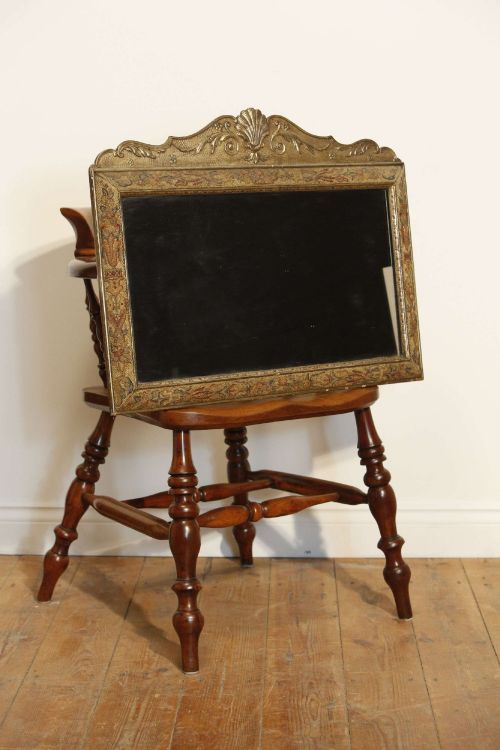
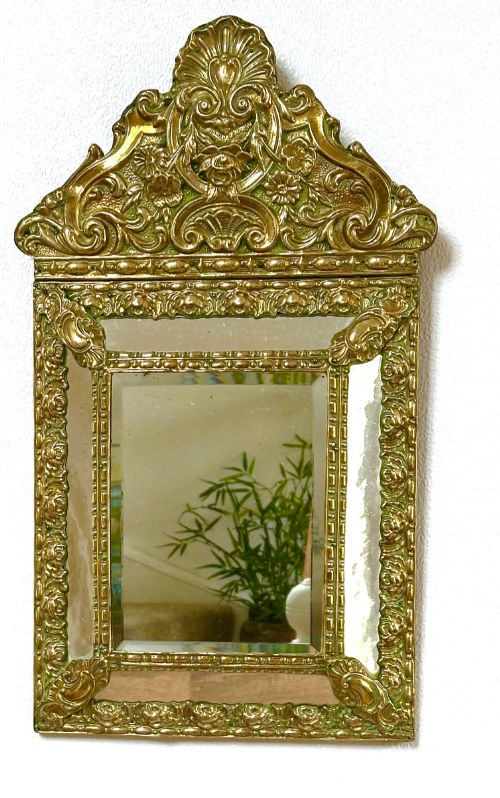


Antique Embossed Crest Mirror
An antique embossed crest mirror brings heavy brass work and deep reflection to a wall.
Antique Embossed Crest Mirror
When you search for an antique embossed crest mirror, you are looking at nineteenth century wall mirrors featuring worked metal frames and cushion profiles. These pieces draw on French, Flemish, and Dutch revival styles from the eighteen sixties onwards.
You will most commonly meet French and Flemish brass or giltwood examples on this page, often built with cushion frames and substantial metal mounts. The designs span the Victorian and Edwardian periods, including pieces referencing earlier seventeenth and eighteenth century aesthetics.
These wall mirrors serve as striking focal points in a room, combining reflective glass with textured metalwork. The frames frequently incorporate crests, repoussé details, and tapestry borders alongside the primary mirror glass.
How they were made
Makers constructed these wall mirrors using wood foundations wrapped or mounted in pressed brass, embossed brass, and giltwood. Craftsmen utilised repoussé techniques to hammer patterns and crests into the metal sheets before securing them to the frames.
Many examples incorporate cushion framing, which angles the outer edges towards the central mirror glass to catch the light from multiple angles. Additional materials such as tapestry work and patinated metal mounts complete the construction of these nineteenth century pieces.
Antique Embossed Crest Mirror Retail Price Guide 2026
Typical asking prices for embossed crest mirror among the pieces listed under this phrase on Sellingantiques today, from the lower quarter to the upper quarter. They describe what is for sale here now, not the wider market.
Listings for this phrase feature nineteenth century pieces, spanning Victorian and Edwardian periods with Dutch and Flemish revival styles.
What varies in quality
The depth and crispness of the metalwork set the finer pieces apart from simpler production. Deeply chased repoussé details and substantial brass gauge demonstrate superior workshop skill compared to thin, flat stampings.
The integrity of the wooden cushion frames and the quality of the original gilding or patination influence the character of the piece. Well-preserved mirror glass and secure metal mounts ensure the structural and visual harmony of the wall mirror.
The Antique Embossed Crest Mirror Glossary
- Cushion mirror
- A wall mirror featuring a frame that curves outward towards the edge like a cushion. This profile adds volume and directs light inward.
- Repoussé
- A metalworking technique where the artisan hammers the design from the reverse side to form raised patterns in relief. This method defines the embossed crests on the brass frames.
- Giltwood
- Wood carved and coated with a thin layer of gold leaf or gilt composition. It provides a bright, reflective frame surface.
- Patinated brass
- Brass that has developed a darkened, aged surface finish through natural oxidation or chemical treatment. This finish highlights the details of the embossed work.
Antique Embossed Crest Mirror: Frequently Asked Questions
Where should I hang these wall mirrors?
These pieces suit principal reception rooms or hallways where their reflective glass and heavy brass frames can catch natural light. They work well above mantelpieces or console tables.
Ensure the wall fixings can support the weight of the wood and metal construction. Positioning the mirror opposite a window maximises the play of light across the room.
How do I date an antique brass mirror?
Examine the construction of the wooden frame behind the metal mounts and the style of the brass work. Nineteenth century pieces often show specific revival characteristics, such as Flemish or Dutch baroque motifs.
Look closely at the fixings, screw types, and the backboards. Hand-beaten metal and period framing techniques help confirm the nineteenth century origins.
What is a cushion frame?
A cushion frame slopes gently outward from the wall towards the central glass plate. This distinctive profile creates a rounded box effect around the reflection.
Makers frequently covered these wooden cushion forms with pressed brass or velvet and tapestry. The shape enhances the sense of depth in the wall mirror.
How do I care for embossed brass?
Dust the metalwork gently with a soft, dry brush to prevent dirt settling in the recesses of the repoussé pattern. Avoid harsh metal polishes that can strip away the historic patina.
Keep the mirror away from direct dampness to protect the wooden backing and the silvering on the glass. Regular light dusting is all that is required for maintenance.