



Repousse Brass Lighting
Repousse brass lighting brings tactile metalwork and warm illumination into rooms, offering historical character through hammered relief surfaces.
Repousse Brass Lighting
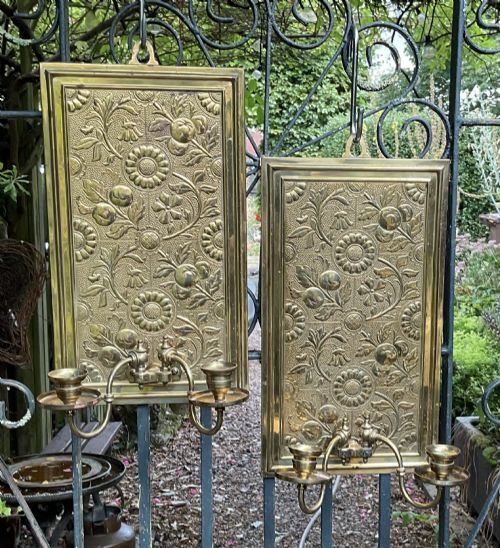
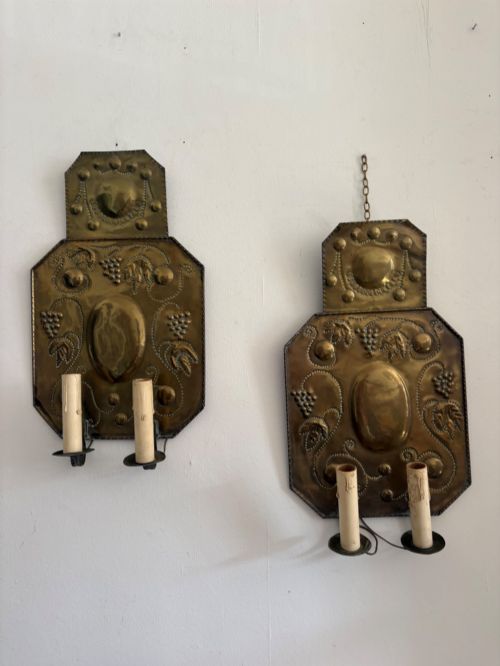
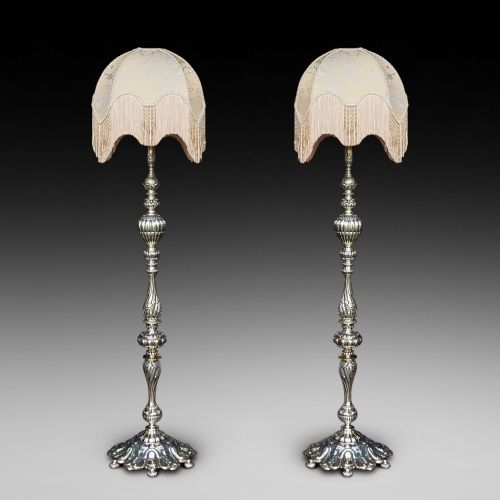
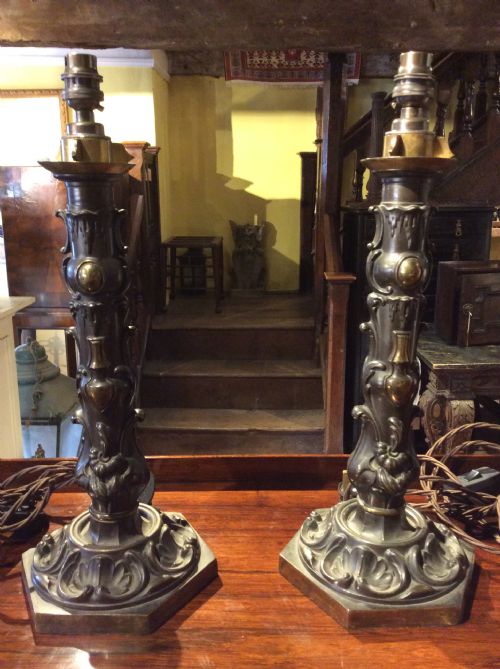
When you search for repousse brass lighting, you examine items fashioned from metal decorated with raised designs hammered from the reverse side. The selection spans wall sconces, table lamps, standard lamps, and ceiling roses originating from the eighteenth, nineteenth, and early twentieth centuries.
Victorian and Edwardian iterations dominate the selection, alongside items reflecting the Aesthetic Movement, Arts and Crafts philosophy, Dutch traditional styles, and French Renaissance Revival. These objects combine utilitarian illumination with decorative metal relief, frequently pairing brass with glass, mirror glass, or fabric elements.
Makers and designers like Bruce Talbert emerge in specific Aesthetic Movement pieces, while others remain anonymous workshop productions. Buyers encounter everything from small single candleholders to heavy standard lamps and paired wall sconces designed for domestic interiors.
Materials and construction methods
The primary material is brass or polished bronze, manipulated while sheet metal is worked from behind to push the metal forward into raised patterns. Artisans utilised hand-hammering techniques to achieve depth and texture across surfaces before mounting components onto wall fixtures or lamp bases.
Combinations of mirror glass, fabric, and fringe appear alongside metal work, particularly in wall mirrors, girandoles, and shaded reading lamps. Conversion from early oil systems to electricity occurs in pieces dated from the nineteenth century onward.
Listings feature periods spanning the eighteenth, nineteenth, and early twentieth centuries, including Victorian, Edwardian, and eighteenth-century Georgian eras.
Judging quality in metalwork
Quality rests in the crispness and depth of the hammered relief, where hand-worked detail demonstrates greater artisanal skill than shallow machine stamping. Weight and gauge of the brass sheet also distinguish robust domestic fittings from lighter commercial output.
The integrity of period mounts, original fixings, and uncompromised surface patination elevate individual pieces. Refined design execution, evident in specific Aesthetic Movement or Arts and Crafts examples, separates standard production items from distinguished workshop creations.
Bruce Talbert
The Repousse Brass Lighting Glossary
- Repoussé
- A metalworking technique where a design is hammered into relief from the reverse side of the sheet. This process creates three-dimensional decorative motifs across brass surfaces.
- Girandole
- A branched wall sconce or candleholder incorporating a mirror backplate. The reflective glass serves to multiply the ambient light in a room.
- Standard Lamp
- A tall freestanding floor lamp designed to illuminate a specific area. These heavy brass examples provide substantial vertical presence in period interiors.
- Ceiling Rose
- An ornamental circular moulding or metal fixture fixed to the ceiling from which a light fitting hangs. Polished bronze versions anchor overhead illumination schemes.
Repousse Brass Lighting: Frequently Asked Questions
What is repousse brass lighting?
Repousse brass lighting encompasses lamps, sconces, and fixtures decorated with raised metal designs hammered by hand from the reverse. These items span the eighteenth to early twentieth centuries.
Examples include wall sconces, standard lamps, and candleholders created in Victorian, Arts and Crafts, and Aesthetic Movement styles.
How do I date these lights?
Dating relies on stylistic markers such as Aesthetic Movement geometry, Arts and Crafts simplicity, or Victorian ornamentation. Construction methods and wiring adaptations also indicate age.
Objects range from eighteenth-century candleholders to Edwardian girandoles and converted nineteenth-century oil lamps.
Were these converted from oil?
Many nineteenth-century fixtures began as oil-burning lamps before being adapted for electricity in later decades. This evolution is common among surviving standard lamps and table pieces.
Conversion details reflect the practical transition of domestic lighting technology across the Victorian and Edwardian periods.
Where should I place wall sconces?
Paired wall sconces suit placement flanking mirrors, fireplaces, or architectural focal points in period rooms. Their reflective brass surfaces enhance ambient illumination.
Consider height and wiring layout when positioning sconces or girandoles featuring mirror glass backplates.