


Renaissance Walnut Desk
These pieces sold as a renaissance walnut desk bring heavy timber, dark patinas and centuries of history straight into a room.
Renaissance Walnut Desk
A renaissance walnut desk encompasses heavy writing cabinets, table cabinets and writing desks built from rich timber.
Most examples found here bridge the gap between 17th century originals and 19th century revivals drawing on Italian, Spanish and Flemish designs.
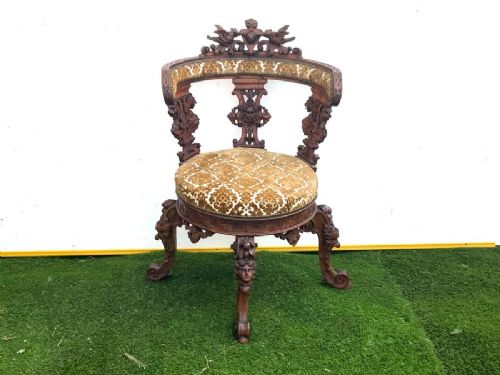
Buyers look for these heavy forms to anchor a study or library with traditional woodwork and carved detail.
What varies in quality
The depth and crispness of the hand carving separate standard production from master craftsmanship.
Surface preservation, including the survival of original patinas and secondary woods, dictates the standing of each piece.
Listings feature walnut, fruitwood, brass and wrought iron across seventeenth century pieces and nineteenth century revivals.
Angiolo Barbetti Firenze·Luigi Frullini·Wiggers
The Renaissance Walnut Desk Glossary
- Patina
- The surface sheen and colour developed by wood through age and handling. This mellow glow proves the age of the timber.
- Marquetry
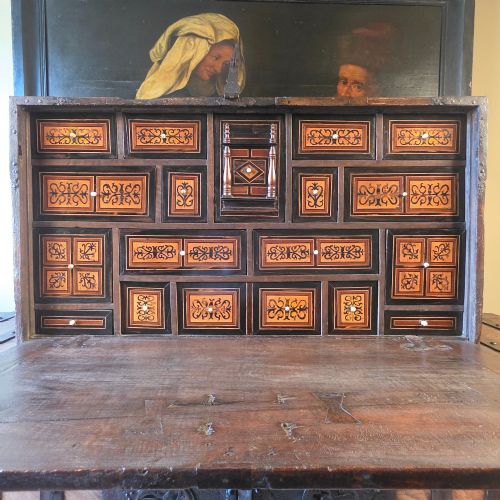
- The art of applying small pieces of veneer to form decorative patterns. Craftsmen used contrasting woods and bone for these designs.
- Bargueño
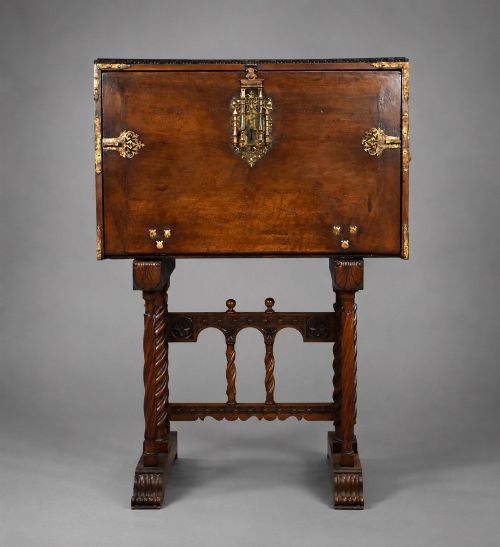
- A traditional Spanish chest or writing cabinet fitted with a drop front and small drawers. These pieces typically rest on a separate stand.
Renaissance Walnut Desk: Frequently Asked Questions
How do I identify a 17th century desk?
Seventeenth century pieces show construction methods like pegged joints and hand-cut dovetails alongside genuine surface wear.
The density of the walnut and the style of the ironwork also help confirm the period of manufacture.
What is a vargueno cabinet?
A vargueno is a traditional Spanish writing cabinet featuring a drop front that opens to reveal a complex arrangement of small drawers and compartments.
These portable writing chests were designed to sit upon matching wooden stands or tables.
How do I care for antique walnut?
Keep wooden surfaces away from direct sunlight and rapid temperature changes to prevent the timber from drying out or splitting.
Apply a traditional wax polish occasionally to nourish the grain and maintain the natural patina.
What distinguishes revival pieces from originals?
Nineteenth century revival pieces often combine historical motifs from multiple regions, such as Italian carvings on Flemish frames.
Closer inspection of the interior construction and secondary woods reveals the later date of manufacture.