

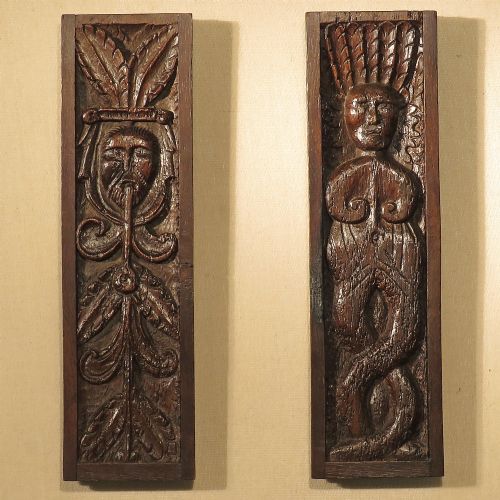




Renaissance Timber Sculpture
Renaissance timber sculpture brings solid presence to a room, carved in oak and walnut with traces of old polychrome paint.
Renaissance Timber Sculpture
Renaissance timber sculpture encompasses devotional figures, architectural carvings, and relief panels produced across Europe from the pre-sixteenth century through to later revival periods. Buyers searching for renaissance timber sculpture encounter standing saints, angels, and decorative figures fashioned from dense hardwoods.
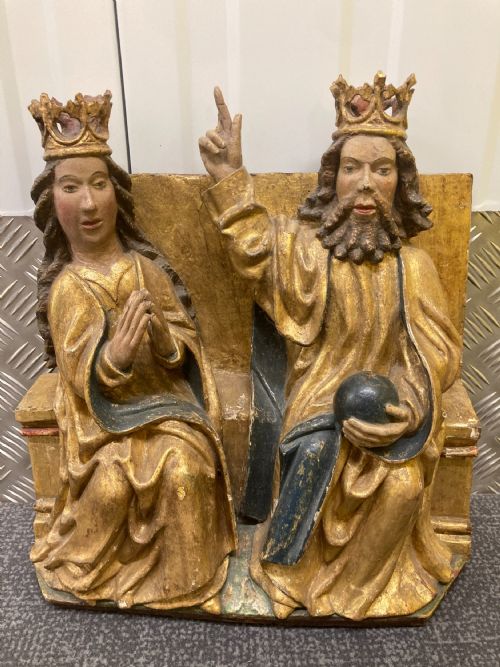
The selection here ranges from sixteenth-century Flemish and French devotional fragments to seventeenth-century caryatids and nineteenth-century Italian interpretations. Figures of saints, such as Saint Francis and Saint John, alongside representations of Mary and Christ, dominate the religious sculpture category.
Architectural fragments and wall panels appear alongside free-standing animal statues and winged griffins. Oak and walnut serve as the primary foundational timbers, frequently enriched with gold leaf and polychrome paint.
How they were made
Carvers utilised native European hardwoods, predominantly oak and walnut, selecting straight-grained timber to accommodate deep relief work and intricate drapery. Logs were quarter-sawn to minimise movement before the maker applied chisel and gouge directly to the block.
Surfaces were frequently prepared with a chalk ground before the application of polychrome paint and gold leaf, adding rich colour and luminosity to the carved wood. Over centuries, these layered finishes have settled into the grain, revealing the hand of the maker through tool marks and residual gilding.
Renaissance Timber Sculpture Retail Price Guide 2026
Typical asking prices for renaissance timber sculpture among the pieces listed under this phrase on Sellingantiques today, from the lower quarter to the upper quarter. They describe what is for sale here now, not the wider market.
Listings feature works spanning from the pre-sixteenth century to the nineteenth century, executed in oak, walnut, and gilded wood.
What varies in quality
Quality rests in the anatomical conviction of the carving, the crispness of the drapery folds, and the survival of original surface treatments such as polychrome paint or gilding. Master carvers achieved depth and expression that separate ambitious workshop pieces from simpler provincial work.
Valentino Besarel·Luigi Frullini
The Renaissance Timber Sculpture Glossary
- Polychrome paint
- Decoration applied in several colours to the surface of wood sculpture. This historic paint layer often survives in fragments on sixteenth-century figures.
- Caryatid
- A sculpted female figure serving as an architectural support in place of a column or pilaster. Seventeenth-century examples display distinct regional carving traits.
- Giltwood
- Timber coated with gold leaf or powder over a prepared gesso base. It catches light differently than plain oak or walnut.
- Relief sculpture
- Carving where the figures project from a background plane rather than standing entirely in the round. Wall panels and narrative scenes frequently employ this method.
Renaissance Timber Sculpture: Frequently Asked Questions
How do I care for antique wood sculpture?
Keep wooden sculptures away from direct heat sources and fluctuating humidity to prevent the timber from splitting or warping.
Dust gently with a dry, soft brush and avoid applying modern polishes or cleaning agents to historic surfaces.
What woods were used for these carvings?
Carvers relied on dense domestic hardwoods that offered stability and fine grain for intricate detail work.
Oak and walnut form the basis of most pieces found in this category, selected for their durability.
How can I tell a sixteenth-century piece from a nineteenth-century copy?
Examine the tool marks, the oxidation of the timber, and the way the construction joints have settled over time.
Revival pieces often display different surface wear and tool precision compared to early workshop production.
Where were these sculptures originally placed?
Many devotional figures and relief panels stood inside churches, chapels, or domestic oratories as focal points for prayer.
Architectural carvings and caryatids formed structural or decorative elements within substantial European interiors.