




Renaissance Style Furniture
Renaissance style furniture brings heavy architectural carving and grand proportions into a room, spanning revival pieces and early originals.
Renaissance Style Furniture
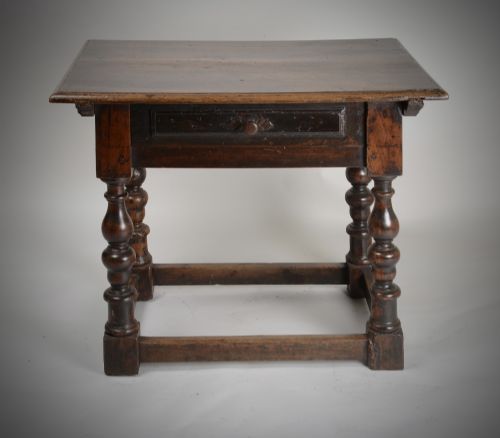
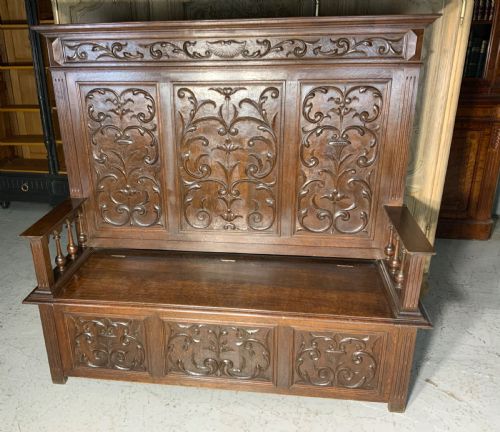
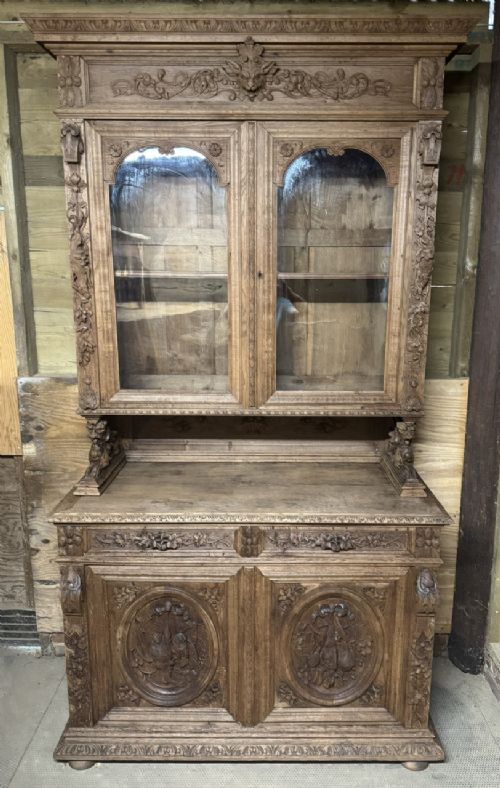
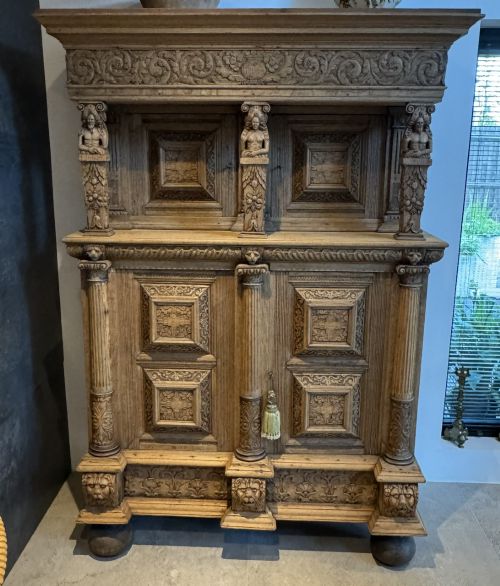
Renaissance style furniture encompasses heavy architectural forms, including cabinets, side tables, benches, and architectural carvings drawn from centuries of design. You will encounter nineteenth century revival pieces alongside authentic sixteenth and seventeenth century examples.
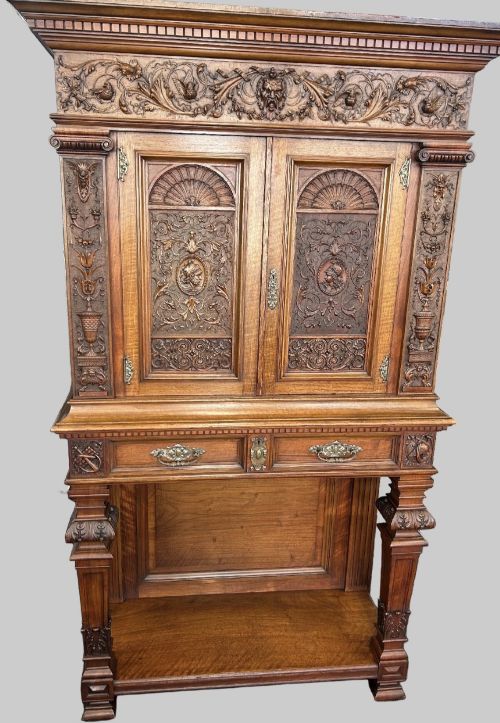
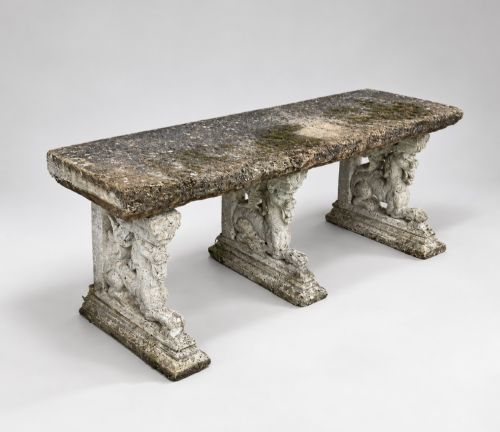
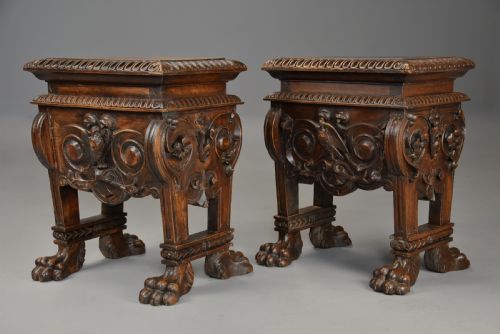
The selection ranges from large French hunting cabinets and Italian walnut side tables to garden benches supported by cast stone griffin bases. These pieces bring formal symmetry and deep relief carving into domestic interiors.
Materials and construction
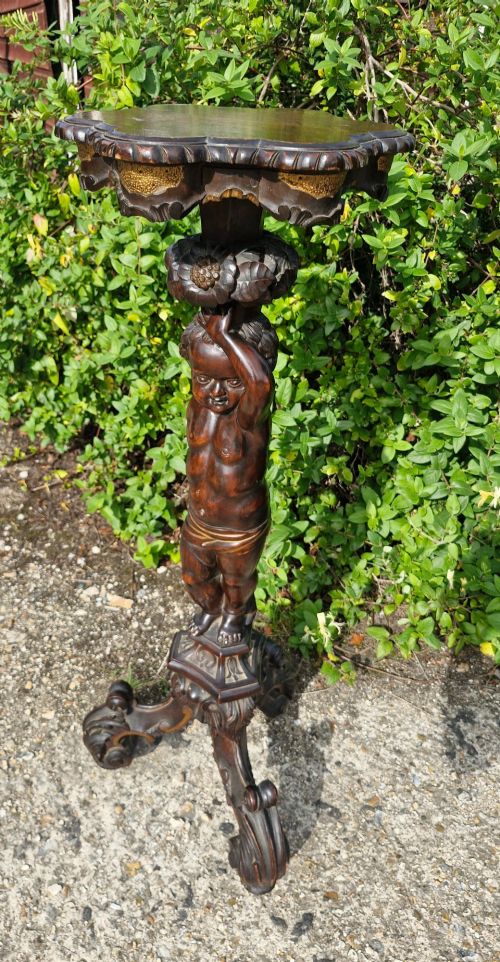
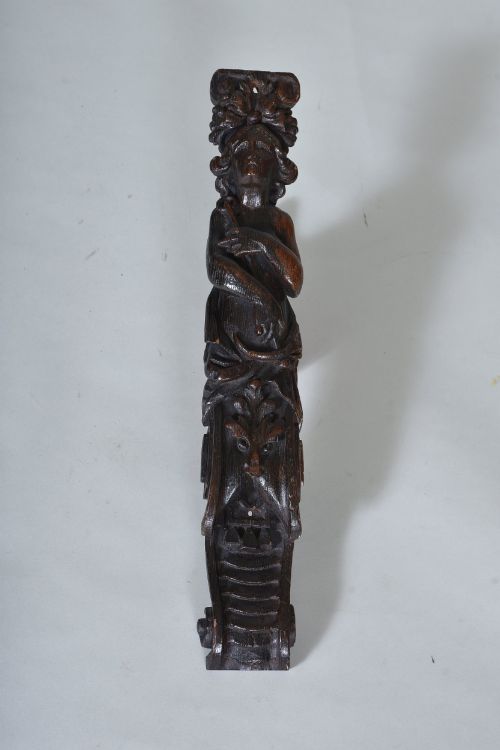
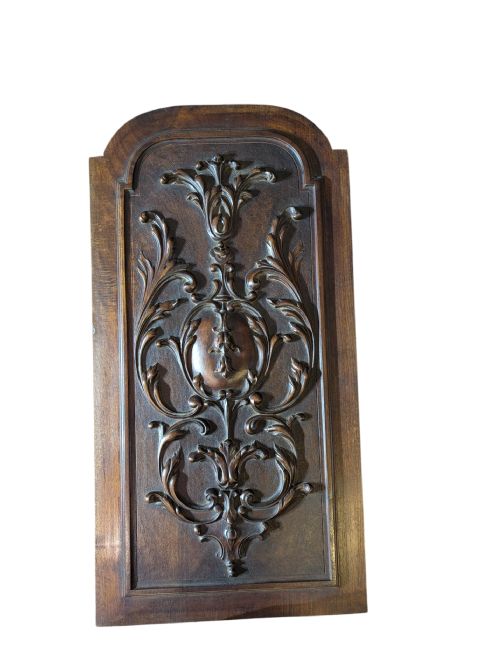
Oak and walnut dominate the construction of these pieces, selected for their grain and structural strength. Carvers worked directly into the timber to create deep relief panels, caryatids, and figural supports.
Secondary elements incorporate brass hardware, glass panels, polychrome paint, and occasional gilding. Stone variations include York stone and cast stone for garden benches and architectural elements.
Renaissance Style Furniture Retail Price Guide 2026
Typical asking prices for renaissance style furniture among the pieces listed under this phrase on Sellingantiques today, from the lower quarter to the upper quarter. They describe what is for sale here now, not the wider market.
Three cast stone griffins stand ready to support a heavy garden bench.
Assessing quality and execution
Quality rests upon the depth, sharpness, and anatomical accuracy of the hand carving, distinguishing master workshops from standard production. Crisp detailing on figures, caryatids, and architectural mouldings separates superior examples.
The choice of timber grain and the integrity of the structural joinery dictate longevity. Fine specimens maintain balanced proportions and authentic surface patination across oak and walnut.
Gillows·White, Allom & Co.
The Renaissance Style Furniture Glossary
- Caryatid
- A carved architectural figure acting as a support column. These figures frequently appear on cabinets and architectural woodwork.
- Settle
- A wooden bench with a high back, solid arms, and often a storage box beneath the seat. They provide substantial seating in hallways and principal rooms.
- Polychrome
- Decorated in multiple colours. This technique appears on specific Italian tables and decorative surfaces.
- Revival
- A nineteenth century artistic movement drawing inspiration from earlier historical periods. This approach recreated sixteenth and seventeenth century forms for Victorian interiors.
Renaissance Style Furniture: Frequently Asked Questions
What defines Renaissance style furniture?
These pieces draw on classical architectural motifs, featuring symmetrical layouts, heavy mouldings, and deep figural carving.
Craftsmen utilised solid oak and walnut to build substantial cabinets, tables, and seating.
How do I distinguish revival pieces from originals?
Nineteenth century revival items often employ machine assistance alongside hand carving and show characteristic nineteenth century secondary timbers.
Sixteenth and seventeenth century originals display tool marks and construction methods specific to their early production dates.
Where should I place a heavy oak cabinet?
These substantial cabinets require strong structural flooring due to their solid timber weight and grand scale.
Position them against large, neutral walls where their architectural carving and proportions can dominate the space.
How do I care for antique walnut and oak?
Keep wooden surfaces away from direct sunlight and steady heat sources to prevent the timber from splitting.
Apply traditional wax sparingly and buff gently with a soft cloth to maintain the natural finish.