


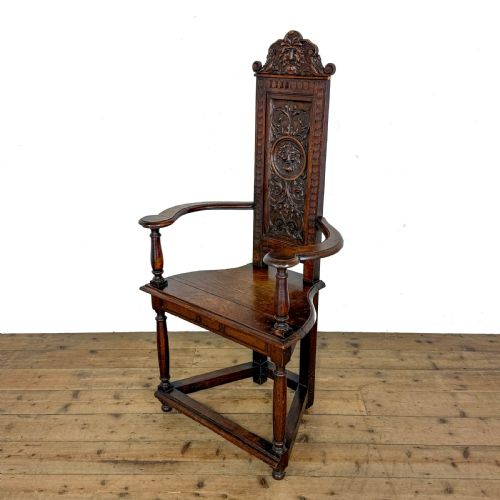


Renaissance Revival Carved Chair
A renaissance revival carved chair brings heavy historical drama and dense ornament into a room, drawing directly on sixteenth-century motifs.
Renaissance Revival Carved Chair
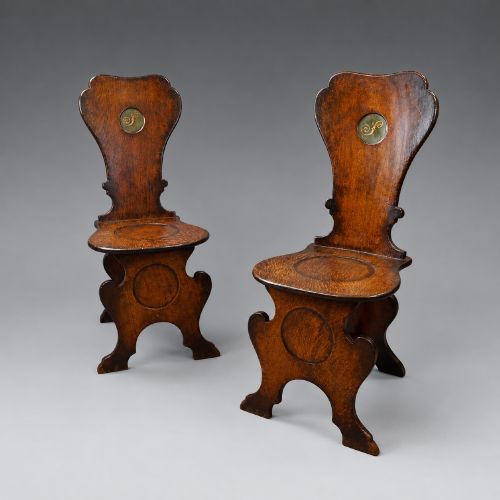
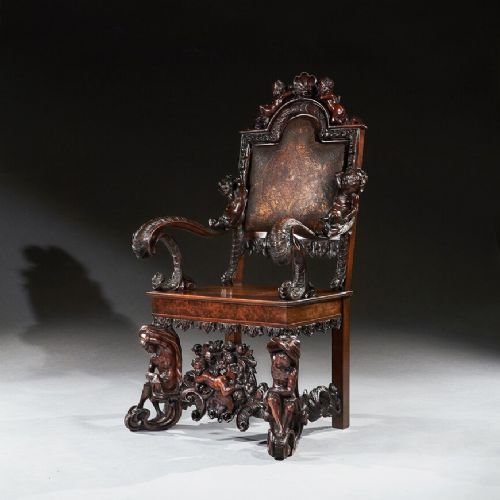
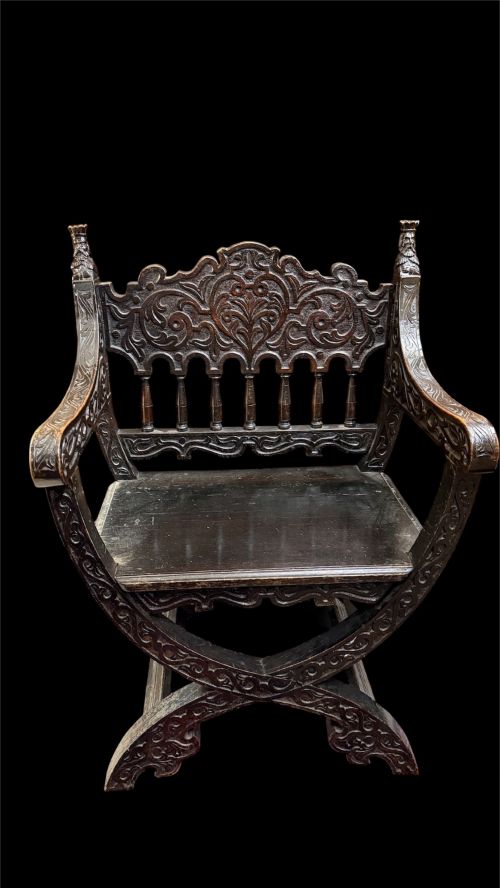
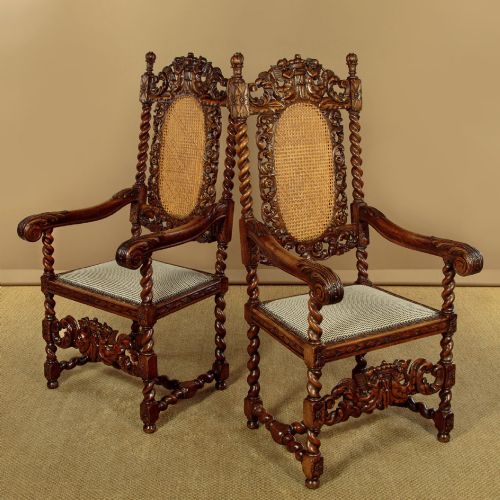
A renaissance revival carved chair draws on the robust shapes and deep ornamentation of earlier centuries, appearing most frequently in nineteenth-century interpretations across European traditions. The selection spans sturdy oak hall chairs, elaborate walnut armchairs, and folding X-frame seats influenced by Italian and French models.
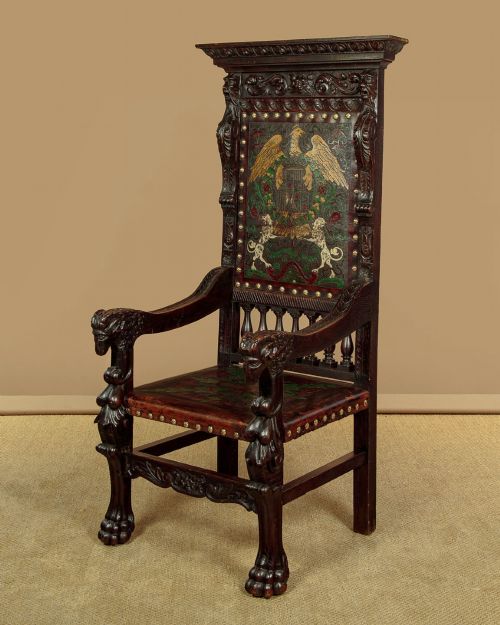
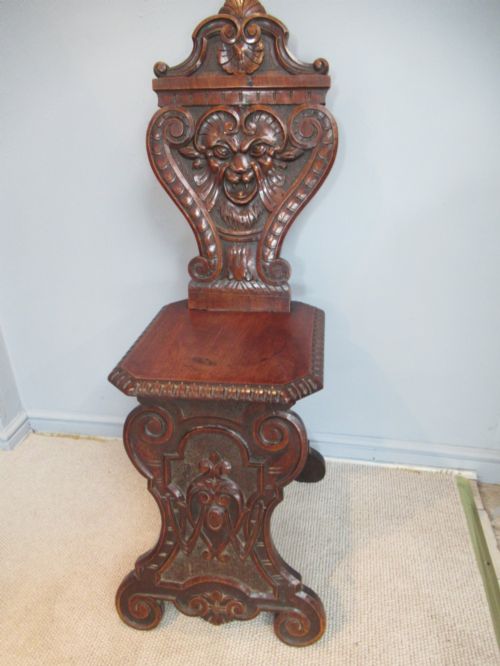
Buyers encounter distinct seating forms including sgabello hall chairs, caquetoire conversation chairs, and high-backed throne chairs. These pieces originate from Victorian revivals as well as continental workshops, often utilising dense timbers and sculptural carving.
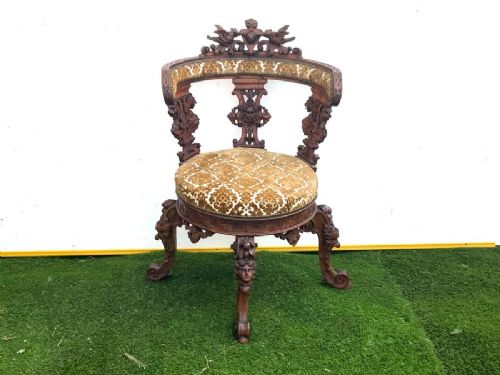
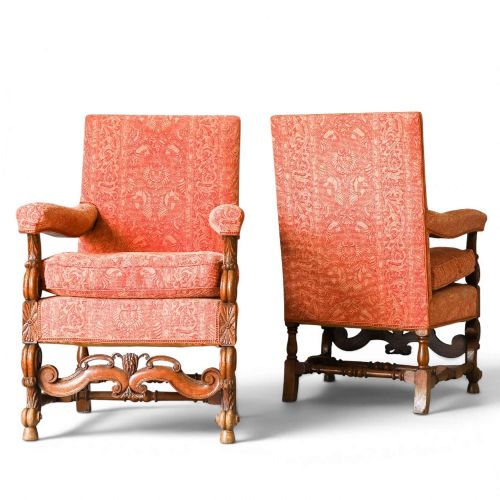
The assortment on display ranges from utilitarian hall seating to exhibition-quality armchairs bearing intricate figural work and bone inlay. Oak and walnut dominate the selection, shaped into benches, side chairs, and corner armchairs.
Levels of Execution
The distinction between standard production and top-tier work rests on the depth, clarity, and ambition of the carving. Master carvers executed figures and foliage with sharp undercut details and naturalistic proportion, whereas lesser examples rely on shallow, mechanical stamping.
Timber selection and grain figure heavily in the hierarchy, with highly figured walnut and dense quarter-sawn oak commanding greater visual presence. The integrity of the joinery and the originality of secondary elements, such as brass studs or leather inserts, further separate ordinary seating from exhibition pieces.
The selection encompasses diverse seating types, ranging from simple side chairs to monumental throne chairs.
White, Allom and Co
The Renaissance Revival Carved Chair Glossary
- Sgabello
- A light wooden chair with a high back and a base formed of solid boards or trestles rather than legs. These pieces were designed for hallways in Renaissance Italy.
- Caquetoire
- A lightweight armchair featuring a trapezoidal seat and a high, narrow back designed for conversation. Originating in sixteenth-century France, it allows space for voluminous garments.
- X-Frame
- A folding chair construction utilising intersecting curved or straight wooden members that form an X shape when viewed from the side. This ancient structural form gained favour during various revival periods.
- Curule
- A form of seat based on ancient Roman magistrate chairs, featuring crossed legs and an X-frame structure. They often appear with folding mechanisms in nineteenth-century iterations.
- Grotesque
- A style of decorative ornament composed of intertwined figures, foliage, and mythical beasts. It derives from ancient Roman frescoes rediscovered during the Renaissance.
Renaissance Revival Carved Chair: Frequently Asked Questions
How do I style a heavy revival chair today?
These robust wooden seats work effectively as singular accent pieces in contemporary or traditional hallways, libraries, and living spaces. Their dark timber tones and sculptural carving anchor a room without requiring matching furniture.
Allow the piece enough physical space to display its carving and silhouette properly. Pairing the chair with neutral walls or simple textiles lets the historic ornament stand out.
What is the difference between a hall chair and an armchair?
Hall chairs were traditionally designed for transient seating in entryways, featuring rigid wooden seats and upright backs without arms. They often display striking carved crests or solid board supports.
Armchairs offer greater comfort with supportive armrests, upholstered elements, or wider proportions intended for prolonged sitting. Both forms share the same dense renaissance revival vocabulary but serve different functional roles.
How do I care for antique carved wood and leather?
Maintain the timber by applying appropriate furniture wax sparingly to nourish the grain and protect the carved surfaces from drying out. Avoid placing the chair near direct heat sources or strong sunlight, which can warp wood and crack leather.
Dust intricate carvings regularly with a soft brush to prevent dirt accumulation in the recesses. Treat leather inserts with specialised conditioners to maintain flexibility without altering the original finish.
Are these chairs authentic sixteenth-century pieces?
Most seating matching this description dates from the nineteenth century, when Victorian and continental cabinetmakers enthusiastically revived Renaissance and Jacobean styles. These nineteenth-century interpretations pay homage to earlier aesthetics while utilising contemporary workshop techniques.
Occasional pieces originate from earlier periods, but the majority reflect the Victorian appetite for historical revival. Examining the timber shrinkage, tool marks, and construction methods helps determine the precise era of manufacture.