



Renaissance Pottery
Renaissance pottery comprises earthenware vessels and decorative pieces that bring historic continental artistry into a room.
Renaissance Pottery
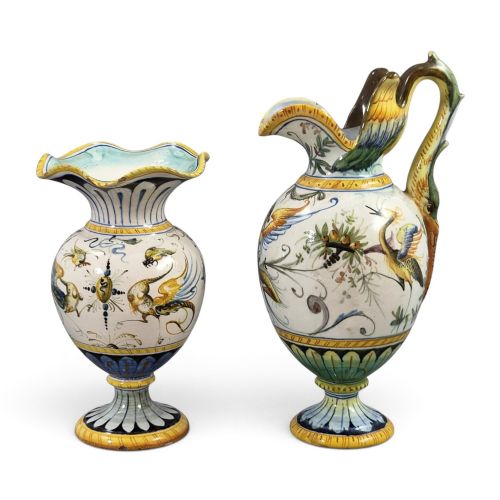
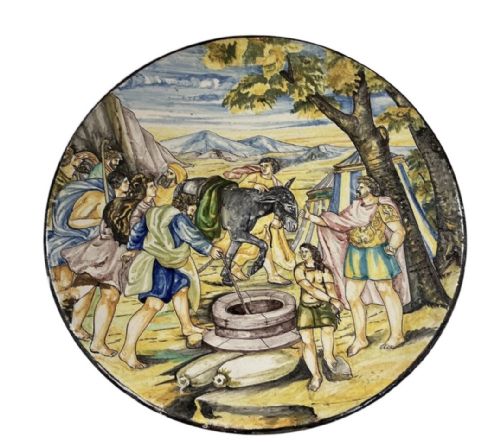
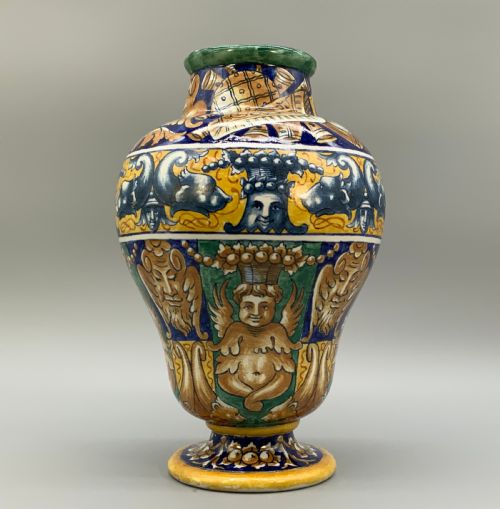
When you search for renaissance pottery, you encounter works spanning from sixteenth-century German stoneware to nineteenth-century revival earthenware inspired by Italian and French styles. The selection leans heavily towards nineteenth-century interpretations, particularly Victorian majolica, faience ewers, and Italian chargers.
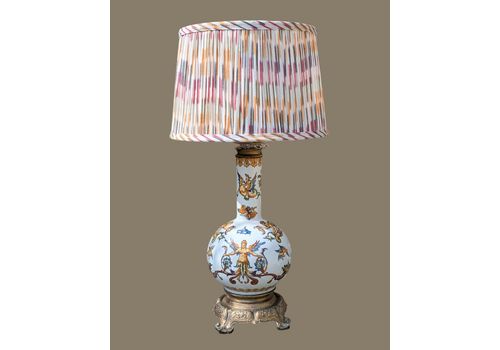
The forms vary from utilitarian water vessels and table lamps to grand centrepiece bowls, chargers, and pedestalled vases. Many pieces draw directly upon specific historical traditions, including Urbino and Savona designs.
Collectors frequently find items bearing the output of major European potteries alongside unmarked provincial pieces. The range captures both genuine sixteenth-century German production and the enthusiastic revivalism of the Victorian era.
How they were made
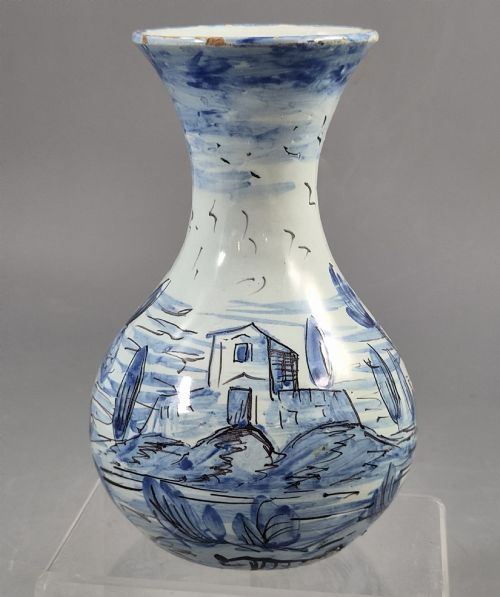
Potters shaped ceramic and earthenware bodies before applying tin glaze or opaque white glazes to receive hand-painted polychrome and blue-and-white decoration. This surface treatment provided a smooth canvas for intricate historical motifs and narrative scenes.
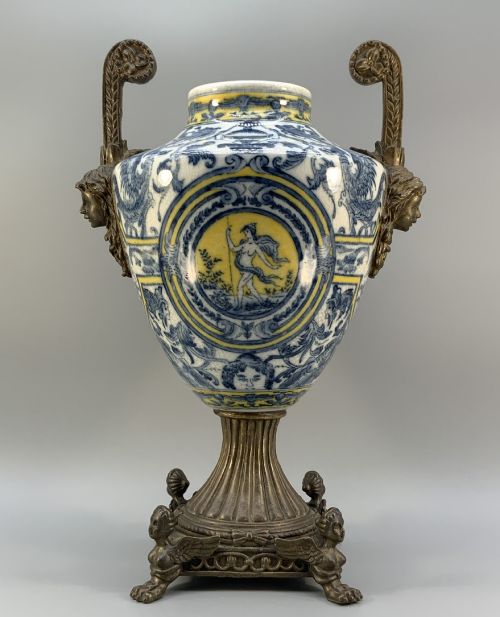
Selected vessels received bronze mounts or brass additions, particularly during the nineteenth-century revival periods when makers enhanced decorative domestic items for Victorian interiors.
Renaissance Pottery Retail Price Guide 2026
Typical asking prices for renaissance pottery among the pieces listed under this phrase on Sellingantiques today, from the lower quarter to the upper quarter. They describe what is for sale here now, not the wider market.
Early sixteenth-century German jugs peer out from the shelves with tiny bearded salt-glazed faces.
What varies in quality
The crispness of the hand-painted brushwork distinguishes exceptional pieces from standard production, particularly in detailed figurative plaques and heraldic designs. Superior examples display precise control over polychrome glazes and cobalt blues.
The ambition of the form also dictates standing, with large pedestalled vases, chargers, and double-handled flasks representing more complex ceramic engineering than smaller cabinet pieces.
Cantagalli Florence·Gien French Faience·Minton Majolica
The Renaissance Pottery Glossary
- Maiolica
- Tin-glazed earthenware produced in Italy, celebrated for colourful painted decoration. This term is often used interchangeably with majolica.
- Faience
- European tin-glazed pottery, particularly associated with French and Dutch production. The technique creates an opaque white background suitable for detailed painting.
- Charger
- A large decorative plate intended for display on a wall or dresser rather than dining use. These items often feature narrative scenes in historical styles.
- Ewer
- A large jug with a wide spout and shaped handle, originally designed for pouring water. Revival examples prioritize ornamental presence over practical utility.
- Bartmann jug
- A German stoneware drinking vessel featuring a bearded mask applied to the neck. These early sixteenth-century pieces originate from production centres such as Siegburg.
Renaissance Pottery: Frequently Asked Questions
How do I identify Renaissance revival pottery?
Revival pieces combine sixteenth-century Italian or French decorative motifs with nineteenth-century manufacturing methods, often utilising bright tin-glazed earthenware bodies and hand-painted historical scenes.
Look closely at the glaze consistency, the handling of the clay, and any maker marks on the base to separate nineteenth-century interpretations from earlier eras.
Where were these ceramic pieces made?
Production spans several European centres, with significant output originating from Italian kilns in Florence and Urbino, French potteries in Gien, and German stoneware towns like Siegburg.
Each region employed distinct regional techniques, such as German salt-glazed stoneware or Italian tin-glazed maiolica.
Can I use these vessels for liquids?
While forms like pitchers, ewers, and water vessels were originally functional, many historical and revival pieces function best as decorative display items today.
Historic glazes and porous earthenware bodies require careful handling, making them more suitable for interior placement on tables and brackets.
What is the difference between maiolica and majolica?
Maiolica traditionally refers to tin-glazed earthenware made in Italy during the Renaissance and later revival periods, employing specific pigment palettes.
Victorian majolica often describes British and continental nineteenth-century lead-glazed ceramics featuring vibrant moulded relief decoration.