




Renaissance Oak Relief
These pieces of renaissance oak relief bring centuries of carved architectural history directly into your interior.
Renaissance Oak Relief
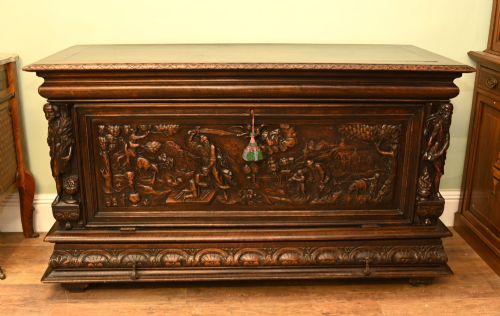
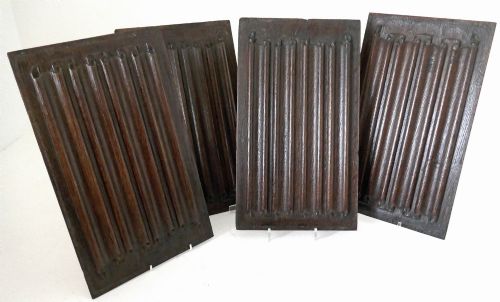
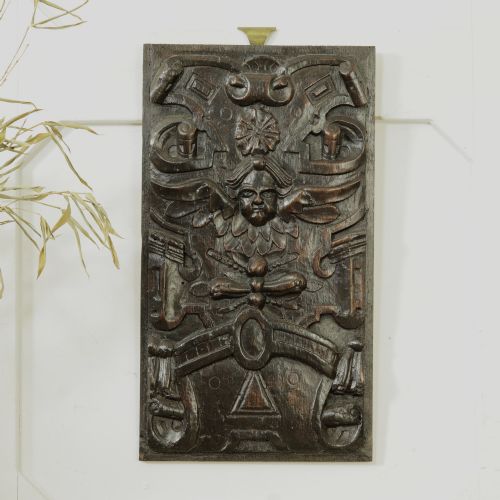
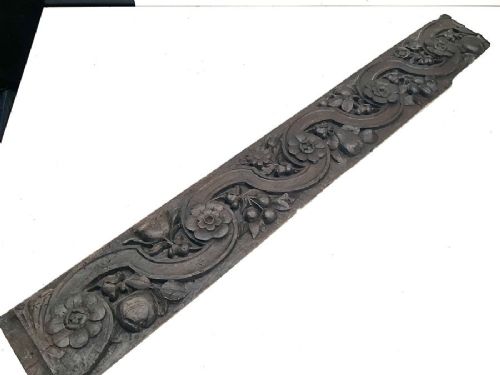
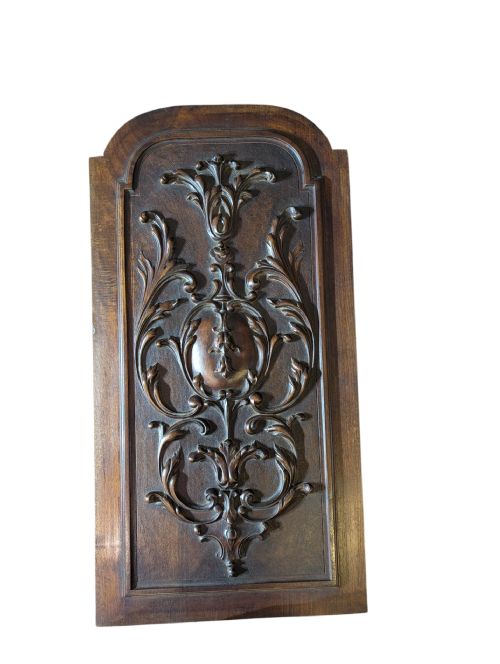
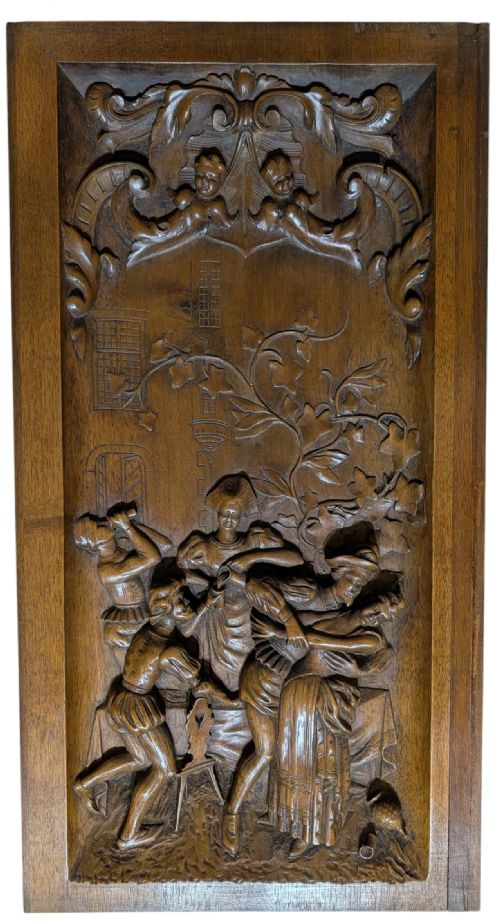
When you search for renaissance oak relief, you encounter heavily carved panels, wall plaques, and architectural fragments dating from the sixteenth century through to nineteenth-century revivals. The earliest examples originate from English and continental workshops around fifteen forty, capturing profound religious scenes, grotesque masks, and linenfold patterns.
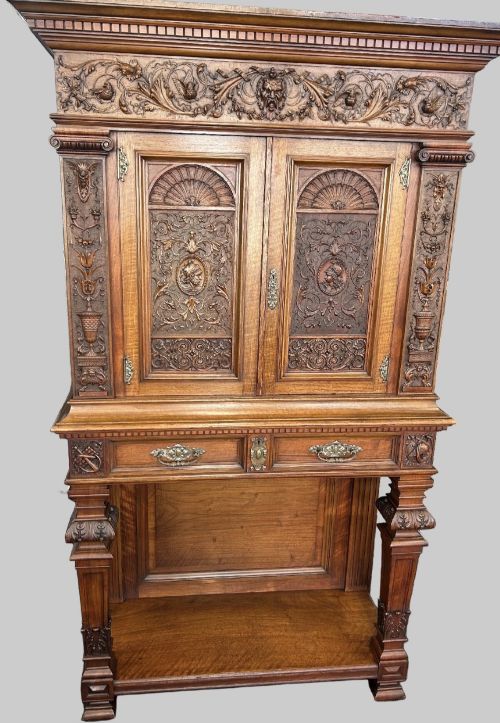
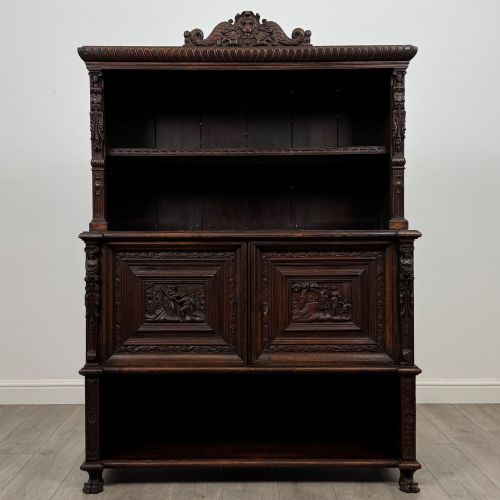
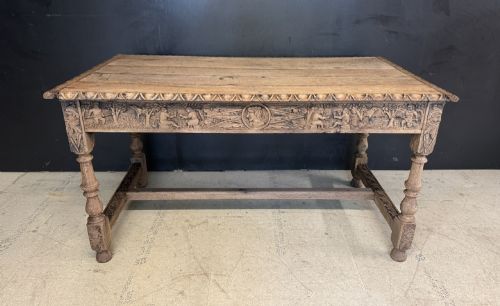
Alongside flat panels, the selection encompasses larger functional forms including cupboards, sideboards, hall benches, and cabinets. Pieces frequently display Renaissance Revival, Tudor, and Flemish stylistic influences executed in solid timber.
The material focus centres firmly upon oak, though walnut and mixed timbers appear across continental interpretations. Buyers typically select these works to anchor a room with deep relief carving and historical presence.
Materials and construction
Carvers shaped these works primarily from solid oak and walnut, employing traditional hand chisels and gouges to achieve high-relief depth. Select panels incorporate traces of polychrome paint or surface finishes applied during fabrication.
Structural elements occasionally integrate iron and brass hardware, particularly on larger cupboards and hall benches. Joinery relies on period techniques such as mortise and tenon framing to support heavy carved door fronts and wall panels.
The selection spans sixteenth-century originals to nineteenth-century revival pieces, incorporating wall panels, cupboards, and hall benches made from oak and walnut.
Judging quality and execution
Quality rests entirely upon the crispness of the hand carving and the depth of the relief work. Master carvers from the sixteenth century and later revivalists achieved precise facial expressions, fluid drapery, and sharp undercut details that separate superior pieces from simpler production.
The integrity of the timber also dictates value, with dense, uncompromised oak grains and minimal later restoration holding greater aesthetic weight. Original surface patination accumulated over centuries adds vital authenticity to the carved motifs.
The Renaissance Oak Relief Glossary
- Linenfold
- A style of relief carving imitating folded linen, commonly seen on sixteenth-century panels. This geometric motif provides a textured backdrop within early domestic interiors.
- High-Relief
- Carving where figures project significantly from the background plane. This technique creates dramatic shadow play across architectural panels and figural scenes.
- Renaissance Revival
- A nineteenth-century artistic movement that emulated sixteenth-century architectural and decorative forms. Makers utilised these historical motifs on large cabinets, sideboards, and settles.
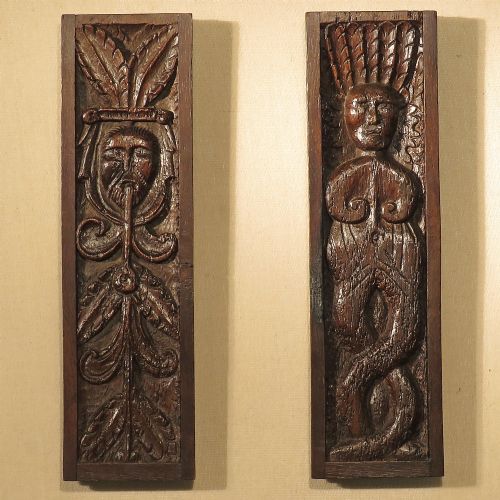
- Green Man
- A sculptural motif depicting a human face disgorged from foliage or composed of leaves. This ancient symbol appears frequently within early carved wood panels.
- Polychrome
- The practice of decorating architectural elements and wood sculptures in multiple colours. Traces of this historical paint survive on select early panels.
Renaissance Oak Relief: Frequently Asked Questions
How do I hang a heavy carved oak panel?
Heavy panels require secure wall fixings anchored directly into masonry or substantial timber studs behind the plaster. Utilising custom metal cleats or weight-bearing brackets ensures the piece remains stable without stressing the historic wood.
Professional installation is strongly advised given the substantial weight of dense sixteenth-century and nineteenth-century carved oak boards.
Where were these relief panels originally placed?
Original sixteenth-century panels typically formed part of elaborate wall panelling, ecclesiastical screens, or the cabinetry of wealthy residences. They served to display theological narratives, classical motifs, or familial status within great halls.
Later nineteenth-century revival pieces often integrated these older elements into newly constructed sideboards, hall stands, and cabinets.
How do I care for antique carved oak?
Maintain stable indoor humidity levels away from direct heat sources to prevent the historic oak timber from splitting or warping. Dust gently with a dry, soft bristle brush to clear debris from deep recesses without harming the surface.
Avoid applying modern silicone polishes or heavy waxes that can accumulate within the intricate crevices of the hand carving.
How can I tell sixteenth-century work from nineteenth-century revival pieces?
Sixteenth-century carvings display tool marks characteristic of early hand execution, alongside natural timber shrinkage and deep, dry patination earned over centuries. The grain pattern and structural wear reflect genuine early use.
Nineteenth-century Renaissance Revival pieces often exhibit machine-assisted preparation beneath the hand finishing, alongside distinct assembly methods and heavier framing proportions.